 Breaking News & Live Updates
- Breaking News & Live Updates
- Breaking News & Live Updates
- Breaking News & Live Updates
- Breaking News & Live Updates
- Breaking News & Live Updates
- Breaking News & Live Updates
- Breaking News & Live Updates
- Breaking News & Live Updates
- Breaking News & Live Updates
Chronic Caffeine and Sleep: A Deeper Look
Recent investigations shed light on the intricate relationship between sustained caffeine consumption and human sleep architecture, indicating a nuanced interaction where the brain adapts to maintain restorative processes. The study suggests a potential trade-off: a slight reduction in overall sleep time for an increase in its qualitative depth. This intriguing finding, published in the esteemed Journal of Psychopharmacology, offers a fresh perspective on how our bodies manage the pervasive presence of caffeine.
This research underscores the brain’s remarkable capacity for self-regulation, even in the face of consistent stimulant exposure. By meticulously analyzing extensive datasets and employing sophisticated statistical methods, scientists have begun to unravel the subtle yet significant ways chronic caffeine intake influences sleep. The implications extend beyond mere duration, hinting at an underlying homeostatic mechanism that prioritizes sleep quality when quantity is compromised.
The Dual Impact of Habitual Caffeine Intake on Sleep
New scientific findings indicate that while regular, high caffeine consumption might lead to a modest decrease in overall sleep duration, it concurrently enhances the quality of sleep by increasing its depth. This suggests a fascinating adaptive response within the human brain, which appears to compensate for the reduced sleep time by making the sleep obtained more efficient and restorative. The study’s revelations, based on comprehensive datasets and advanced analytical techniques, challenge conventional assumptions about caffeine’s purely disruptive role in sleep, proposing instead a more complex interplay where the body actively seeks to maintain critical recuperative processes. This insight is particularly relevant given caffeine’s widespread use globally.
The investigation utilized two extensive datasets: the UK Biobank, providing genetic and self-reported caffeine habits from nearly half a million individuals, and the HypnoLaus cohort from Switzerland, which offered objective sleep data via polysomnography for over 1,700 participants. Researchers categorized individuals into high (four or more caffeinated beverages daily) and moderate (three or fewer) intake groups. Employing Mendelian Randomization and causal matching, the study minimized confounding lifestyle factors. Results consistently showed that high caffeine intake reduced total sleep time by an estimated 11 to 13 minutes per night. However, critically, electroencephalography (EEG) data indicated increased delta wave activity in high caffeine consumers. Delta waves are characteristic of the deepest, most restorative stage of non-rapid eye movement (NREM) sleep, suggesting that even with slightly less sleep, individuals experience a more profound, rejuvenating rest.
Adaptive Sleep Mechanisms in Caffeine Consumers
The study highlights a remarkable adaptive mechanism in the brains of habitual caffeine users, where an increase in sleep depth appears to counteract the slight reduction in total sleep duration. This compensatory response is evidenced by heightened delta wave activity, a key indicator of deep, restorative sleep. Despite the common perception that caffeine unequivocally impairs sleep, this research posits that the brain actively optimizes the quality of the sleep it does get, ensuring that vital restorative functions are maintained. This homeostatic regulation suggests that the brain is not simply a passive recipient of caffeine’s effects but an active participant in managing its sleep needs, even under chronic stimulant conditions.
This adaptive behavior is particularly evident in the increase of delta wave intensity among heavy caffeine consumers, signifying a deeper, more recuperative sleep phase. This finding implies that the brain possesses a built-in mechanism to compensate for shortened sleep, ensuring that the time spent sleeping is maximally effective. While the study observed a minor decrease in sleep duration, the enhanced depth of sleep suggests a complex homeostatic process at play, where the body's internal systems strive to maintain balance. Interestingly, subjective reports on sleep quality and daytime alertness did not significantly differ between high and moderate caffeine consumers, further supporting the idea that the increased sleep depth effectively mitigates the impact of reduced sleep time. This nuanced understanding of caffeine's long-term effects on sleep shifts the focus from mere duration to the critical role of sleep architecture in overall well-being.
Other Articles
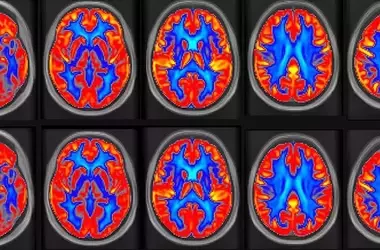
Peanut Consumption Boosts Brain Function and Memory in Older Adults
A recent study published in Clinical Nutrition indicates that regular consumption of unsalted, skin-roasted peanuts significantly improves brain vascular function and verbal memory in older individuals. The research, conducted over 16 weeks, revealed enhanced blood flow to key brain regions and better retention of verbal information, suggesting peanuts could be a valuable dietary component for healthy aging.

Cannabis Use Linked to Reduced Alcohol Consumption
A recent study suggests that for individuals who consume substantial amounts of alcohol, cannabis use may lead to a decrease in alcohol intake. This observed reduction appears to be associated with diminished alcohol cravings following cannabis use, proposing a potential explanation for why some individuals might opt to use cannabis as an alternative to alcohol. The findings, published in 'Drug and Alcohol Dependence', shed light on the complex interplay between these two substances.
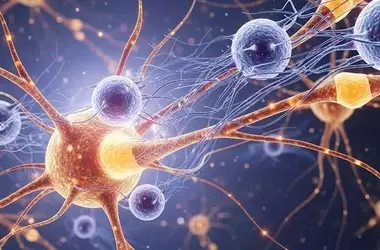
Brain's Immune Cells Regulate Anxiety: A New Perspective Beyond Neurons
A study published in Molecular Psychiatry reveals that specific immune cells in the mouse brain, known as microglia, directly cause chronic anxiety and compulsive grooming. The research highlights two distinct microglial lineages: one promotes these behaviors (accelerator), while the other suppresses them (brake). These findings shift the focus from neurons to the brain's immune system as a key regulator of certain psychiatric conditions, offering new avenues for therapeutic development.

Brain Networks Decode Sound and Anticipate Auditory Sequences
A recent scientific inquiry, documented in "Advanced Science," unveils that the human brain utilizes two extensive, distinct neural networks to process and anticipate familiar sound patterns. One network is primarily responsible for general acoustic processing, while the other is specifically dedicated to matching incoming auditory information with stored memories and identifying discrepancies. These revelations deepen our comprehension of how varied neural systems collaborate to facilitate intricate cognitive functions.

AI Deciphers Dance's Neural Signature
A new study reveals how artificial intelligence helps unravel the brain's complex processing of dance, where sound and movement merge. Computer models can predict neural activity in observers, showing that expert dancers exhibit diverse neural responses compared to novices. This research offers insights into how the brain integrates multimodal sensory information and could bridge the gap between neuroscience and the arts.
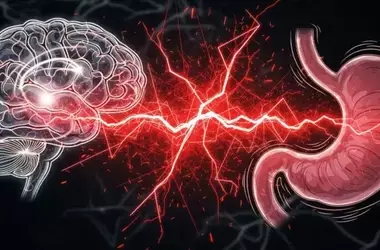
High-Fat Diet Disrupts Gut-Brain Serotonin Pathway
A new analysis reveals that chronic high-fat diets severely impair the communication between the gut and the brain, specifically concerning serotonin levels. While serotonin increases in the gut, it depletes in key brain regions controlling mood and memory. This disruption, driven by enzyme imbalances and microbiome changes, offers insights into the links between obesity, depression, and cognitive decline, suggesting potential therapeutic avenues for restoring gut-brain balance.