 Breaking News & Live Updates
- Breaking News & Live Updates
- Breaking News & Live Updates
- Breaking News & Live Updates
- Breaking News & Live Updates
- Breaking News & Live Updates
- Breaking News & Live Updates
- Breaking News & Live Updates
- Breaking News & Live Updates
- Breaking News & Live Updates
AI Deciphers Dance's Neural Signature
A groundbreaking study reveals how artificial intelligence can illuminate the intricate ways our brains interpret dance. This research demonstrates that computational models are capable of accurately forecasting neural engagement in individuals observing dance, suggesting that skilled dancers process performances with a notable degree of individuality in their brain activity, distinguishing them from those with less experience.
For decades, scientists have sought to understand how the brain processes sensory inputs. Traditional experiments often isolate stimuli, presenting single sounds or lights to track neural firing. While precise, this method often overlooks the complex, multisensory nature of real-world experiences. To overcome this, researchers turned to dance, an art form that inherently blends dynamic movement with music, requiring simultaneous integration of visual and auditory signals. Earlier studies on dance frequently separated these elements, showing silent videos or playing music without visuals, thereby missing the crucial interplay between rhythm and motion that defines dance.
To address this gap, a research team led by Yu Takagi and Hiroshi Imamizu at the University of Tokyo harnessed advanced technology. They investigated whether sophisticated computer programs could replicate how the human brain integrates these combined sensations and if professional dancers' brain activity differed from that of novices. The experiment involved fourteen participants, half experienced dancers and half untrained, who watched street dance videos while undergoing fMRI scans to measure real-time brain activity. Using a deep generative AI model called EDGE, which creates dance choreography from music, the researchers extracted mathematical features representing motion, audio, and cross-modal information. They found that cross-modal features most accurately predicted brain activity in high-level association areas, indicating that the brain processes the interaction between movement and sound as a unified phenomenon. The study also revealed that expert dancers' brain activity was more precisely predicted by dance features, and surprisingly, exhibited greater variability among themselves, challenging the notion that expertise leads to uniform processing. The team further explored how the brain encodes emotional content, correlating subjective ratings of aesthetics, dynamics, and boredom with distinct brain networks. Their model predicted that matching music and motion strongly activate sensory regions, while mismatches engage frontal areas, possibly indicating error detection. While acknowledging limitations, such as focusing on street dance and passive observation, the study marks a significant advance in connecting computational models with human artistic perception.
This pioneering research has the potential to transform our understanding of the arts and human perception. By bridging neuroscience and artistic expression, it opens doors for new creative tools that could help choreographers and deepen our appreciation for the universal appeal of dance, fostering innovation and enriching human experience.
Other Articles
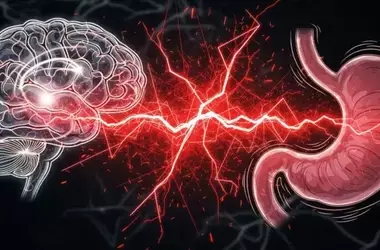
High-Fat Diet Disrupts Gut-Brain Serotonin Pathway
A new analysis reveals that chronic high-fat diets severely impair the communication between the gut and the brain, specifically concerning serotonin levels. While serotonin increases in the gut, it depletes in key brain regions controlling mood and memory. This disruption, driven by enzyme imbalances and microbiome changes, offers insights into the links between obesity, depression, and cognitive decline, suggesting potential therapeutic avenues for restoring gut-brain balance.
New Psychological Research Illuminates the Enigma of Déjà Vu and Predictive Illusions
Recent psychological investigations have provided compelling experimental evidence indicating that the experience of d←j¢ vu can generate an illusory sense of future predictability. This research suggests that when individuals encounter a new situation with a feeling of familiarity, they may subjectively believe they can anticipate upcoming events, even without actual foresight. Published in "Consciousness and Cognition," these findings offer new insights into the cognitive mechanisms underlying this intriguing phenomenon.
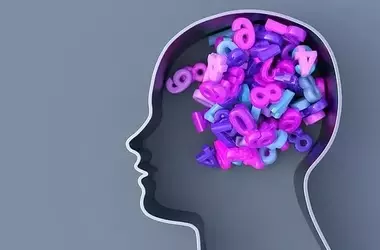
The Impact of Numerical Systems on Human Cognition and Culture
New research explores how the underlying structures of number systems, particularly the concept of 'bases,' profoundly influence cognitive processes, language acquisition, and cultural interactions. This study highlights the challenges posed by inconsistencies between different numerical bases, such as those found in time measurement versus standard Indo-Arabic numerals, and their implications for learning, calculation, and even critical decision-making in daily life.

Oxytocin's Creative Spark: Personality Matters
New research shows that oxytocin, often dubbed the 'love hormone,' can boost creativity, but its effects are not universal. The study, published in *Social Cognitive and Affective Neuroscience*, reveals that oxytocin primarily enhances creative thinking in individuals who are naturally inclined towards seeking rewards and opportunities, rather than those who prioritize avoiding risks. This finding suggests that an individual's motivational style plays a crucial role in how their brain responds to oxytocin, influencing cognitive processes like originality and flexibility of thought. The research provides valuable insights into the complex interplay between neurochemistry and personality in fostering creativity.
Neural Dynamics and General Intelligence: A New Perspective
Groundbreaking research published in "Imaging Neuroscience" reveals a profound link between general intelligence and the brain's capacity for stable, efficient, and typical connectivity patterns. The study highlights that individuals with superior cognitive abilities exhibit prolonged maintenance of specific brain states and more streamlined neural network reconfigurations. This suggests that optimized brain communication dynamics, rather than merely faster connections, underpin higher general intelligence.
Gene Mutation Influences Alcohol Sensitivity and Consumption
New research in The Journal of Neuroscience reveals that a specific genetic variant in the chrna3 gene significantly impacts an organism's response to alcohol. Using zebrafish as a model, scientists demonstrated that a mutation in this gene leads to increased alcohol tolerance and consumption, bypassing the natural aversion mechanisms typically observed at higher doses. This groundbreaking study highlights the gene's crucial role in regulating alcohol sensitivity and suggests implications for understanding alcohol use disorders in humans.