 Breaking News & Live Updates
- Breaking News & Live Updates
- Breaking News & Live Updates
- Breaking News & Live Updates
- Breaking News & Live Updates
- Breaking News & Live Updates
- Breaking News & Live Updates
- Breaking News & Live Updates
- Breaking News & Live Updates
- Breaking News & Live Updates
New Psychological Research Illuminates the Enigma of Déjà Vu and Predictive Illusions
New studies have experimentally demonstrated that the sensation known as déjà vu can induce an unfounded belief in one's capacity to foresee future occurrences. This research highlights that a feeling of recognition in a novel environment can create a subjective conviction that one is aware of what is about to happen, despite lacking any genuine predictive ability. These significant findings were recently published in the scientific journal, Consciousness and Cognition.
For many years, psychologists have investigated déjà vu to understand why certain situations evoke an intense sense of familiarity, even when there's no prior experience. A frequent characteristic linked with déjà vu is an illusion of prediction. This is the profound feeling that an individual knows precisely how a moment will unfold or what awaits them around the bend. Earlier studies had established a correlation between the intensity of this familiarity and the strength of the predictive feeling, with stronger déjà vu experiences often coinciding with a more powerful sense of knowing the future. However, these past studies were primarily correlational, making it difficult to definitively conclude that familiarity directly caused the predictive feeling. It was possible that the observed link was influenced by participants being explicitly questioned about déjà vu, which might have led them to respond in ways consistent with popular understandings of the phenomenon.
To address the limitations of previous research, a team of scientists, including Andrew Huebert, Sarah Myers, and Anne Cleary, set out to determine if the detection of familiarity itself plays a causal role in generating these predictive illusions. They aimed to manipulate the level of familiarity experienced by participants to see if it directly increased the sensation of being able to predict the future, crucially without explicitly referencing déjà vu to minimize the impact of social expectations. Across three experiments using a virtual reality setup, participants explored virtual environments. The researchers utilized the Gestalt Familiarity Hypothesis, which suggests déjà vu arises when a new scene's spatial arrangement resembles a stored memory, even if specific details differ. Experiment 1 demonstrated that scenes with layouts viewed multiple times produced the highest rates of familiarity and, consequently, a stronger sense of prediction. However, participants also showed above-chance predictive accuracy, which the researchers attributed to the order of questioning potentially allowing participants to access underlying memories. In Experiment 2, the question order was altered to prevent memory retrieval from influencing predictions. This modification confirmed that while increased familiarity enhanced the feeling of prediction, actual predictive accuracy was no better than random chance, underscoring the illusory nature of this sensation. Experiment 3 further solidified these findings by showing that even without explicit prompts about familiarity, the spatial overlap with previously seen scenes still led to stronger feelings of prediction, suggesting an automatic cognitive process.
The consistent results across these studies, particularly the dose-response relationship where greater exposure to layouts led to stronger effects, strongly support a causal link between familiarity and illusory predictions. This research reveals that the simple act of detecting familiarity, independent of conscious awareness or direct questioning about déjà vu, can instigate a powerful, yet ultimately false, sense of foresight. This understanding shifts the perception of déjà vu from a mysterious, often non-scientific phenomenon to a recognizable cognitive process driven by environmental familiarity. While this study primarily focused on spatial familiarity, future research could explore whether other forms of familiarity, like recognizing a face or voice, also trigger similar predictive illusions. Additionally, investigating the temporal dynamics of these sensations, such as how quickly they might dissipate, could offer further insights into the transient nature of these predictive feelings.
Other Articles
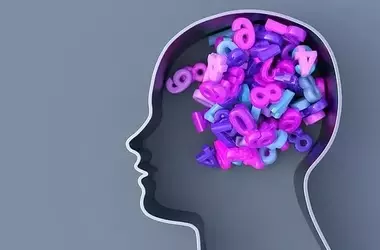
The Impact of Numerical Systems on Human Cognition and Culture
New research explores how the underlying structures of number systems, particularly the concept of 'bases,' profoundly influence cognitive processes, language acquisition, and cultural interactions. This study highlights the challenges posed by inconsistencies between different numerical bases, such as those found in time measurement versus standard Indo-Arabic numerals, and their implications for learning, calculation, and even critical decision-making in daily life.

Oxytocin's Creative Spark: Personality Matters
New research shows that oxytocin, often dubbed the 'love hormone,' can boost creativity, but its effects are not universal. The study, published in *Social Cognitive and Affective Neuroscience*, reveals that oxytocin primarily enhances creative thinking in individuals who are naturally inclined towards seeking rewards and opportunities, rather than those who prioritize avoiding risks. This finding suggests that an individual's motivational style plays a crucial role in how their brain responds to oxytocin, influencing cognitive processes like originality and flexibility of thought. The research provides valuable insights into the complex interplay between neurochemistry and personality in fostering creativity.
Neural Dynamics and General Intelligence: A New Perspective
Groundbreaking research published in "Imaging Neuroscience" reveals a profound link between general intelligence and the brain's capacity for stable, efficient, and typical connectivity patterns. The study highlights that individuals with superior cognitive abilities exhibit prolonged maintenance of specific brain states and more streamlined neural network reconfigurations. This suggests that optimized brain communication dynamics, rather than merely faster connections, underpin higher general intelligence.

Gene Mutation Influences Alcohol Sensitivity and Consumption
New research in The Journal of Neuroscience reveals that a specific genetic variant in the chrna3 gene significantly impacts an organism's response to alcohol. Using zebrafish as a model, scientists demonstrated that a mutation in this gene leads to increased alcohol tolerance and consumption, bypassing the natural aversion mechanisms typically observed at higher doses. This groundbreaking study highlights the gene's crucial role in regulating alcohol sensitivity and suggests implications for understanding alcohol use disorders in humans.

A Single Weightlifting Session Boosts Executive Function and Processing Speed
A recent study revealed that a single session of moderate-intensity resistance exercise can significantly improve inhibitory control and working memory. Participants engaging in weightlifting showed enhanced cognitive performance and increased blood lactate and systolic blood pressure, suggesting a potential physiological mechanism behind these mental benefits. The findings highlight resistance training's immediate positive impact on brain function.

New Study Reveals Unexpected CBD Impact on Cannabis Effects in Schizophrenia Patients
A recent study published in Neuropsychopharmacology unveiled an unanticipated interaction between cannabidiol (CBD) and cannabis in individuals with schizophrenia. Contrary to previous expectations that CBD might alleviate the adverse effects of tetrahydrocannabinol (THC), the research indicates that CBD pre-treatment actually intensified both memory impairment and psychotic symptoms in this vulnerable population. This discovery challenges existing assumptions about CBD's protective role and underscores the complex interplay of cannabinoids in mental health conditions, particularly in those with a co-occurring cannabis use disorder.