 Breaking News & Live Updates
- Breaking News & Live Updates
- Breaking News & Live Updates
- Breaking News & Live Updates
- Breaking News & Live Updates
- Breaking News & Live Updates
- Breaking News & Live Updates
- Breaking News & Live Updates
- Breaking News & Live Updates
- Breaking News & Live Updates
Brain's Immune Cells Regulate Anxiety: A New Perspective Beyond Neurons
Recent investigations have illuminated the critical role of the brain's immune system in regulating anxiety and related behaviors, challenging traditional neuron-centric views. A landmark study identified two distinct types of microglial cells that act as a 'gas pedal' and 'brake' for anxiety, suggesting novel therapeutic targets. This groundbreaking research not only deepens our understanding of psychiatric conditions but also paves the way for innovative treatments that could restore emotional balance.
This study represents a significant shift in neuroscience, moving beyond the long-held belief that neurons alone are responsible for complex brain functions and dysfunctions. By demonstrating the direct involvement of microglia in the genesis of anxiety and compulsive behaviors, it opens up an entirely new dimension for exploring the biological underpinnings of mental health disorders.
The Dual Role of Microglia in Brain Function
Pioneering research has uncovered that specialized immune cells within the brain, termed microglia, are direct contributors to chronic anxiety and compulsive grooming behaviors. These findings spotlight two distinct groups of microglia: one lineage intensifies these behaviors, while another lineage acts to mitigate them. This revelation fundamentally redirects scientific attention from the conventional focus on neurons to the brain's immune system as a pivotal factor in the control of specific psychiatric states.
Microglia, which serve as the central nervous system's resident immune cells, are tasked with maintaining cerebral health by clearing cellular debris and reacting to injury or infection. However, their influence extends far beyond mere maintenance. The microglial population in mice comprises two separate lineages that originate at different stages of embryonic development. The majority are identified as canonical non-Hoxb8 microglia, while a smaller contingent, roughly 25 percent, are designated as Hoxb8 microglia, named for a specific developmental gene they express.
Implications for Psychiatric Treatment and Future Research
This study's findings have profound implications for understanding and treating psychiatric disorders, suggesting that interventions targeting microglial function could offer new therapeutic strategies. The identification of 'accelerator' and 'brake' microglia provides a detailed model for future pharmacological and immunotherapeutic approaches, aiming to restore the brain's natural balance. This paradigm shift could lead to more effective treatments for conditions that have historically been challenging to manage with neuron-focused therapies.
The behavioral outcomes observed in mice receiving defective Hoxb8 microglia directly mirrored the pathological behaviors seen in the original mutant mice, including compulsive grooming and heightened anxiety. Conversely, mice receiving healthy Hoxb8 microglia displayed normal behavioral patterns. This confirmed a direct causal link between defective Hoxb8 microglia and the manifestation of these behaviors. The 'Accelerator/Brake' model further posits that non-Hoxb8 microglia amplify anxiety and grooming, while Hoxb8 microglia suppress them. This was validated by experiments where mice with only non-Hoxb8 microglia exhibited severe anxiety and grooming, akin to having the 'accelerator' permanently engaged. The nuanced observation that original mutant mice showed even more severe symptoms than those with a mere loss of Hoxb8 function suggests that defective Hoxb8 microglia actively contribute to these behaviors, possibly through a 'gain of function' mechanism. While these experiments utilized mouse models, researchers believe similar microglial populations exist in humans, suggesting that this research could redefine our approach to psychiatric conditions by exploring interventions that target specific immune cell populations in the brain, marking a significant advancement in neuropsychiatric disorder treatment.
Other Articles
Brain Networks Decode Sound and Anticipate Auditory Sequences
A recent scientific inquiry, documented in "Advanced Science," unveils that the human brain utilizes two extensive, distinct neural networks to process and anticipate familiar sound patterns. One network is primarily responsible for general acoustic processing, while the other is specifically dedicated to matching incoming auditory information with stored memories and identifying discrepancies. These revelations deepen our comprehension of how varied neural systems collaborate to facilitate intricate cognitive functions.

AI Deciphers Dance's Neural Signature
A new study reveals how artificial intelligence helps unravel the brain's complex processing of dance, where sound and movement merge. Computer models can predict neural activity in observers, showing that expert dancers exhibit diverse neural responses compared to novices. This research offers insights into how the brain integrates multimodal sensory information and could bridge the gap between neuroscience and the arts.
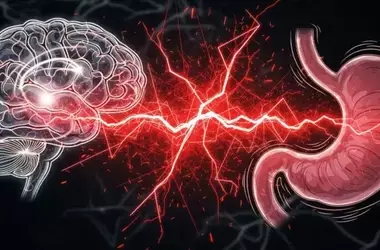
High-Fat Diet Disrupts Gut-Brain Serotonin Pathway
A new analysis reveals that chronic high-fat diets severely impair the communication between the gut and the brain, specifically concerning serotonin levels. While serotonin increases in the gut, it depletes in key brain regions controlling mood and memory. This disruption, driven by enzyme imbalances and microbiome changes, offers insights into the links between obesity, depression, and cognitive decline, suggesting potential therapeutic avenues for restoring gut-brain balance.

New Psychological Research Illuminates the Enigma of Déjà Vu and Predictive Illusions
Recent psychological investigations have provided compelling experimental evidence indicating that the experience of d←j¢ vu can generate an illusory sense of future predictability. This research suggests that when individuals encounter a new situation with a feeling of familiarity, they may subjectively believe they can anticipate upcoming events, even without actual foresight. Published in "Consciousness and Cognition," these findings offer new insights into the cognitive mechanisms underlying this intriguing phenomenon.
The Impact of Numerical Systems on Human Cognition and Culture
New research explores how the underlying structures of number systems, particularly the concept of 'bases,' profoundly influence cognitive processes, language acquisition, and cultural interactions. This study highlights the challenges posed by inconsistencies between different numerical bases, such as those found in time measurement versus standard Indo-Arabic numerals, and their implications for learning, calculation, and even critical decision-making in daily life.
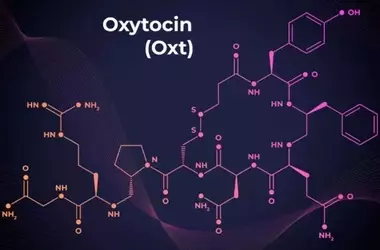
Oxytocin's Creative Spark: Personality Matters
New research shows that oxytocin, often dubbed the 'love hormone,' can boost creativity, but its effects are not universal. The study, published in *Social Cognitive and Affective Neuroscience*, reveals that oxytocin primarily enhances creative thinking in individuals who are naturally inclined towards seeking rewards and opportunities, rather than those who prioritize avoiding risks. This finding suggests that an individual's motivational style plays a crucial role in how their brain responds to oxytocin, influencing cognitive processes like originality and flexibility of thought. The research provides valuable insights into the complex interplay between neurochemistry and personality in fostering creativity.