 Breaking News & Live Updates
- Breaking News & Live Updates
- Breaking News & Live Updates
- Breaking News & Live Updates
- Breaking News & Live Updates
- Breaking News & Live Updates
- Breaking News & Live Updates
- Breaking News & Live Updates
- Breaking News & Live Updates
- Breaking News & Live Updates
Brain Scans Uncover Two Distinct Biological Subtypes of Autism
Recent research published in Nature Neuroscience illuminates the biological complexity of autism spectrum disorder (ASD), proposing that it manifests through two distinct patterns of brain connectivity. This significant study, employing functional magnetic resonance imaging (fMRI) across both animal models and human subjects, identified that individuals with autism either exhibit unusually low or remarkably high levels of communication between various brain regions. These divergent connectivity profiles are associated with entirely different biological underpinnings, offering a fresh perspective on understanding and potentially supporting those on the autism spectrum.
Autism spectrum disorder is characterized by its broad range of clinical presentations. Some individuals encounter considerable difficulties with language and motor skills, while others do not. This extensive variability in observable traits is frequently thought to stem from a multitude of underlying biological causes. Directly linking specific behavioral characteristics to precise biological origins, however, has proven to be a formidable challenge. A limited number of autistic individuals possess identifiable genetic mutations, simplifying study. This scarcity makes biological classification based solely on genetics difficult.
“Our investigation originated from a fundamental, yet enduring, inquiry: what accounts for the vast heterogeneity observed in autism?” remarked Alessandro Gozzi, director of the Functional Neuroimaging Laboratory and a senior scientist at the Italian Institute of Technology’s Center for Neuroscience and Cognitive Systems in Rovereto. “It is well-established that autistic individuals can display profound differences in their symptoms, capabilities, and support requirements, but discerning whether this diversity also reflects distinct underlying biological mechanisms has been considerably more challenging.” To bridge this knowledge gap, the research team employed fMRI, a technique that gauges brain activity by monitoring changes in blood flow. When brain areas demonstrate synchronized fluctuations in blood flow during rest, they are deemed functionally connected.
The objective behind this research was to ascertain whether diverse genetic and environmental elements linked to autism generate discernible patterns of functional connectivity. By initially studying genetically modified mice, the team sought to delineate specific brain patterns, subsequently searching for identical patterns in human brain scans. Earlier fMRI research has frequently yielded inconsistent results. “Previous brain imaging investigations into autism have often reported conflicting outcomes: some indicated reduced connectivity between brain regions, while others suggested increased connectivity,” Gozzi explained. “Instead of dismissing this variability as mere noise, we aimed to explore the hypothesis that it might contain valuable biological information. In essence, we proposed that distinct patterns of brain connectivity could signify different biological subtypes of autism.”
Initially, the researchers analyzed fMRI data from 20 different mouse models of autism, which included 17 models with specific genetic alterations, two involving immune system modifications, and one specially bred mouse line. Each model was compared against a control group of typical mice to assess the impact of specific biological changes on functional brain connectivity. Upon clustering the whole-brain fMRI results from these models, two predominant patterns emerged. “What particularly astonished us was the clear manifestation of two opposing connectivity patterns across species,” Gozzi stated. “We observed congruent patterns of hypoconnectivity and hyperconnectivity in both mouse models and human autism datasets, and these patterns were associated with distinct biological pathways.”
Eleven of the mouse models exhibited hypoconnectivity, indicating significantly less communication among their brain regions than anticipated. Conversely, the remaining nine models displayed hyperconnectivity, characterized by considerably heightened communication between brain regions. Following this, the team employed computational methods to identify the biological pathways associated with these two distinct patterns. They examined the genes linked to each mouse model and mapped their interactions with other proteins, forming what is known as an interactome. “Our investigation identified two primary connectivity-defined subtypes,” Gozzi elaborated. “One subtype was characterized by diminished communication between brain regions and was connected to synaptic mechanisms, which are crucial for neuronal communication. The other featured enhanced communication between brain regions and was associated with immune-related mechanisms and alterations in gene regulation.”
Synapses are the microscopic junctions through which nerve cells transmit chemical signals, facilitating brain communication. In contrast, the hyperconnectivity pattern was correlated with the immune system and the processes by which cells translate genetic instructions into proteins. Guided by these discoveries in mice, the researchers then delved into an extensive collection of human fMRI data. This dataset encompassed resting-state brain scans from 940 individuals diagnosed with autism and 1,036 neurotypical individuals, ranging from 5 to 30 years old, with scans collected across 38 research centers. The team concentrated on evolutionarily conserved brain regions—areas that share anatomical and functional similarities between mice and humans. By focusing on these specific areas, they successfully identified the identical two functional connectivity subtypes within the human participants. To validate the reliability of their findings, the researchers divided the human data into two separate groups: a discovery dataset comprising 78.5 percent of participants and a replication dataset with the remaining 21.5 percent to verify the initial outcomes.
Both datasets consistently revealed the two subtypes. Together, the hypoconnectivity and hyperconnectivity groups constituted 25.1 percent of the human autism scans analyzed, with the remaining scans not aligning neatly with either extreme category. These findings provide context for previous inconsistent results in human studies. “This was crucial because it implies that seemingly contradictory findings in earlier autism imaging studies might not simply be due to inconsistency,” Gozzi noted. “Some of them may genuinely reflect biological differences among subgroups of individuals.” These two human subtypes exhibited profoundly different brain network architectures. Individuals in the hyperconnectivity group demonstrated markedly increased connections between deeper, subcortical brain areas and the outer cerebral cortex. Conversely, those in the hypoconnectivity group displayed reduced connections between brain regions responsible for processing sensory and motor information.
The human subtypes also presented distinct behavioral profiles. Researchers assessed standardized symptom severity scores for a subset of participants. Individuals in the hyperconnectivity group generally exhibited slightly higher scores related to social communication and interaction. Finally, scientists correlated human gene expression data with fMRI patterns to ascertain if the biological causes aligned with those found in the mouse models. A remarkable similarity was observed across both species: brain areas with reduced connectivity in humans were significantly enriched with genes linked to synaptic function. Concurrently, human brain regions exhibiting over-connectivity were enriched with genes associated with the immune system. “The central insight is that the diversity of autism extends beyond symptoms,” Gozzi emphasized. “At least in part, it also reflects biologically distinct patterns in how brain circuits communicate.”
It's important for readers to understand that these findings do not suggest autistic individuals can be easily categorized. “The broader message is that we should not assume all autistic individuals share the same underlying biology merely because they fall under the same diagnostic label,” Gozzi stated. “Two individuals might present similarly clinically, but the brain and molecular mechanisms contributing to their condition could differ.” Gozzi further stressed, “Concurrently, I wish to underscore that our objective is not to introduce simplistic new labels. The aim is to unravel the biological framework beneath the autism spectrum, enabling future research—and ultimately clinical trials—to be more precisely aligned with the mechanisms involved.”
The authors acknowledge certain limitations in the current findings. “The most significant limitation is that this is not a clinical diagnostic instrument,” Gozzi clarified. “We cannot yet scan an individual person and utilize this information to guide clinical decisions.” The two identified subtypes only accounted for approximately one-quarter of the autistic individuals in the study. “Another crucial point is that the two subtypes we identified explain only a fraction of autism’s heterogeneity,” Gozzi observed. “This is unsurprising, given autism’s high diversity, but it indicates that additional biological subtypes almost certainly await discovery.” Gozzi concluded, “This does not imply there are only two types of autism. Rather, it suggests that the autism spectrum may encompass biologically distinct subgroups, and comprehending these differences could eventually advance research toward more personalized approaches.”
Moving forward, the team aims to uncover further patterns within the broader spectrum. “We also intend to refine the biological map,” Gozzi added. “In this study, we identified two dominant signatures, but autism is unlikely to be explained by only two categories. With richer mouse and human datasets, we hope to pinpoint more granular, biologically defined subtypes and understand the physiological implications of hypoconnectivity and hyperconnectivity.” Human data expansion will also be essential to fully grasp the impact of these subtypes on daily life. “A significant next step involves comprehending what these brain-based subtypes signify in people,” Gozzi said. “For this, we require larger human datasets with more comprehensive clinical and behavioral information, including cognitive abilities, sensory symptoms, developmental trajectories, adaptive functioning, genetics, and clinical histories.” The study, titled “Autism subtypes identified using cross-species functional connectivity analyses,” was authored by Marco Pagani, Valerio Zerbi, Silvia Gini, Filomena Grazia Alvino, Abhishek Banerjee, Andrea Barberis, M. Albert Basson, Yuri Bozzi, Alberto Galbusera, Jacob Ellegood, Michela Fagiolini, Jason P. Lerch, Michela Matteoli, Caterina Montani, Davide Pozzi, Giovanni Provenzano, Maria Luisa Scattoni, Nicole Wenderoth, Ting Xu, Michael V. Lombardo, Michael P. Milham, Adriana Di Martino, and Alessandro Gozzi.
Other Articles

Loneliness and Empathy: A New Perspective on Connection
A recent study investigated the impact of Loving Kindness Meditation on loneliness and empathy. While the meditation technique effectively reduced loneliness, it did not significantly alter empathy levels. Interestingly, lonely individuals reported lower self-perceived empathy, yet their neural responses during an empathy task remained intact, suggesting a disconnect between self-perception and biological empathetic capacity. This research highlights the importance of addressing cognitive aspects of loneliness interventions.
Brain Chemistry's Role in Error Sensitivity and Mental Health
A new study reveals that elevated glutamate levels in the brain's anterior insular cortex are linked to heightened sensitivity to errors, contributing to anxiety and depression. This research, published in Frontiers in Neuroscience, highlights how our brain's chemical makeup can influence our reaction to mistakes and impact overall mental well-being, suggesting a biological predisposition to internalizing disorders.

Head Trauma in Contact Sports Linked to Blood-Brain Barrier Dysfunction and Cognitive Decline
A new study reveals a correlation between extensive blood-brain barrier disruption and accelerated cognitive decline in retired athletes from combat and collision sports. The research, published in Science Translational Medicine, suggests that repetitive head trauma may lead to persistent inflammation and compromised brain barrier integrity, contributing to long-term neurological issues. These findings underscore the importance of understanding and mitigating the risks associated with head impacts in sports.
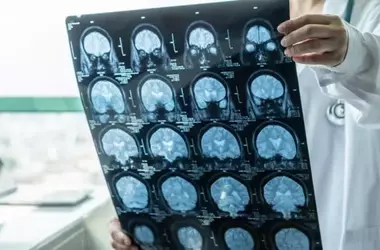
Brain Scan Study Uncovers Physical Foundations of PTSD's Intrusive Symptoms
New research published in "Biological Psychiatry: Cognitive Neuroscience and Neuroimaging" suggests that the structural integrity of specific white matter pathways in the brain influences the intensity and nature of intrusive traumatic memories in individuals with PTSD. The study, involving 114 trauma-exposed adults, found that weaker connections in certain brain regions correlated with more frequent intrusive memories and a heightened sense of reliving traumatic events, shedding light on the neurological underpinnings of these distressing symptoms.
Genetic Predisposition for ADHD Linked to Irregular Brain Rhythms Essential for Cognitive Control
A recent study published in "Translational Psychiatry" reveals a direct correlation between genetic scores for Attention-Deficit/Hyperactivity Disorder (ADHD) and inconsistent timing in midfrontal theta brain waves. These brain waves are critical for cognitive control, enabling individuals to maintain focus and achieve goals. The research highlights how genetic predispositions manifest as tangible disruptions in neural activity, providing new avenues for understanding and potentially treating ADHD.
Researchers Uncover Brain 'Entrapment' Patterns in Depression
New research published in Nature Communications reveals that major depressive disorder is characterized by the brain getting "stuck" in specific, maladaptive activity patterns. Using advanced neuroimaging and network control theory, scientists mapped how altered white matter pathways force depressed brains to expend more energy to transition between states, leading to a cycle of negative thoughts and anhedonia. This groundbreaking study shifts the understanding of depression from static brain differences to dynamic neural entrapment, paving the way for more targeted interventions.