 Breaking News & Live Updates
- Breaking News & Live Updates
- Breaking News & Live Updates
- Breaking News & Live Updates
- Breaking News & Live Updates
- Breaking News & Live Updates
- Breaking News & Live Updates
- Breaking News & Live Updates
- Breaking News & Live Updates
- Breaking News & Live Updates
Brain Scan Study Uncovers Physical Foundations of PTSD's Intrusive Symptoms
Unraveling PTSD: The Brain's Structural Blueprint for Traumatic Memories
Exploring the Enigma of Intrusive Traumatic Memories in PTSD
For individuals afflicted with post-traumatic stress disorder, the involuntary intrusion of traumatic memories into consciousness represents one of the most debilitating aspects of their condition. These recollections are often accompanied by intense emotional distress, vivid sensory details, and a profound feeling that the past trauma is recurring in the present moment. Despite being a hallmark symptom of PTSD, the precise neural mechanisms governing the varied intensity of these intrusive experiences among individuals have remained largely elusive to researchers.
Bridging the Gap: Connecting Brain Structure to Memory Phenomenology
Prior investigations have consistently highlighted the critical roles played by the hippocampus, a brain region central to memory formation and retrieval, alongside areas dedicated to visual processing and autobiographical memory networks. However, the contribution of the physical white matter tracts—the brain's crucial communication pathways—that interconnect these regions to the subjective experience of intrusive memories was previously not well understood. White matter essentially functions as the brain's internal wiring system, facilitating signal transmission between diverse cortical areas.
Methodology: Investigating White Matter Integrity and Intrusive Thoughts
To address this knowledge gap, a research team spearheaded by Steven J. Granger from McLean Hospital and Harvard Medical School recruited 114 adults who had experienced trauma. These participants, predominantly women with an average age of approximately 33, all exhibited PTSD symptoms and reported at least two trauma-related intrusive memories weekly. The study involved participants completing smartphone-based surveys three times daily over a two-week period to capture real-time data on the characteristics of their intrusive memories. Concurrently, high-resolution MRI scans were conducted to evaluate the structural integrity of specific white matter pathways within their brains.
Key Pathways Under Scrutiny: Parahippocampal-Parietal Cingulum and Inferior Longitudinal Fasciculus
The researchers concentrated their analysis on two primary white matter tracts. The first, termed the parahippocampal-parietal cingulum, links memory-related areas with brain regions responsible for self-directed thought and recalling personal life events. The second, known as the inferior longitudinal fasciculus, connects memory-associated temporal lobes with visual processing centers. The team sought to determine if the quality of these pathways, assessed by fractional anisotropy, correlated with five distinct facets of intrusive memories: their vividness, visual clarity, the sensation of reliving, emotional intensity, and overall intrusiveness.
Insights into Memory Intrusion and Reliving Experiences
The study's findings indicated a significant correlation: participants with reduced structural integrity in the parahippocampal-parietal cingulum reported a markedly higher incidence of intrusive trauma memories. This association proved to be the most consistent across various statistical analyses. Granger's team hypothesized that compromised integrity in this pathway might impair the effective communication between the brain's memory and attention systems, thereby diminishing the ability to suppress unwanted memories before they surface into conscious awareness. Conversely, diminished structural integrity in the inferior longitudinal fasciculus was primarily linked to an intensified feeling of reliving the traumatic event, and to a lesser extent, increased vividness. Granger and colleagues posited that damage to this visual-memory connection could blur the brain's capacity to differentiate past perceptions from present reality, contributing to the "here-and-now" quality characteristic of reliving experiences.
Specificity of Brain-Behavior Links and Study Limitations
Notably, the researchers also examined a third white matter tract, the frontal-parietal cingulum, as a control. The absence of any association between its integrity and intrusive memories reinforced the argument that the observed relationships are specific to memory-related brain circuits, rather than generalized differences in overall brain structure. However, the study acknowledges certain limitations. The cross-sectional nature of the brain scan data means that it cannot definitively establish causality. It remains unclear whether compromised white matter integrity predisposes individuals to more intense intrusive memories, or if chronic traumatic intrusions lead to the degradation of white matter over time.
Other Articles
Genetic Predisposition for ADHD Linked to Irregular Brain Rhythms Essential for Cognitive Control
A recent study published in "Translational Psychiatry" reveals a direct correlation between genetic scores for Attention-Deficit/Hyperactivity Disorder (ADHD) and inconsistent timing in midfrontal theta brain waves. These brain waves are critical for cognitive control, enabling individuals to maintain focus and achieve goals. The research highlights how genetic predispositions manifest as tangible disruptions in neural activity, providing new avenues for understanding and potentially treating ADHD.
Researchers Uncover Brain 'Entrapment' Patterns in Depression
New research published in Nature Communications reveals that major depressive disorder is characterized by the brain getting "stuck" in specific, maladaptive activity patterns. Using advanced neuroimaging and network control theory, scientists mapped how altered white matter pathways force depressed brains to expend more energy to transition between states, leading to a cycle of negative thoughts and anhedonia. This groundbreaking study shifts the understanding of depression from static brain differences to dynamic neural entrapment, paving the way for more targeted interventions.

Optimizing Your Diet for Cardiovascular Health
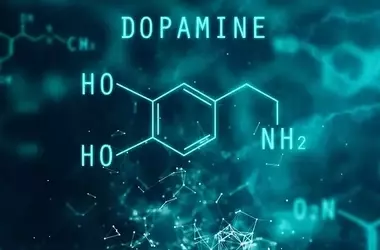
Social Support Fuels Courage: How Dopamine Rewires the Brain for Risk-Taking
New research in mice explores the neural pathways enabling companionship to enhance courage and reduce risk aversion. Scientists identified that social interaction alters dopamine neuron activity in the ventral tegmental area, shifting it from phasic (bursts) to tonic (steady) firing. This change influences distinct dopamine pathways leading to the basolateral amygdala and medial prefrontal cortex, ultimately promoting motivated exploration in dangerous situations. The study sheds light on the biological underpinnings of social support's impact on decision-making.
Brain Connectivity Illuminates Shame and Guilt in Autistic Traits
A recent study employing brain scans reveals a connection between distinct brain region communication patterns and the propensity for shame and guilt in individuals exhibiting elevated autistic characteristics. Specifically, the research points to the right frontal pole's interaction with cortical midline structures, particularly the precuneus, as a key neural mechanism influencing these emotional responses.

Neural Synchrony Between Mothers and Daughters Linked to Better Mental Health
A study published in Neuroscience reveals that when young girls observe their parents discussing their relationship, their brain activity aligns with their mothers'. This shared neural response is associated with fewer emotional difficulties in children. The research highlights how family environments shape early mental health, with maternal marital satisfaction enhancing this brain synchronization and promoting positive emotional development in daughters. This suggests a passive learning mechanism where children absorb emotional cues from their parents' interactions.