 Breaking News & Live Updates
- Breaking News & Live Updates
- Breaking News & Live Updates
- Breaking News & Live Updates
- Breaking News & Live Updates
- Breaking News & Live Updates
- Breaking News & Live Updates
- Breaking News & Live Updates
- Breaking News & Live Updates
- Breaking News & Live Updates
Researchers Uncover Brain 'Entrapment' Patterns in Depression
Recent scientific investigations have unveiled a profound neurological basis for the sensation of being ensnared in negative thought patterns often reported by individuals grappling with major depressive disorder. This groundbreaking study, featured in Nature Communications, illustrates that the depressed brain frequently cycles through particular activity configurations, akin to being physically trapped. This phenomenon highlights how compromised energetic pathways within the brain sustain these detrimental mental states.
Details of the Neuroscientific Breakthrough
Traditionally, studies on depression have focused on pinpointing static variations in brain activity. However, the human brain is a dynamic organ, continuously transitioning between diverse electrical and chemical states. These distinct patterns are termed brain states. The intricate network of nerve fibers, known as white matter, dictates how brain signals traverse, guiding these transitions. This process can be conceptualized as an energy landscape, where the brain naturally gravitates towards certain states that require less energy, much like water flowing into valleys.
Researchers questioned whether individuals with major depressive disorder (MDD) possess an altered energy landscape, compelling their brains to exert greater effort in navigating between typical states. A team from the Icahn School of Medicine at Mount Sinai in New York, spearheaded by postdoctoral fellow B. Ülgen Kilic and assistant professor of psychiatry Yael Jacob, aimed to explore how the brain's physical architecture influences its activity. Their hypothesis posited that the subjective experience of being "stuck" in depression might correlate with tangible changes in how the brain navigates this energy landscape.
The study involved participants diagnosed with MDD and healthy controls. Advanced magnetic resonance imaging (MRI) was employed to monitor spontaneous brain activity during rest, tracking changes in blood flow. Concurrently, diffusion tractography, an imaging method that traces water molecule movement along white matter fibers, was used to map the brain's structural wiring. By integrating activity data with structural maps, the team quantified the energetic cost of transitioning between brain states. A mathematical clustering algorithm identified four recurrent whole-brain activity patterns, each representing a unique functional configuration. These configurations ranged from heightened activity in the default mode network, associated with introspection, to increased activity in attention and sensory networks for external engagement.
A notable finding was the behavior surrounding "State 3," characterized by elevated activity in external attention and sensory processing regions and reduced internal thought network activity. Individuals with MDD frequented State 3 more often but for shorter durations, indicating a rapid, restless shifting. This volatility was linked to anhedonia, the inability to experience pleasure. As Kilic explained, the brain states were not necessarily stronger but appeared more frequently and were harder to disengage from, suggesting depression is a disorder of brain dynamics rather than just altered activity levels.
The depressed brain exhibited a pronounced tendency to loop between State 3 and State 2, the latter being associated with high activity in the default mode network and cognitive control, often correlating with rumination. This constant oscillation between these two states led to a neglect of other available patterns, showcasing cognitive rigidity. Healthy individuals, in contrast, smoothly transitioned between states, incurring low energy costs due to structurally supported pathways. However, depressed individuals consistently made high-energy transitions, battling against their brain's inherent structural preferences. The researchers concluded that the depressed brain becomes trapped in a "deep basin" within its energy landscape, necessitating extra effort for even basic functional loops. Jacob affirmed that this experience of being "stuck" directly reflects measurable changes in the brain's underlying dynamics.
While the study's structural wiring scans involved a relatively small sample size, and not all transitions were statistically significant, this research paves the way for future investigations. The team intends to apply this mapping technique to guide therapeutic interventions, potentially predicting the precise stimulation needed to dislodge a patient's brain from maladaptive loops. This could optimize treatments using magnetic fields or electric currents. It may also illuminate how medications, such as psychedelics or ketamine, alter the brain's landscape to facilitate healthier states. James Murrough, a co-author and director at the Depression and Anxiety Discovery Center at Mount Sinai, highlighted the clinical promise of this dynamic perspective, emphasizing its potential to refine our understanding of depression and accelerate the discovery of novel treatments. The research also aims to explore similar entrapment patterns in other psychiatric conditions and track patients over time to observe if the energy landscape normalizes with clinical improvement.
This study marks a significant stride in comprehending major depressive disorder not merely as an issue of isolated brain regions, but as a complex disorder of brain dynamics. By integrating advanced neuroimaging with sophisticated mathematical modeling, scientists are gaining unprecedented insight into the brain's large-scale activity patterns over time. This dynamic perspective offers profound implications for the future of mental health treatment, suggesting that personalized interventions could be developed to help brains navigate their internal landscapes more effectively, liberating individuals from the persistent grip of depressive cycles. The emphasis on 'entrapment' and energy landscapes provides a fresh lens through which to view and combat this debilitating condition.
Other Articles

Optimizing Your Diet for Cardiovascular Health
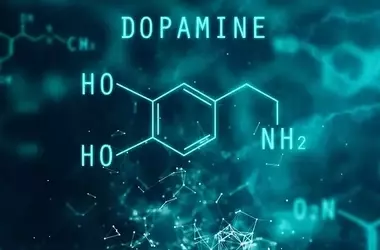
Social Support Fuels Courage: How Dopamine Rewires the Brain for Risk-Taking
New research in mice explores the neural pathways enabling companionship to enhance courage and reduce risk aversion. Scientists identified that social interaction alters dopamine neuron activity in the ventral tegmental area, shifting it from phasic (bursts) to tonic (steady) firing. This change influences distinct dopamine pathways leading to the basolateral amygdala and medial prefrontal cortex, ultimately promoting motivated exploration in dangerous situations. The study sheds light on the biological underpinnings of social support's impact on decision-making.

Brain Connectivity Illuminates Shame and Guilt in Autistic Traits
A recent study employing brain scans reveals a connection between distinct brain region communication patterns and the propensity for shame and guilt in individuals exhibiting elevated autistic characteristics. Specifically, the research points to the right frontal pole's interaction with cortical midline structures, particularly the precuneus, as a key neural mechanism influencing these emotional responses.

Neural Synchrony Between Mothers and Daughters Linked to Better Mental Health
A study published in Neuroscience reveals that when young girls observe their parents discussing their relationship, their brain activity aligns with their mothers'. This shared neural response is associated with fewer emotional difficulties in children. The research highlights how family environments shape early mental health, with maternal marital satisfaction enhancing this brain synchronization and promoting positive emotional development in daughters. This suggests a passive learning mechanism where children absorb emotional cues from their parents' interactions.
Undigested Fructose Linked to Anxiety and Brain Inflammation
Recent studies in both humans and animal models suggest a strong connection between unabsorbed dietary fructose, altered gut bacteria, and increased levels of anxiety and inflammation in the brain. This research indicates that consuming more fructose than the body can properly digest may disrupt the gut microbiome, triggering an immune response that negatively impacts mental well-being. This highlights a potential overlooked aspect of modern diets on psychological health.
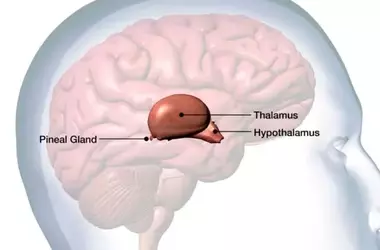
The Evolutionary Journey of Vertebrate Vision: From a Single 'Third Eye' to Complex Paired Organs
A groundbreaking study published in Current Biology proposes a revolutionary theory for the evolution of vertebrate eyes. It suggests that our complex paired eyes originated from a singular, central "third eye" in an ancient, worm-like ancestor. This research challenges conventional understanding by positing that light-sensing cells predated the eyes themselves, with remnants of this primordial visual system still influencing human brain functions like sleep regulation. The findings shed light on the unique cellular composition of vertebrate eyes, which distinctively blend two types of photoreceptors not seen elsewhere in the animal kingdom, hinting at a fascinating detour in our evolutionary visual pathway.