 Breaking News & Live Updates
- Breaking News & Live Updates
- Breaking News & Live Updates
- Breaking News & Live Updates
- Breaking News & Live Updates
- Breaking News & Live Updates
- Breaking News & Live Updates
- Breaking News & Live Updates
- Breaking News & Live Updates
- Breaking News & Live Updates
Understanding Cognitive Dissonance: Theories and Manifestations
The intricate realm of cognitive dissonance, initially described by Leon Festinger, posits that individuals experience mental unease when their internal thoughts or behaviors clash. This sensation, termed 'dissonance,' acts as a powerful motivator, compelling people to modify their perspectives or actions to alleviate the discomfort. Festinger's groundbreaking insights paved the way for a multitude of subsequent psychological frameworks and experimental investigations, some of which expanded upon, challenged, or reinterpreted his foundational ideas.

Several theoretical constructs further illuminate the diverse ways humans navigate cognitive inconsistencies. For instance, the self-consistency theory suggests that dissonance arises from a discrepancy between one's actions and their self-perception; an individual who values honesty but tells a lie will experience this conflict. To restore internal harmony, they might confess their untruth or subtly revise their self-image from 'always honest' to 'generally honest.' Other mechanisms include 'effort justification,' where substantial investment in an endeavor leads one to rationalize its worth, and 'belief disconfirmation,' a tendency to reinforce existing views even when confronted with contradictory evidence. This latter phenomenon can involve dismissing new information or creating justifications to protect deeply held convictions. Furthermore, 'selective exposure' describes the inclination to seek out information that validates pre-existing beliefs while avoiding content that challenges them, thereby reinforcing one's current worldview.
Ultimately, the study of cognitive dissonance offers profound insights into the human mind's enduring quest for coherence and psychological equilibrium. It reveals the often-unconscious strategies we employ to reconcile conflicting ideas and actions, illustrating our inherent drive to reduce mental tension and maintain a consistent sense of self. Recognizing these psychological processes allows for a deeper understanding of human behavior, fostering a more empathetic and insightful perspective on why individuals think and act the way they do.
Other Articles
 Feb 17, 2026
Understanding Cognitive Dissonance: Everyday Conflicts of Mind
Cognitive dissonance is a psychological phenomenon that frequently appears in daily life, causing internal conflict and discomfort. This mental state arises when an individual holds two or more conflicting beliefs, values, or behaviors. Such inconsistencies can stem from various sources, including discrepancies between beliefs and actions, difficult decision-making processes, external social pressures, and challenging moral or ethical predicaments.
 Feb 14, 2026
Understanding Cognitive Dissonance: The Mind's Internal Conflict
Cognitive dissonance is the mental discomfort experienced when one's beliefs, values, or ideas conflict with each other or with one's actions. This psychological phenomenon, first theorized by Leon Festinger in 1957, often leads to negative emotions like guilt or anxiety. While unpleasant, it can also serve as a powerful motivator for personal change, prompting individuals to resolve inconsistencies by altering their thoughts or behaviors to achieve internal harmony.
 Feb 11, 2026
Exploring the Delay in Emotional Responses Among Autistic Individuals
This article explores the phenomenon of delayed emotional responses often experienced by autistic individuals. It clarifies common misunderstandings that arise from this processing style, emphasizing that such emotions are valid. The piece offers practical advice for autistic people on self-management and provides guidance for their support networks, highlighting communication and self-compassion as key strategies.
 Feb 08, 2026
The Intricacies of Delayed Emotional Responses
Delayed emotional responses, characterized by a lag between an event and the subsequent emotional expression, can profoundly impact individuals and their relationships. This phenomenon often leads to misunderstandings, as others may not connect the delayed reaction to its original trigger. Such responses can manifest as initial numbness followed by an eventual outpouring of feeling, affecting personal relationships, professional interactions, self-esteem, and overall mental well-being.
 Feb 05, 2026
Understanding Delayed Emotional Responses in Autism
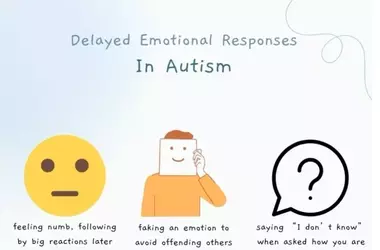
Many autistic individuals experience emotions with a delay, often hours or days after an event, which is not indifference but a characteristic of autistic processing. This phenomenon is influenced by factors such as sensory overload, detailed cognitive processing, alexithymia, and emotional masking, all of which contribute to the deferred experience and expression of feelings.
 Feb 03, 2026
Navigating Childhood Anxiety: A Comprehensive Guide for Parents and Educators
This article explores the complexities of childhood anxiety, providing guidance for parents and educators on distinguishing normal developmental anxieties from anxiety disorders. It discusses common symptoms, the importance of facing fears, and when to seek professional help. The piece also delves into effective treatment approaches, such as Cognitive Behavioral Therapy (CBT) and exposure therapy, offering insights into supporting children's mental well-being.