 Breaking News & Live Updates
- Breaking News & Live Updates
- Breaking News & Live Updates
- Breaking News & Live Updates
- Breaking News & Live Updates
- Breaking News & Live Updates
- Breaking News & Live Updates
- Breaking News & Live Updates
- Breaking News & Live Updates
- Breaking News & Live Updates
Understanding Cognitive Dissonance: The Mind's Internal Conflict
Cognitive dissonance refers to the internal unease that arises when an individual holds conflicting ideas, convictions, or principles, or when their actions contradict their deeply held beliefs. This psychological phenomenon, first introduced by Leon Festinger in 1957, explains the mental discomfort that pushes people to seek consistency between their thoughts and behaviors. It manifests as negative emotions such as anxiety, guilt, or regret, compelling individuals to reconcile these disparities. While often perceived as negative, this internal conflict can serve as a potent catalyst for self-improvement and behavioral modification, guiding individuals towards aligning their actions with their values.
Consider a scenario where an individual committed to a healthy lifestyle indulges excessively in alcohol one evening. The ensuing morning might bring a wave of anxiety and self-reproach, illustrating cognitive dissonance in action. Similarly, uttering a falsehood can trigger a profound sense of guilt. To alleviate this psychological tension, the individual might vow abstinence from alcohol for a period or rationalize the lie as an unavoidable necessity. These coping mechanisms are direct responses to the discomfort generated by the clash between personal values and actual conduct. Festinger's groundbreaking theory offered a novel framework for understanding how people internalize their moral compass, form their perspectives, and evaluate the consequences of their choices.

Although the experience of cognitive dissonance is inherently unpleasant, it isn't always detrimental. In fact, this internal struggle can be a powerful driver for positive change. For instance, if someone aims to enhance their overall well-being but consistently consumes unhealthy foods, the discomfort stemming from this inconsistency can motivate them to adopt better eating habits. The desire to reduce this dissonance can lead to a re-evaluation of choices and a proactive effort to align actions with long-term goals. Therefore, what feels like an internal battle can ultimately lead to constructive modifications in lifestyle and perspective.
However, if the gap between beliefs and actions becomes chronic or extreme, cognitive dissonance can lead to significant psychological distress. Continuously yielding to peer pressure and engaging in activities that violate one's personal ethics can trap an individual in a cycle of regret and self-loathing. Similarly, repeated failures to adhere to personal commitments, such as a dietary plan, can erode self-confidence and foster self-criticism. Even when consciously ignored, the underlying tension of cognitive dissonance can manifest as physical symptoms, including heightened stress and bodily discomfort. Acknowledging and addressing these internal conflicts is crucial for mental and emotional equilibrium, regardless of the intensity of the discomfort experienced.
Ultimately, the internal conflict known as cognitive dissonance, though challenging, offers a unique opportunity for self-reflection and personal growth. It highlights the inherent human drive for consistency and serves as an indicator when our actions deviate from our core principles. By understanding and addressing these inconsistencies, individuals can proactively work towards greater internal harmony, leading to more intentional and value-aligned living. This process of realigning beliefs, values, and behaviors is fundamental to navigating life's complexities with integrity and a sense of well-being.
Other Articles
 Feb 11, 2026
Exploring the Delay in Emotional Responses Among Autistic Individuals
This article explores the phenomenon of delayed emotional responses often experienced by autistic individuals. It clarifies common misunderstandings that arise from this processing style, emphasizing that such emotions are valid. The piece offers practical advice for autistic people on self-management and provides guidance for their support networks, highlighting communication and self-compassion as key strategies.
 Feb 08, 2026
The Intricacies of Delayed Emotional Responses
Delayed emotional responses, characterized by a lag between an event and the subsequent emotional expression, can profoundly impact individuals and their relationships. This phenomenon often leads to misunderstandings, as others may not connect the delayed reaction to its original trigger. Such responses can manifest as initial numbness followed by an eventual outpouring of feeling, affecting personal relationships, professional interactions, self-esteem, and overall mental well-being.
 Feb 05, 2026
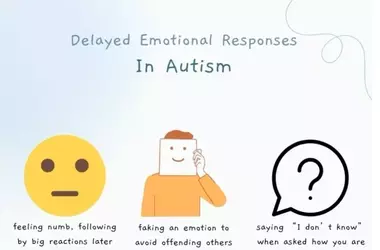
Understanding Delayed Emotional Responses in Autism
Many autistic individuals experience emotions with a delay, often hours or days after an event, which is not indifference but a characteristic of autistic processing. This phenomenon is influenced by factors such as sensory overload, detailed cognitive processing, alexithymia, and emotional masking, all of which contribute to the deferred experience and expression of feelings.
 Feb 03, 2026
Navigating Childhood Anxiety: A Comprehensive Guide for Parents and Educators
This article explores the complexities of childhood anxiety, providing guidance for parents and educators on distinguishing normal developmental anxieties from anxiety disorders. It discusses common symptoms, the importance of facing fears, and when to seek professional help. The piece also delves into effective treatment approaches, such as Cognitive Behavioral Therapy (CBT) and exposure therapy, offering insights into supporting children's mental well-being.
 Jan 01, 2026
Fitness Trackers Accurately Identify Mood Episodes in Bipolar Disorder
A recent study highlights the capability of fitness trackers to detect mood episodes in individuals with bipolar disorder. Utilizing passively collected, non-invasive data combined with machine learning, researchers achieved high accuracy in identifying both manic and depressive states. These findings suggest a significant advancement in real-time mental health monitoring, offering a promising avenue for improving clinical care by enabling earlier intervention and personalized treatment strategies.
 Jan 10, 2026
Parental Mental Illness Escalates Risk of Childhood Psychopathology
A recent extensive study confirms a heightened risk of mental health challenges in children whose parents live with schizophrenia or bipolar disorder, in contrast to their peers whose parents do not have such diagnoses. Spanning four years, the research observed 238 children, noting distinct symptom patterns tied to the specific parental diagnosis. Children with a parent diagnosed with schizophrenia frequently displayed attention deficits, disruptive behaviors, and subclinical psychotic tendencies, whereas those with bipolar parents more often exhibited mood-related symptoms and subclinical bipolar indicators. The study also identified protective elements like robust parental functionality and elevated socioeconomic status as factors that mitigate these risks, underscoring the critical need for early monitoring and supportive interventions.