 Breaking News & Live Updates
- Breaking News & Live Updates
- Breaking News & Live Updates
- Breaking News & Live Updates
- Breaking News & Live Updates
- Breaking News & Live Updates
- Breaking News & Live Updates
- Breaking News & Live Updates
- Breaking News & Live Updates
- Breaking News & Live Updates
Understanding Cognitive Dissonance: Everyday Conflicts of Mind
Explore the common psychological phenomenon of cognitive dissonance and its varied manifestations in our daily lives, from personal habits to social interactions.
Navigating the Inner Turmoil: Unraveling Cognitive Dissonance
The Daily Incursion of Mental Discomfort
Cognitive dissonance, a state of mental unease, is a recurring visitor in our everyday experiences. This internal conflict might sometimes be swiftly resolved through rationalization or simply pushed aside. Yet, there are instances where this dissonance lingers, causing prolonged discomfort and mental strain. Several situations frequently trigger this psychological state.

When Actions Betray Convictions
A common scenario leading to dissonance involves a stark contrast between one's deeply held beliefs and actual behaviors. Consider, for example, the individual who firmly believes in the importance of reducing sugar intake for health but routinely succumbs to the temptation of purchasing and consuming sugary treats after work. This clash between belief and action exemplifies a classic instance of cognitive dissonance.
The Quandary of Choice: Navigating Difficult Decisions
Decision-making processes are fertile ground for cognitive dissonance, especially when faced with equally appealing or unappealing options. Imagine grappling with the dilemma of choosing between a product known for its ethical sourcing practices and a more affordable alternative. The internal conflict arising from these choices is a clear indicator of dissonance at play.
Societal Pressures and the Erosion of Authenticity
External social dynamics often compel individuals into actions or expressions that contradict their genuine sentiments. For instance, being part of a particular social circle might lead one to laugh at distasteful jokes, despite finding them inherently offensive. This capitulation to social pressure, at odds with personal values, generates significant internal dissonance.
Confronting Moral Labyrinth: Ethical Predicaments
Moral and ethical dilemmas frequently ignite cognitive dissonance. An individual might find themselves supporting a political figure whose legislative agenda aligns with their moral compass, yet simultaneously harbor strong reservations about the politician's integrity due to perceived corruption. This conflict between moral alignment and ethical judgment is a powerful source of dissonance.
Other Articles
 Feb 14, 2026
Understanding Cognitive Dissonance: The Mind's Internal Conflict
Cognitive dissonance is the mental discomfort experienced when one's beliefs, values, or ideas conflict with each other or with one's actions. This psychological phenomenon, first theorized by Leon Festinger in 1957, often leads to negative emotions like guilt or anxiety. While unpleasant, it can also serve as a powerful motivator for personal change, prompting individuals to resolve inconsistencies by altering their thoughts or behaviors to achieve internal harmony.
 Feb 11, 2026
Exploring the Delay in Emotional Responses Among Autistic Individuals
This article explores the phenomenon of delayed emotional responses often experienced by autistic individuals. It clarifies common misunderstandings that arise from this processing style, emphasizing that such emotions are valid. The piece offers practical advice for autistic people on self-management and provides guidance for their support networks, highlighting communication and self-compassion as key strategies.
 Feb 08, 2026
The Intricacies of Delayed Emotional Responses
Delayed emotional responses, characterized by a lag between an event and the subsequent emotional expression, can profoundly impact individuals and their relationships. This phenomenon often leads to misunderstandings, as others may not connect the delayed reaction to its original trigger. Such responses can manifest as initial numbness followed by an eventual outpouring of feeling, affecting personal relationships, professional interactions, self-esteem, and overall mental well-being.
 Feb 05, 2026
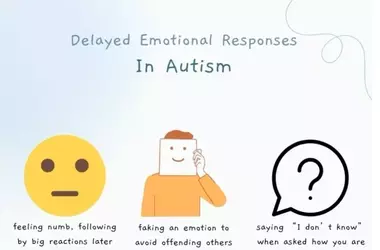
Understanding Delayed Emotional Responses in Autism
Many autistic individuals experience emotions with a delay, often hours or days after an event, which is not indifference but a characteristic of autistic processing. This phenomenon is influenced by factors such as sensory overload, detailed cognitive processing, alexithymia, and emotional masking, all of which contribute to the deferred experience and expression of feelings.
 Feb 03, 2026
Navigating Childhood Anxiety: A Comprehensive Guide for Parents and Educators
This article explores the complexities of childhood anxiety, providing guidance for parents and educators on distinguishing normal developmental anxieties from anxiety disorders. It discusses common symptoms, the importance of facing fears, and when to seek professional help. The piece also delves into effective treatment approaches, such as Cognitive Behavioral Therapy (CBT) and exposure therapy, offering insights into supporting children's mental well-being.
 Jan 01, 2026
Fitness Trackers Accurately Identify Mood Episodes in Bipolar Disorder
A recent study highlights the capability of fitness trackers to detect mood episodes in individuals with bipolar disorder. Utilizing passively collected, non-invasive data combined with machine learning, researchers achieved high accuracy in identifying both manic and depressive states. These findings suggest a significant advancement in real-time mental health monitoring, offering a promising avenue for improving clinical care by enabling earlier intervention and personalized treatment strategies.