 Breaking News & Live Updates
- Breaking News & Live Updates
- Breaking News & Live Updates
- Breaking News & Live Updates
- Breaking News & Live Updates
- Breaking News & Live Updates
- Breaking News & Live Updates
- Breaking News & Live Updates
- Breaking News & Live Updates
- Breaking News & Live Updates
The Rise of AI in Mental Health Support: A Global Perspective
In an era where conventional healthcare systems grapple with extensive waitlists and escalating expenses, a sweeping international survey underscores a notable shift in public confidence towards Artificial Intelligence. This comprehensive study, encompassing 31,000 adults across 35 nations, reveals that 41% of adults in the UK and 61% globally are now open to utilizing ChatGPT as a mental health advisor. While the impartial nature and constant availability of AI tools offer comfort and a sense of connection to many, specialists caution that these platforms cannot substitute professional therapeutic intervention. Furthermore, concerns are being raised regarding their potential enduring effects on cognitive abilities, such as recall and cognitive assimilation.
The study, spearheaded by Bournemouth University, delves into the attitudes of individuals towards large language models, including ChatGPT, in fulfilling crucial societal roles. It reveals that a substantial portion of the population is ready to entrust AI with roles traditionally held by humans, extending beyond mental health support to education and even medical advice. This growing reliance on AI is particularly evident in regions where access to human professionals is limited or costly, suggesting that AI is perceived as a viable alternative.
A striking finding is the high willingness to use AI for mental health counseling. In the UK, 41% of respondents expressed comfort with this idea, a figure that rises to 61% globally. Researchers propose that the prolonged waiting periods for mental health services in countries like the UK contribute significantly to this trend. The immediate availability of AI, without the bureaucratic hurdles, makes it an attractive option for those seeking prompt support. However, experts like Dr. Ala Yankouskaya from Bournemouth University, who led the study, emphasize that while AI can offer preliminary support, its responses are often too generalized and cautious to provide definitive diagnoses or tailored advice, making it an inadequate replacement for human expertise.
Beyond mental health, the study uncovered public readiness to delegate educational responsibilities to AI, with a quarter of UK adults and half of global respondents willing to have AI teach their children. This particular finding raised considerable apprehension among the research team. Dr. Yankouskaya expressed concern about the long-term implications for children's cognitive development, suggesting that over-reliance on AI for learning might cultivate a generation proficient in 'prompt-focused' learning but lacking in deep comprehension and information retention. There are also worries about the potential physical impact on the brain, specifically a possible reduction in the hippocampus's size, a region vital for memory and spatial awareness, if traditional learning is supplanted by excessive dependence on search engines and AI tools.
The survey also highlighted a readiness among 45% of global respondents and 25% in the UK to trust AI as a medical doctor. This trust was notably higher in nations where healthcare is expensive or difficult to access, indicating AI's role as a fallback in underserved areas. Yet, researchers pointed out the risks associated with AI's inherent design to maintain user engagement, which might prioritize comfort over potentially critical, direct advice, such as directing users to emergency services like The Samaritans in mental health crises. The highest level of public trust in AI was observed in its capacity as a companion, with over three-quarters globally and more than half in the UK willing to engage with ChatGPT for friendship. This phenomenon is attributed to AI's ability to adapt its tone, remember past conversations, and provide a non-judgmental space, fostering a sense of empathy and security for users.
As AI's presence in daily life solidifies, the study's conclusions highlight an urgent need for greater public understanding of how generative AI tools operate and their inherent limitations. The uncertainties surrounding the long-term cognitive effects, particularly on memory, necessitate a cautious approach before these technologies assume more significant roles, especially in educational settings. A deeper societal awareness of these implications is paramount to navigate the evolving landscape of human-AI interaction responsibly.
Other Articles
 Mar 07, 2026
Blocking a Common Brain Gas Reverses Autism-Like Traits in Mice
Researchers have uncovered a novel biological pathway demonstrating how elevated levels of nitric oxide in the brain contribute to cellular overactivity in autism spectrum disorder. By identifying how nitric oxide inactivates a protective protein, TSC2, which normally regulates cell growth, scientists have found a specific target for potential future therapies. This discovery offers a promising direction for developing new treatments for autism.
 Mar 07, 2026
Brain Structure Differences Found in BPD Patients With Auditory Hallucinations
New research suggests that individuals with borderline personality disorder who experience auditory hallucinations exhibit distinct structural differences in specific brain regions. These variations are observed in areas linked to language processing, sensory integration, and emotional regulation. The findings imply that hallucinations may stem from shared biological mechanisms across various mental health conditions, offering fresh perspectives on the neurobiological underpinnings of these symptoms.
 Mar 06, 2026
Psychedelic-like Effects of Psilocybin Therapy: The Next Generation
Scientists have developed modified versions of psilocin, the active compound in 'magic mushrooms,' that could provide therapeutic benefits without hallucinogenic effects. This research, published in ACS's Journal of Medicinal Chemistry, focuses on a new derivative named 4e, which offers a slow, sustained release into the brain. In animal models, 4e successfully stimulated key serotonin receptors and showed reduced psychedelic indicators, suggesting a promising future for treating neuropsychiatric conditions like depression and anxiety.
 Mar 06, 2026
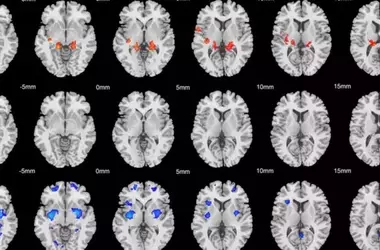
Brain Scans Uncover Two Distinct ADHD Subtypes
A groundbreaking study published in 'General Psychiatry' reveals that Attention-Deficit/Hyperactivity Disorder (ADHD) is not a monolithic condition but comprises at least two distinct structural brain subtypes. Utilizing MRI data, researchers identified unique physical characteristics and behavioral patterns associated with each subtype. This discovery paves the way for highly personalized diagnostic and treatment strategies, moving beyond current generalized approaches. The findings highlight the complexity of ADHD and the potential for precision medicine in neurodevelopmental disorders.
 Mar 06, 2026
ADHD Medication's Long-Term Impact on Brain Development
A recent study published in "Progress in Neuro-Psychopharmacology and Biological Psychiatry" indicates that the extended use of stimulant medications for ADHD does not result in permanent alterations to brain development. The research followed adolescents and adults with ADHD, examining brain responses to methylphenidate over four years. While short-term effects were observed, they did not persist, suggesting the brain's neuroplasticity. The findings offer reassurance regarding the safety of long-term stimulant therapy for ADHD.
 Mar 05, 2026
Neuroscientific Study Reveals Link Between Visual Brain Network Hyperactivity and Social Anxiety
A recent neuroscience study published in "Psychiatry Research: Neuroimaging" indicates that young adults with elevated social anxiety exhibit distinct patterns of heightened activity and altered communication within the brain's visual centers. These findings suggest that recognizing these early neurological changes could facilitate the detection and treatment of severe social anxiety before its full manifestation, offering a new avenue for intervention in managing this debilitating condition.