 Breaking News & Live Updates
- Breaking News & Live Updates
- Breaking News & Live Updates
- Breaking News & Live Updates
- Breaking News & Live Updates
- Breaking News & Live Updates
- Breaking News & Live Updates
- Breaking News & Live Updates
- Breaking News & Live Updates
- Breaking News & Live Updates
The Profound Link Between Warmth, Hugging, and Self-Perception
Our sense of self, deeply intertwined with our physical body, is profoundly influenced by external warmth and the comforting embrace of a hug. A groundbreaking review has illuminated how subtle shifts in skin temperature, a phenomenon termed 'thermoception,' are not merely physiological responses but are fundamental to forging our embodied identity. This intricate connection between our skin and brain serves as a vital conduit for self-awareness, shaping our emotions and overall mental health.
The Intimate Connection Between Skin Temperature and Self-Perception
In a world where winter's chill sharpens our perception of freezing extremities and a warm embrace melts away external discomfort, it becomes evident that temperature is more than just a physical sensation. A recent comprehensive review published in Trends in Cognitive Sciences challenges the traditional view, proposing that 'thermoception'—our ability to sense changes in skin temperature—is a crucial, yet often overlooked, pathway that directly influences our bodily self-awareness. This research, spearheaded by Dr. Laura Crucianelli, a Lecturer in Psychology at Queen Mary University of London, and Professor Gerardo Salvato from the University of Pavia, meticulously synthesizes decades of findings across neuroscience, psychology, and clinical science. Their work reveals that the ancient sense of temperature not only contributes to our survival and comfort but also profoundly impacts our emotions, personal identity, and mental well-being. Dr. Crucianelli emphasizes that warmth, a primary signal of protection experienced from the womb onward, helps us feel connected to ourselves. Disturbances in this thermal perception have been observed in various mental health conditions, including eating disorders, depression, anxiety, and trauma-related disorders, where individuals often report a sense of detachment from their bodies. For instance, Dr. Salvato highlights that patients with brain strokes exhibiting altered temperature regulation may struggle to recognize parts of their bodies as their own. These discoveries hold significant implications for developing novel sensory-based therapeutic interventions, enhancing the natural feel of prosthetic devices, and understanding how environmental temperature fluctuations, such as those caused by climate change, might influence mood and cognitive functions. The review ultimately explains that the warmth and tactile signals exchanged during a hug engage specialized C-tactile afferents and thermosensitive pathways, leading to increased body ownership, reduced stress through oxytocin release, and an amplified sense of self and social connection. As Dr. Crucianelli eloquently puts it, "Warm touch reminds us that we are connected, valued, and part of a social world."
This innovative research underscores the profound impact of our most basic senses on our complex psychological landscape. It offers a compelling perspective on how physical interactions, particularly those involving warmth and touch, are essential for fostering a robust sense of self and enhancing overall well-being. The findings pave the way for future explorations into sensory integration and its therapeutic potential, inviting us to reconsider the subtle yet powerful ways our physical environment shapes our inner experience.
Other Articles
 Dec 05, 2025
Brain Plasticity Peaks at Day's End, Study Finds
New research suggests the brain's ability to learn and form memories may be highest at the end of the day, despite feelings of fatigue. This challenges the notion that optimal cognitive function aligns with peak alertness, proposing specific temporal windows for neural processing and adaptation.
 Dec 05, 2025
MAPP Magazine: Global Perspectives on Well-Being
This edition of MAPP Magazine explores the multifaceted nature of well-being across different cultures, moving beyond the Western-centric view that has often dominated positive psychology research. It highlights concepts like Japanese "ikigai," the Latin American well-being paradox, and Finnish "sisu," emphasizing that a truly comprehensive understanding of human flourishing requires diverse cultural insights. The articles presented aim to broaden perspectives on what constitutes a meaningful and happy life globally.
 Dec 05, 2025
The Complex Relationship Between Pet Ownership and Mental Well-being
Recent research challenges the common belief that strong pet attachments universally lead to better mental health. A comprehensive review of over 100 studies reveals mixed findings, with many showing no link or even a negative correlation between intense pet bonds and psychological well-being. Notably, anxious attachment styles in pet owners are frequently associated with increased distress, suggesting that the nature, rather than just the strength, of the human-animal bond plays a critical role in mental health outcomes.
 Dec 05, 2025
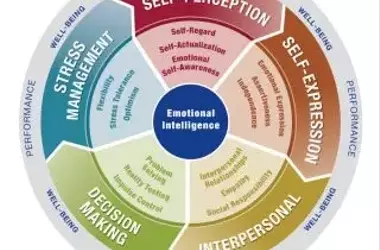
Emotional Intelligence: A Skill for Better Decision-Making
A recent study from Victoria University explores the role of emotional intelligence (EI) in high-stakes decision-making. Researchers found that understanding one's own emotions is a crucial component of EI, enabling individuals to make more rational choices, particularly in situations involving risk. This highlights the practical value of emotional awareness in navigating complex life scenarios.
 Dec 05, 2025
AI Detects Hidden Stress Markers in the Body
Researchers have pioneered an AI-powered tool capable of identifying chronic stress by measuring the volume of adrenal glands using standard chest CT scans. This innovative biomarker correlates with cortisol levels, stress assessments, and future cardiovascular risks, marking a significant advancement in quantifying the body's stress burden through imaging. The study highlights that increased adrenal volume is linked to heightened stress, greater allostatic load, and an elevated risk of heart failure and mortality, offering a scalable solution for early stress detection without additional procedures.
 Dec 05, 2025
Unlocking Happiness: A Neuroscientific Approach to Well-being Measurement
This article delves into an innovative neuroscientific method for quantifying happiness, moving beyond subjective self-reports. It introduces 'Immersion,' a brain network identified through two decades of research, which objectively measures social-emotional experiences. The piece highlights how this discovery, coupled with advances in wearable technology, led to the creation of a free app, 'SIX,' designed to help individuals enhance their emotional fitness and foster greater happiness by tracking valuable life experiences.