 Breaking News & Live Updates
- Breaking News & Live Updates
- Breaking News & Live Updates
- Breaking News & Live Updates
- Breaking News & Live Updates
- Breaking News & Live Updates
- Breaking News & Live Updates
- Breaking News & Live Updates
- Breaking News & Live Updates
- Breaking News & Live Updates
Brain Plasticity Peaks at Day's End, Study Finds
A recent scientific inquiry has brought forth compelling evidence that the brain's capacity for processing new information and adapting undergoes a rhythmic, 24-hour fluctuation. The research indicates that while individuals may experience heightened tiredness towards the conclusion of their active period, this specific timeframe could simultaneously enhance the brain's aptitude for acquiring new knowledge and solidifying memories. These discoveries imply that our brains are structured to create distinct periods, each optimally suited for various modes of neural activity.
Unveiling the Brain's Daily Rhythms in Neural Processing
In a groundbreaking study published in Neuroscience Research, Professors Yoko Ikoma and Ko Matsui from Tohoku University spearheaded an investigation into the brain's intricate daily cycles. Unlike the unwavering consistency of mechanical systems, the brain operates within a dynamic internal environment, influenced by elements such as metabolic rates, hormonal shifts, and the accumulating pressure for sleep throughout the day and night. The researchers emphasized that neural circuits are not static electronic systems; rather, they exhibit variable responses to identical inputs based on an organism's internal state. This variability in responsiveness and metaplasticity is believed to stem from daily changes in ions and neuromodulatory molecules surrounding neurons. The study sought to elucidate how these physiological rhythms, governed by the interplay of the circadian clock and external light-dark cycles, impact brain chemistry, neuronal excitability, and overall plasticity.
The research team meticulously examined the primary visual cortex of nocturnal Wistar rats to understand these diurnal rhythms. Employing optogenetics, a sophisticated technique involving genetically modified rats with light-sensitive proteins in their neurons, they were able to precisely stimulate neural activity using blue light pulses. This innovative approach circumvented the electrical interference common in conventional recording methods. Electrodes were implanted to monitor local field potentials, reflecting the collective electrical activity of neuron groups. The rats, housed under a controlled 12-hour light-dark cycle, were observed during their active dark phase. The researchers defined 'sunrise' as the end of the rats' active period and 'sunset' as the onset of their wakefulness.
By applying identical light pulses to the visual cortex at various times over several days, the researchers observed a clear diurnal pattern in neural responses. Despite consistent stimulus intensity, neural signals were strongest just before sunset, when the rats were beginning their active phase, and weakest just before sunrise, after a full night of activity. This suggests a reduced excitability of the visual cortex following prolonged wakefulness. To uncover the underlying chemical mechanism, the team explored the role of adenosine, a neuromodulator that accumulates with wakefulness and signals sleep pressure. They hypothesized that high adenosine levels at the end of the active phase dampened neural activity. Administering DPCPX, an adenosine A1 receptor antagonist, successfully blocked adenosine's action, eliminating the suppression of neural activity at sunrise. This confirmed adenosine's role in regulating neural excitability.
The investigation further delved into metaplasticity, the brain's potential for synaptic strength alteration. Using rapid, repetitive light pulses to simulate a learning event, they discovered a paradoxical finding: at sunset, when rats were alert and neural excitability was high, this stimulation failed to induce significant plasticity. Conversely, at sunrise, when rats were fatigued and excitability was low, the same stimulation triggered robust long-term potentiation, a process critical for memory storage. This suggests that while fatigue may decrease immediate neural responsiveness, it may simultaneously create an optimal window for brain reorganization and memory formation.
For humans, who are diurnal, these findings suggest that the period analogous to the rats' 'sunrise' is the human evening, just before sleep. This is when human adenosine levels are highest after a day's activity. Therefore, the human brain might be most adaptable during this twilight period, despite feelings of tiredness, indicating an optimal time for consolidating new information. The researchers propose that the brain fine-tunes the balance between stability and flexibility throughout the day, shifting from immediate environmental reactivity in the morning to internal reorganization and memory consolidation towards evening.
While the study primarily focused on the visual cortex of nocturnal animals, further research is needed to determine if these rhythmic patterns extend to other brain regions and to diurnal species, including humans. Understanding these daily rhythms holds significant promise for practical applications in education and rehabilitation, potentially enabling more effective timing of brain stimulation therapies and skills training to coincide with periods of peak adaptability.
This research offers a profound insight into the sophisticated temporal organization of our brain's functions. It prompts a reconsideration of our daily routines and learning strategies, suggesting that the most productive times for certain cognitive tasks might not align with when we feel most energetic. Embracing these natural rhythms could unlock new potentials for enhancing learning, memory, and overall cognitive performance in both educational and therapeutic contexts.
Other Articles
 Dec 05, 2025
MAPP Magazine: Global Perspectives on Well-Being
This edition of MAPP Magazine explores the multifaceted nature of well-being across different cultures, moving beyond the Western-centric view that has often dominated positive psychology research. It highlights concepts like Japanese "ikigai," the Latin American well-being paradox, and Finnish "sisu," emphasizing that a truly comprehensive understanding of human flourishing requires diverse cultural insights. The articles presented aim to broaden perspectives on what constitutes a meaningful and happy life globally.
 Dec 05, 2025
The Complex Relationship Between Pet Ownership and Mental Well-being
Recent research challenges the common belief that strong pet attachments universally lead to better mental health. A comprehensive review of over 100 studies reveals mixed findings, with many showing no link or even a negative correlation between intense pet bonds and psychological well-being. Notably, anxious attachment styles in pet owners are frequently associated with increased distress, suggesting that the nature, rather than just the strength, of the human-animal bond plays a critical role in mental health outcomes.
 Dec 05, 2025
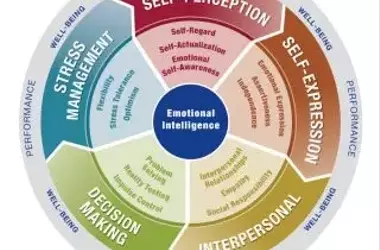
Emotional Intelligence: A Skill for Better Decision-Making
A recent study from Victoria University explores the role of emotional intelligence (EI) in high-stakes decision-making. Researchers found that understanding one's own emotions is a crucial component of EI, enabling individuals to make more rational choices, particularly in situations involving risk. This highlights the practical value of emotional awareness in navigating complex life scenarios.
 Dec 05, 2025
AI Detects Hidden Stress Markers in the Body
Researchers have pioneered an AI-powered tool capable of identifying chronic stress by measuring the volume of adrenal glands using standard chest CT scans. This innovative biomarker correlates with cortisol levels, stress assessments, and future cardiovascular risks, marking a significant advancement in quantifying the body's stress burden through imaging. The study highlights that increased adrenal volume is linked to heightened stress, greater allostatic load, and an elevated risk of heart failure and mortality, offering a scalable solution for early stress detection without additional procedures.
 Dec 05, 2025
Unlocking Happiness: A Neuroscientific Approach to Well-being Measurement
This article delves into an innovative neuroscientific method for quantifying happiness, moving beyond subjective self-reports. It introduces 'Immersion,' a brain network identified through two decades of research, which objectively measures social-emotional experiences. The piece highlights how this discovery, coupled with advances in wearable technology, led to the creation of a free app, 'SIX,' designed to help individuals enhance their emotional fitness and foster greater happiness by tracking valuable life experiences.
 Dec 05, 2025
Understanding Biophobia: Causes and Solutions for the Growing Fear of Nature
A recent study from Lund University delves into the escalating phenomenon of biophobia, defined as an aversion to nature. This comprehensive review synthesizes nearly 200 scientific articles, revealing that negative sentiments towards natural environments are shaped by a combination of external factors, such as urban living and media influence, and internal elements like individual health and emotional dispositions. The research highlights that reduced interaction with nature perpetuates avoidance, consequently diminishing exposure to its established mental and physical health benefits. Early positive encounters with nature and the cultivation of greener urban landscapes are proposed as vital strategies to counteract this emerging trend.