 Breaking News & Live Updates
- Breaking News & Live Updates
- Breaking News & Live Updates
- Breaking News & Live Updates
- Breaking News & Live Updates
- Breaking News & Live Updates
- Breaking News & Live Updates
- Breaking News & Live Updates
- Breaking News & Live Updates
- Breaking News & Live Updates
Understanding Biophobia: Causes and Solutions for the Growing Fear of Nature
An increasing number of individuals across various age groups and cultures are experiencing a growing sense of fear, discomfort, or even revulsion towards the natural world, a phenomenon termed biophobia. This aversion is profoundly influenced by a mix of external and internal elements. External pressures, such as the relentless expansion of urban environments and prevailing media narratives, often shape perceptions. Concurrently, internal factors, including one's health status and emotional predispositions, also play a significant role. This disconnect from nature not only exacerbates avoidance but also deprives individuals of the well-documented mental and physical health advantages that natural environments offer. Addressing this escalating issue necessitates fostering early, positive interactions with nature and integrating more green spaces within urban settings.
Historically, research often presumed that humans harbored an intrinsic positive affinity for nature. However, a groundbreaking investigation led by Johan Kjellberg Jensen at Lund University has pivoted to explore the inverse—the dynamics of a negative relationship with nature. This study systematically compiled and analyzed close to 200 scholarly articles from diverse fields, including environmental sciences, psychology, and social sciences, to construct a holistic understanding of biophobia. This extensive review sheds light on how such aversions emerge, their far-reaching consequences, and potential avenues for intervention.
The findings indicate a discernible decline in humanity's relationship with various facets of nature, including animals and plants, over time. Jensen underscores that this erosion of connection creates a detrimental feedback loop: a scarcity of direct engagement with nature, coupled with limited knowledge about it, reinforces negative perceptions. Particularly concerning is the impact of urbanization, which, when combined with parental attitudes, can instill heightened feelings of fear and perceived danger in children concerning natural environments, especially as more young people are raised in bustling cities.
The health benefits derived from contact with nature, such as stress reduction and improved academic performance in children, are extensively documented. The study reveals that biophobia prevents individuals from reaping these crucial health advantages. Moreover, it cultivates attitudes and behaviors that directly undermine conservation efforts and sustainability initiatives. This can manifest as an irrational aversion to species that are, in reality, harmless or even beneficial to local ecosystems.
To combat biophobia effectively, Jensen advocates for a multi-faceted approach. A pivotal step involves increasing direct exposure to nature. This can be achieved through the strategic development of green infrastructure and the enhancement of biodiversity within urban areas, offering children vital early positive experiences with nature. Furthermore, a deeper understanding of the underlying mechanisms that fuel these negative emotions is essential for developing comprehensive and effective solutions. By bridging the knowledge gap and addressing specific points of conflict between human activities and natural ecosystems, it may be possible to reverse the prevailing trend of increasing aversion towards nature.
In essence, the study highlights a critical contemporary challenge: the growing human estrangement from the natural world. This alienation, driven by a confluence of societal and individual factors, not only impacts personal well-being but also impedes global conservation efforts. Recognizing the multifaceted nature of biophobia and implementing targeted strategies that promote positive early experiences and urban greening are crucial for fostering a healthier, more sustainable coexistence with our planet. The synthesis of diverse research provides a robust foundation for future interdisciplinary collaborations aimed at transforming aversion into appreciation for nature.
Other Articles
 Dec 05, 2025
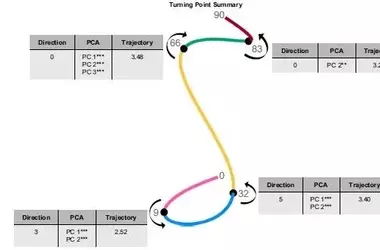
The Dynamic Evolution of the Human Brain: Five Epochs of Development
A groundbreaking study published in Nature Communications unveils a detailed analysis of how the human brain's structural networks transform across the lifespan. By examining diffusion MRIs from over 4,000 individuals ranging from infancy to old age, researchers identified four distinct 'turning points' that delineate five unique epochs of brain development. This research challenges earlier, simpler models, offering a multivariate and non-linear perspective on neural evolution, with profound implications for understanding cognitive function, mental health, and potential future interventions.
 Dec 05, 2025
MAPP Magazine: Embracing Collective Well-being
This article explores the October 2024 issue of MAPP Magazine, which delves into the evolving field of positive psychology. Moving beyond individual happiness, the magazine focuses on the "third wave" – considering well-being within groups, communities, and society as a whole. It features articles on collective joy, community connection, positive public service, and an interview with Dr. Tim Lomas, highlighting the importance of shared well-being in a world often marked by disconnection.
 Dec 05, 2025
Unlocking AI's Mind: Bridging Cognitive Science and Machine Learning
Recent research reveals how large language models (LLMs) develop social reasoning and 'theory of mind' (ToM), offering a pathway to more energy-efficient and transparent AI. By examining specific parameters within LLMs, scientists found that perturbing a tiny fraction of these parameters can significantly alter ToM capabilities, particularly those connected to positional encoding. This breakthrough not only sheds light on the internal workings of AI but also holds the potential to enhance AI ethics and improve human-AI interactions.
 Dec 05, 2025
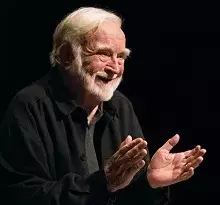
The Enduring Wisdom of Mihaly Csikszentmihalyi: Lessons on Scientific Inquiry and Intellectual Growth
This article reflects on the profound influence of Mihaly Csikszentmihalyi, a pioneer in positive psychology and the architect of the 'flow' concept. Through personal anecdotes from a former doctoral student, it highlights Csikszentmihalyi's unconventional approach to mentorship, emphasizing intellectual humility, the courage to challenge established theories, and the importance of continuous intellectual evolution. The narrative portrays him as a beacon of open-mindedness and a champion of dialectical thinking within academia, fostering an environment where curiosity and respectful disagreement were paramount.
 Dec 05, 2025
Career: The Modern World's Foremost Source of Perceived Risk
A recent study conducted in Switzerland reveals a surprising insight into what individuals perceive as the greatest source of risk in their lives. Contrary to traditional research focusing on extreme behaviors, the study found that career-related decisions overwhelmingly top the list. This perception remains consistent across various age groups and even persisted through the COVID-19 pandemic, highlighting the profound impact of work on personal identity and well-being in stable societies.
 Dec 05, 2025
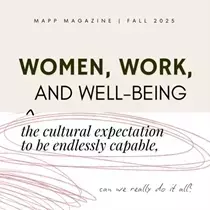
Women, Work, and Well-Being: Redefining Flourishing in Modern Society
This article from MAPP Magazine explores the persistent challenges women face in balancing work, family, and personal well-being, often leading to burnout. It critiques societal expectations and proposes that positive psychology offers practical frameworks and solutions to foster female flourishing by transforming both individual approaches and systemic contexts. The issue delves into topics like burnout, entrepreneurship, and financial thriving, aiming to guide women toward more sustainable and equitable paths.