 Breaking News & Live Updates
- Breaking News & Live Updates
- Breaking News & Live Updates
- Breaking News & Live Updates
- Breaking News & Live Updates
- Breaking News & Live Updates
- Breaking News & Live Updates
- Breaking News & Live Updates
- Breaking News & Live Updates
- Breaking News & Live Updates
MAPP Magazine: Embracing Collective Well-being
Positive psychology has traditionally centered on individual experiences of meaning, purpose, and happiness. However, a significant shift, often termed the "third wave" of positive psychology, encourages us to broaden our perspective to encompass the collective. This contemporary approach emphasizes understanding well-being not merely as an individual state, but as something woven into the fabric of groups, communities, and indeed, humanity's place within the global ecosystem. In an era where societal bonds are frequently strained by political divides and a disconnection from both each other and the natural world, this expanded view is more crucial than ever.
Initiating such a profound transformation often begins with modest steps. To truly embrace a collective mindset, we must first envision the necessary actions, then diligently work to implement those concepts. The latest edition of MAPP Magazine, published by the alumni of the University of Pennsylvania's Master of Applied Positive Psychology program, actively engages with this compelling dialogue. The October 2024 issue delves into the multifaceted dimensions of collective well-being through contributions from practitioners and experts in the field, offering insights ranging from practical advice like hosting gatherings and appreciating public servants to discussions on cutting-edge research in third-wave positive psychology.
Among the featured articles, Louise Wo explores the concept of collective effervescence, the heightened sense of shared energy experienced in communal events like festivals or worship services, and its potential to foster community well-being. Anna Lucas examines the essence of community and strategies drawn from positive psychology to strengthen personal and communal connections, advocating for the importance of nurturing our social networks. Furthermore, B.J. Jones highlights the invaluable contributions of public servants, arguing that acknowledging their efforts can enhance both their well-being and the collective good. The issue also includes an insightful interview with Dr. Tim Lomas, a leading figure in positive psychology research, who discusses the intricacies of collective well-being and the imperative to look beyond current paradigms.
By championing the idea of collective well-being, we cultivate a world where individual flourishing is intrinsically linked to the health and vitality of our shared communities and planet. This integrated perspective empowers us to address societal challenges with empathy and collaboration, fostering a more interconnected and resilient future for all.
Other Articles
 Dec 05, 2025
Unlocking AI's Mind: Bridging Cognitive Science and Machine Learning
Recent research reveals how large language models (LLMs) develop social reasoning and 'theory of mind' (ToM), offering a pathway to more energy-efficient and transparent AI. By examining specific parameters within LLMs, scientists found that perturbing a tiny fraction of these parameters can significantly alter ToM capabilities, particularly those connected to positional encoding. This breakthrough not only sheds light on the internal workings of AI but also holds the potential to enhance AI ethics and improve human-AI interactions.
 Dec 05, 2025
The Enduring Wisdom of Mihaly Csikszentmihalyi: Lessons on Scientific Inquiry and Intellectual Growth
This article reflects on the profound influence of Mihaly Csikszentmihalyi, a pioneer in positive psychology and the architect of the 'flow' concept. Through personal anecdotes from a former doctoral student, it highlights Csikszentmihalyi's unconventional approach to mentorship, emphasizing intellectual humility, the courage to challenge established theories, and the importance of continuous intellectual evolution. The narrative portrays him as a beacon of open-mindedness and a champion of dialectical thinking within academia, fostering an environment where curiosity and respectful disagreement were paramount.
 Dec 05, 2025
Career: The Modern World's Foremost Source of Perceived Risk
A recent study conducted in Switzerland reveals a surprising insight into what individuals perceive as the greatest source of risk in their lives. Contrary to traditional research focusing on extreme behaviors, the study found that career-related decisions overwhelmingly top the list. This perception remains consistent across various age groups and even persisted through the COVID-19 pandemic, highlighting the profound impact of work on personal identity and well-being in stable societies.
 Dec 05, 2025
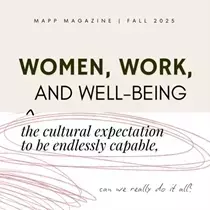
Women, Work, and Well-Being: Redefining Flourishing in Modern Society
This article from MAPP Magazine explores the persistent challenges women face in balancing work, family, and personal well-being, often leading to burnout. It critiques societal expectations and proposes that positive psychology offers practical frameworks and solutions to foster female flourishing by transforming both individual approaches and systemic contexts. The issue delves into topics like burnout, entrepreneurship, and financial thriving, aiming to guide women toward more sustainable and equitable paths.
 Dec 05, 2025
Shared Genetic Underpinnings of Canine Behavior and Human Emotion
A study on 1,300 golden retrievers revealed that specific genetic variants influence traits such as trainability, fear of strangers, and aggression. Intriguingly, twelve of these genes also impact human emotional and cognitive traits, highlighting common biological origins. The findings suggest that many dog behaviors stem from genetic predispositions to emotional sensitivity or stress, rather than simply 'bad manners.' This research offers valuable insights for pet owners, enabling more empathetic training approaches and improved veterinary care tailored to individual canine needs.
 Dec 05, 2025
Uncovering Strengths: The Hidden Upsides of Mental Illness
While mental health conditions are often characterized by their difficulties, emerging evidence suggests they can also be linked to unexpected strengths. These include heightened creativity, increased social sensitivity, deeper emotional understanding, and enhanced resilience. Longitudinal research indicates that some individuals not only recover but also achieve exceptional well-being. Recognizing these positive aspects can transform treatment approaches, reduce societal stigma, and provide a more optimistic and balanced outlook for those affected.