 Breaking News & Live Updates
- Breaking News & Live Updates
- Breaking News & Live Updates
- Breaking News & Live Updates
- Breaking News & Live Updates
- Breaking News & Live Updates
- Breaking News & Live Updates
- Breaking News & Live Updates
- Breaking News & Live Updates
- Breaking News & Live Updates
Career: The Modern World's Foremost Source of Perceived Risk
In an age where adrenaline sports and dramatic lifestyle choices often grab headlines as epitomes of 'risk,' groundbreaking research from the University of Zurich paints a different picture. Their comprehensive study, involving thousands of participants, reveals that for the average person, the most significant and frequent source of perceived risk isn't found in daring escapades or illicit activities, but rather in the everyday realm of their professional lives. This challenges long-held assumptions within behavioral science, underscoring the deep connection between one's work and their sense of security and identity.
Understanding the True Landscape of Modern Risk Perception
In a significant re-evaluation of risk perception, researchers at the University of Zurich published findings in November 2025 that contradicted previous academic focuses on high-stakes, dramatic behaviors like gambling or extreme sports. Their study systematically surveyed 4,380 individuals in Switzerland, seeking to understand what decisions genuinely felt risky in their daily lives. The results were clear: career choices emerged as the predominant category, accounting for 32 percent of all reported risky decisions.
Key examples of these frequently cited risky decisions included contemplating a new job offer, the difficult decision to leave an existing position, and the daunting prospect of entrepreneurial ventures. These work-related concerns significantly overshadowed other life domains such as personal health (18 percent), financial investments (17 percent), social relationships (13 percent), daily commutes (12 percent), and recreational pursuits (9 percent). This pattern of work-centric risk held remarkably steady across all working age groups, from early career stages (15-29 years) through mid-career (30-44 and 45-59 years), with only those approaching retirement (60+) showing an equalization of concerns between work and health.
Furthermore, the study uniquely captured data before, during, and after the global health crisis of COVID-19 (November 2019, November 2020, and 2023, respectively). Despite the monumental shifts brought by the pandemic, the top-ranking work-related anxieties remained unchanged, confirming their enduring and central role in people's lives. The Swiss context, known for its stability and high quality of life, further illuminated these findings: in an environment where basic survival is largely assured, the professional sphere becomes the primary arena where individuals grapple with significant, identity-shaping uncertainties.
Reflections on Our Professional Journeys
The Zurich study offers a profound reorientation of our understanding of risk, moving beyond the sensational to spotlight the quiet, persistent anxieties that shape our lives. For many, the workplace is not just a source of income but a crucible of self-worth, community, and purpose. Recognizing this can be liberating, affirming that the weight we feel when making career decisions is not a sign of personal weakness but a natural response to the high stakes involved in modern professional life. This research encourages us to acknowledge and validate the emotional and psychological intensity of our work-related choices, understanding that they are, for many, the true frontier of personal risk.
Other Articles
 Dec 05, 2025
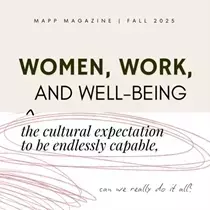
Women, Work, and Well-Being: Redefining Flourishing in Modern Society
This article from MAPP Magazine explores the persistent challenges women face in balancing work, family, and personal well-being, often leading to burnout. It critiques societal expectations and proposes that positive psychology offers practical frameworks and solutions to foster female flourishing by transforming both individual approaches and systemic contexts. The issue delves into topics like burnout, entrepreneurship, and financial thriving, aiming to guide women toward more sustainable and equitable paths.
 Dec 05, 2025
Shared Genetic Underpinnings of Canine Behavior and Human Emotion
A study on 1,300 golden retrievers revealed that specific genetic variants influence traits such as trainability, fear of strangers, and aggression. Intriguingly, twelve of these genes also impact human emotional and cognitive traits, highlighting common biological origins. The findings suggest that many dog behaviors stem from genetic predispositions to emotional sensitivity or stress, rather than simply 'bad manners.' This research offers valuable insights for pet owners, enabling more empathetic training approaches and improved veterinary care tailored to individual canine needs.
 Dec 05, 2025
Uncovering Strengths: The Hidden Upsides of Mental Illness
While mental health conditions are often characterized by their difficulties, emerging evidence suggests they can also be linked to unexpected strengths. These include heightened creativity, increased social sensitivity, deeper emotional understanding, and enhanced resilience. Longitudinal research indicates that some individuals not only recover but also achieve exceptional well-being. Recognizing these positive aspects can transform treatment approaches, reduce societal stigma, and provide a more optimistic and balanced outlook for those affected.
 Dec 05, 2025
Embracing Self-Forgiveness: A Path to Inner Peace and Well-Being
This article delves into the intricate nature of self-forgiveness, differentiating it from interpersonal forgiveness and highlighting its profound impact on an individual's psychological well-being. It explores real-life scenarios, particularly among children, to illustrate the challenges and manifestations of self-blame. Drawing on research, the piece outlines a four-phase model for achieving self-forgiveness, emphasizing its role in fostering self-esteem, life satisfaction, and constructive behaviors. Ultimately, it advocates for self-compassion as a vital tool for overcoming guilt and shame.
 Dec 05, 2025
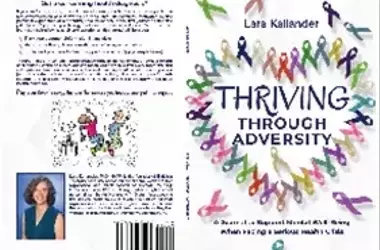
Navigating Hardship: A Journey to Growth and Well-being
This article explores the transformative journey of overcoming significant life challenges, such as a serious health diagnosis, by embracing positive psychology principles. It highlights the potential for post-traumatic growth, emphasizing how individuals can discover new strengths, purpose, and hope amidst adversity. The piece introduces a new journal designed to guide readers through difficult health crises, offering practical tools for emotional processing, resilience building, and cultivating gratitude, ultimately fostering mental well-being for both patients and caregivers.
 Dec 05, 2025
The Measurability of Empathy: A Psychological Perspective
Many perceive empathy as an elusive quality, too personal to quantify. However, this article delves into the diverse methods psychologists employ to accurately assess various facets of empathy. It highlights that empathy isn't a singular entity but a composite of processes like emotional resonance, perspective-taking, and concern for others. Different tools, from self-report questionnaires to performance-based tasks and observer ratings, are tailored to measure these distinct components, debunking the myth that empathy is beyond scientific measurement.