 Breaking News & Live Updates
- Breaking News & Live Updates
- Breaking News & Live Updates
- Breaking News & Live Updates
- Breaking News & Live Updates
- Breaking News & Live Updates
- Breaking News & Live Updates
- Breaking News & Live Updates
- Breaking News & Live Updates
- Breaking News & Live Updates
MAPP Magazine: Global Perspectives on Well-Being
Positive psychology, a field dedicated to understanding human flourishing, has historically drawn heavily from Western, educated, industrialized, rich, and democratic (WEIRD) populations. This foundational bias has been a consistent point of critique. However, as the field matures, there's a growing recognition of the invaluable insights offered by cross-cultural research. This expansion is crucial for building a holistic understanding of well-being, acknowledging that the very definition of a 'good life' is deeply intertwined with language and cultural context. To truly grasp what enables individuals to lead happy, meaningful, and fulfilling existences, it is essential to move beyond a singular cultural lens and embrace the diverse perspectives that shape human experience worldwide.
This imperative to explore diverse understandings of well-being is perfectly captured in the latest issue of MAPP Magazine. This publication, created by alumni of the Master of Applied Positive Psychology program, showcases contributions from global experts who delve into well-being concepts that challenge conventional wisdom. From the Japanese philosophy of 'ikigai'—a concept that transcends a simple definition of 'reason for living'—to the intriguing well-being paradox observed in Latin America, these articles illuminate how different societies define and pursue happiness. The magazine encourages readers to journey through these varied cultural landscapes, fostering a richer, more inclusive comprehension of well-being that resonates across the globe.
Understanding Well-being Across Cultures
Positive psychology has faced criticism for its historical focus on Western populations, often neglecting the rich tapestry of well-being concepts found globally. This issue of MAPP Magazine addresses this by showcasing diverse cultural perspectives on leading a fulfilling life. It features articles exploring Japanese 'ikigai,' the unexpected high well-being levels in Latin America despite challenges, and the Finnish concept of 'sisu.' The aim is to demonstrate that a comprehensive understanding of well-being requires acknowledging how cultural contexts shape what it means to be happy and live meaningfully. This approach enriches the field by incorporating non-Western viewpoints, highlighting that the 'good life' is not universally defined but rather culturally nuanced.
The MAPP Magazine's latest issue embarks on an insightful journey, exploring what makes life worth living through the eyes of various cultures. The articles delve into topics like 'ikigai' (生き甲斐), often simplistically interpreted as a 'reason for being,' but which the magazine clarifies, holds deeper cultural meanings beyond the popular four-circle diagram. Furthermore, it examines the intriguing well-being paradox in Latin America, where, despite socio-economic hurdles, subjective well-being remains remarkably high. This phenomenon is attributed to strong interpersonal relationships, high positive affect, and an inherent optimism. The magazine also introduces 'sisu,' an ancient Finnish concept representing extreme resolve and resilience, which is believed to contribute to Finland's consistent ranking as one of the happiest nations. By presenting these diverse perspectives, the magazine argues that positive psychology must evolve beyond its traditional scope to truly capture the essence of global human flourishing.
Global Insights into Flourishing Lives
This section delves into specific cultural constructs that offer unique insights into well-being. It corrects common misconceptions, such as the oversimplified Western interpretation of 'ikigai,' emphasizing its deeper cultural roots. The magazine also sheds light on the well-being paradox in Latin America, identifying strong social bonds, positive emotional experiences, and optimism as key factors contributing to perceived happiness. Additionally, it explores 'sisu,' the Finnish concept of grit and perseverance, linking it to the nation's high happiness levels. These examples collectively demonstrate the need for positive psychology to adopt a more inclusive, globally informed approach, recognizing that the pathways to a good life are as varied as the cultures themselves.
Expanding on these global insights, the magazine presents 'ikigai' not merely as a profession or a passion, but as a deeper cultural practice for finding purpose and promoting a life worth experiencing, moving beyond the often-cited four-overlapping-circles model. Eugene Tee (MAPP '23) specifically addresses these common assumptions, offering practices grounded in authentic cultural understanding. Regarding the Latin American well-being paradox, Mariangela Rodriguez (MAPP '23) meticulously analyzes its components, underscoring the vital role of interpersonal connections and a prevailing optimistic outlook that helps people thrive even amidst challenges. Her findings suggest that other cultures can glean valuable lessons from these protective cultural elements. Finally, Elisabet Lahti, PhD (MAPP '13), illuminates 'sisu,' the unique Finnish characteristic of remarkable fortitude. Lahti, whose research and personal experience inform her work, demonstrates how embracing 'sisu' can enhance resilience in work, relationships, and overall well-being, potentially explaining Finland's consistent top ranking in global happiness indices. Collectively, these articles champion a broader, more nuanced understanding of well-being that celebrates cultural diversity.
Other Articles
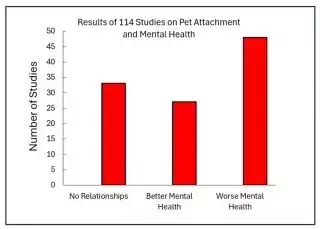 Dec 05, 2025
The Complex Relationship Between Pet Ownership and Mental Well-being
Recent research challenges the common belief that strong pet attachments universally lead to better mental health. A comprehensive review of over 100 studies reveals mixed findings, with many showing no link or even a negative correlation between intense pet bonds and psychological well-being. Notably, anxious attachment styles in pet owners are frequently associated with increased distress, suggesting that the nature, rather than just the strength, of the human-animal bond plays a critical role in mental health outcomes.
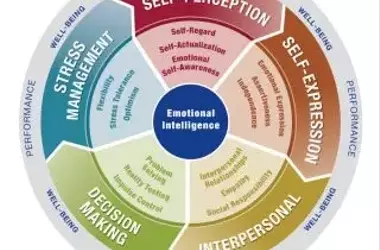 Dec 05, 2025
Emotional Intelligence: A Skill for Better Decision-Making
A recent study from Victoria University explores the role of emotional intelligence (EI) in high-stakes decision-making. Researchers found that understanding one's own emotions is a crucial component of EI, enabling individuals to make more rational choices, particularly in situations involving risk. This highlights the practical value of emotional awareness in navigating complex life scenarios.
 Dec 05, 2025
AI Detects Hidden Stress Markers in the Body
Researchers have pioneered an AI-powered tool capable of identifying chronic stress by measuring the volume of adrenal glands using standard chest CT scans. This innovative biomarker correlates with cortisol levels, stress assessments, and future cardiovascular risks, marking a significant advancement in quantifying the body's stress burden through imaging. The study highlights that increased adrenal volume is linked to heightened stress, greater allostatic load, and an elevated risk of heart failure and mortality, offering a scalable solution for early stress detection without additional procedures.
 Dec 05, 2025
Unlocking Happiness: A Neuroscientific Approach to Well-being Measurement
This article delves into an innovative neuroscientific method for quantifying happiness, moving beyond subjective self-reports. It introduces 'Immersion,' a brain network identified through two decades of research, which objectively measures social-emotional experiences. The piece highlights how this discovery, coupled with advances in wearable technology, led to the creation of a free app, 'SIX,' designed to help individuals enhance their emotional fitness and foster greater happiness by tracking valuable life experiences.
 Dec 05, 2025
Understanding Biophobia: Causes and Solutions for the Growing Fear of Nature
A recent study from Lund University delves into the escalating phenomenon of biophobia, defined as an aversion to nature. This comprehensive review synthesizes nearly 200 scientific articles, revealing that negative sentiments towards natural environments are shaped by a combination of external factors, such as urban living and media influence, and internal elements like individual health and emotional dispositions. The research highlights that reduced interaction with nature perpetuates avoidance, consequently diminishing exposure to its established mental and physical health benefits. Early positive encounters with nature and the cultivation of greener urban landscapes are proposed as vital strategies to counteract this emerging trend.
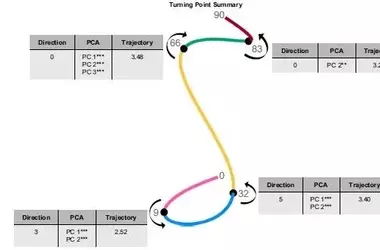 Dec 05, 2025
The Dynamic Evolution of the Human Brain: Five Epochs of Development
A groundbreaking study published in Nature Communications unveils a detailed analysis of how the human brain's structural networks transform across the lifespan. By examining diffusion MRIs from over 4,000 individuals ranging from infancy to old age, researchers identified four distinct 'turning points' that delineate five unique epochs of brain development. This research challenges earlier, simpler models, offering a multivariate and non-linear perspective on neural evolution, with profound implications for understanding cognitive function, mental health, and potential future interventions.