 Breaking News & Live Updates
- Breaking News & Live Updates
- Breaking News & Live Updates
- Breaking News & Live Updates
- Breaking News & Live Updates
- Breaking News & Live Updates
- Breaking News & Live Updates
- Breaking News & Live Updates
- Breaking News & Live Updates
- Breaking News & Live Updates
AI Detects Hidden Stress Markers in the Body
A groundbreaking AI tool has been developed that can detect chronic stress by analyzing adrenal gland volume from routine chest CT scans. This novel approach provides an imaging-based biomarker that correlates strongly with physiological indicators of stress, such as cortisol levels and allostatic load, and is predictive of future cardiovascular events. The implications are significant for early detection and prevention of stress-related diseases, as this method utilizes existing medical imaging data without requiring additional patient procedures.
Chronic stress is a pervasive issue in modern society, contributing to a host of physical and psychological ailments including anxiety, sleep disturbances, hypertension, and a compromised immune system. Its long-term effects are known to increase the risk of serious conditions like heart disease, depression, and obesity. Despite its widespread impact, objectively measuring chronic stress has remained a challenge, often relying on subjective questionnaires or fluctuating biochemical markers.
The research, presented at the annual meeting of the Radiological Society of North America (RSNA), introduces a deep learning AI model trained to precisely measure adrenal gland volume. Dr. Elena Ghotbi, a postdoctoral research fellow at Johns Hopkins University School of Medicine, led the development of this model. Given the millions of chest CT scans performed annually, this technology can be widely applied to evaluate the biological effects of chronic stress across diverse patient populations.
Unlike transient cortisol measurements, which offer only a snapshot of immediate stress, adrenal gland volume serves as a more stable and cumulative indicator of sustained stress exposure. This biomarker is derived from data obtained from the Multi-Ethnic Study of Atherosclerosis, which encompassed 2,842 participants. The study integrated CT scans, validated stress questionnaires, cortisol measurements, and allostatic load markers—a comprehensive dataset ideal for developing and validating an imaging-based stress biomarker.
The deep learning model retrospectively processed CT scans to segment and calculate adrenal gland volume, leading to the establishment of the Adrenal Volume Index (AVI). Researchers found a significant association between higher AVI and elevated cortisol levels, increased peak cortisol, and greater allostatic load. Individuals reporting high perceived stress also exhibited higher AVI compared to those with lower stress levels. Importantly, a direct link was observed between increased AVI and a higher left ventricular mass index, as well as an elevated risk of heart failure and mortality. Specifically, every 1 cm³/m² increase in AVI corresponded to a greater risk of adverse cardiovascular outcomes.
This innovative imaging biomarker represents a significant leap forward in understanding and quantifying the physiological burden of chronic stress. It offers a practical and scalable method to identify individuals at risk for stress-related health complications, potentially revolutionizing preventive care strategies. By leveraging routinely collected imaging data, this approach avoids the need for new tests or additional radiation exposure, making it a highly accessible and efficient diagnostic tool.
Other Articles
 Dec 05, 2025
Unlocking Happiness: A Neuroscientific Approach to Well-being Measurement
This article delves into an innovative neuroscientific method for quantifying happiness, moving beyond subjective self-reports. It introduces 'Immersion,' a brain network identified through two decades of research, which objectively measures social-emotional experiences. The piece highlights how this discovery, coupled with advances in wearable technology, led to the creation of a free app, 'SIX,' designed to help individuals enhance their emotional fitness and foster greater happiness by tracking valuable life experiences.
 Dec 05, 2025
Understanding Biophobia: Causes and Solutions for the Growing Fear of Nature
A recent study from Lund University delves into the escalating phenomenon of biophobia, defined as an aversion to nature. This comprehensive review synthesizes nearly 200 scientific articles, revealing that negative sentiments towards natural environments are shaped by a combination of external factors, such as urban living and media influence, and internal elements like individual health and emotional dispositions. The research highlights that reduced interaction with nature perpetuates avoidance, consequently diminishing exposure to its established mental and physical health benefits. Early positive encounters with nature and the cultivation of greener urban landscapes are proposed as vital strategies to counteract this emerging trend.
 Dec 05, 2025
The Dynamic Evolution of the Human Brain: Five Epochs of Development
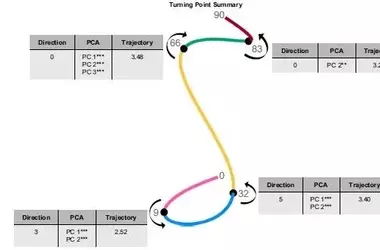
A groundbreaking study published in Nature Communications unveils a detailed analysis of how the human brain's structural networks transform across the lifespan. By examining diffusion MRIs from over 4,000 individuals ranging from infancy to old age, researchers identified four distinct 'turning points' that delineate five unique epochs of brain development. This research challenges earlier, simpler models, offering a multivariate and non-linear perspective on neural evolution, with profound implications for understanding cognitive function, mental health, and potential future interventions.
 Dec 05, 2025
MAPP Magazine: Embracing Collective Well-being
This article explores the October 2024 issue of MAPP Magazine, which delves into the evolving field of positive psychology. Moving beyond individual happiness, the magazine focuses on the "third wave" – considering well-being within groups, communities, and society as a whole. It features articles on collective joy, community connection, positive public service, and an interview with Dr. Tim Lomas, highlighting the importance of shared well-being in a world often marked by disconnection.
 Dec 05, 2025
Unlocking AI's Mind: Bridging Cognitive Science and Machine Learning
Recent research reveals how large language models (LLMs) develop social reasoning and 'theory of mind' (ToM), offering a pathway to more energy-efficient and transparent AI. By examining specific parameters within LLMs, scientists found that perturbing a tiny fraction of these parameters can significantly alter ToM capabilities, particularly those connected to positional encoding. This breakthrough not only sheds light on the internal workings of AI but also holds the potential to enhance AI ethics and improve human-AI interactions.
 Dec 05, 2025
The Enduring Wisdom of Mihaly Csikszentmihalyi: Lessons on Scientific Inquiry and Intellectual Growth
This article reflects on the profound influence of Mihaly Csikszentmihalyi, a pioneer in positive psychology and the architect of the 'flow' concept. Through personal anecdotes from a former doctoral student, it highlights Csikszentmihalyi's unconventional approach to mentorship, emphasizing intellectual humility, the courage to challenge established theories, and the importance of continuous intellectual evolution. The narrative portrays him as a beacon of open-mindedness and a champion of dialectical thinking within academia, fostering an environment where curiosity and respectful disagreement were paramount.