 Breaking News & Live Updates
- Breaking News & Live Updates
- Breaking News & Live Updates
- Breaking News & Live Updates
- Breaking News & Live Updates
- Breaking News & Live Updates
- Breaking News & Live Updates
- Breaking News & Live Updates
- Breaking News & Live Updates
- Breaking News & Live Updates
The Complex Relationship Between Pet Ownership and Mental Well-being
Conventional wisdom often suggests that a deep connection with pets fosters positive mental health outcomes. However, a recent comprehensive analysis of scientific literature challenges this widespread assumption, revealing a far more nuanced and sometimes contradictory picture. While some studies do indicate benefits, a significant body of research points to either no correlation or, surprisingly, a negative association between the intensity of pet attachment and an owner's psychological well-being. This complex interplay highlights the need to move beyond simplistic generalizations and examine the specific characteristics of pet-human relationships to understand their true impact on mental health.
For decades, researchers have explored the intricate ties between humans and their animal companions. A recent review, encompassing 130 peer-reviewed studies published between 1983 and 2024, aimed to clarify this relationship. The majority of these investigations focused on the direct link between the strength of the pet-owner bond and mental health. Counter to popular belief, the findings provided limited support for the notion that a stronger bond consistently leads to improved mental health. Out of 114 studies examining bond strength, 33 showed no relationship at all. While 27 studies did report positive links with certain mental health indicators, a substantial 48 studies found that stronger attachments were associated with worse scores on mental health measures, or even with more severe forms of psychological distress. This unexpected trend was also observed in specific demographics; among 14 studies involving older pet owners, only two found benefits from strong pet bonds, whereas six identified increased psychological problems in highly attached individuals.
Beyond the mere strength of the bond, the style of attachment also emerges as a crucial factor. Drawing parallels with human-to-human attachment theories, researchers classify pet owners into different attachment styles, such as secure or insecure (anxious or avoidant). Anxious attachment, characterized by clinginess and a high demand for attention from the pet, showed a strong correlation with poor mental health. In 11 out of 14 studies, high scores on the anxiety subscale of pet attachment questionnaires were consistently linked to negative psychological outcomes. For instance, a study of 500 Australian pet owners found that those with high pet-anxiety were more prone to depression, stress, and general poor mental health. Conversely, avoidant attachment, where owners maintain emotional distance, had fewer consistent links with mental health issues across the studies. These findings suggest that the emotional dynamics within the pet-owner relationship are critical, with insecure styles potentially exacerbating existing vulnerabilities.
The prevalence of these mixed and sometimes negative findings prompts a critical question: why might strong pet bonds, particularly anxious ones, be associated with poorer mental health? One hypothesis is that individuals with pre-existing anxious attachment styles in human relationships might transfer these patterns to their interactions with pets. Another possibility is that some highly attached pet owners may rely on their animals for social and emotional support as a substitute for human connections, potentially leading to increased loneliness and social isolation. This substitution could reduce participation in social activities or limit the development of robust human friendships. Research by Jaining Li and Nichol Li in 2025 supports this, indicating that excessive reliance on pets as substitutes for human interactions was linked to higher loneliness and lower psychological well-being. Such insights underscore the importance of fostering balanced social lives, where pets complement rather than replace human relationships, for optimal mental health.
In summary, while pets undoubtedly bring joy and companionship to many lives, the relationship between pet attachment and mental health is more intricate than commonly assumed. Research indicates that the strength of the bond does not always guarantee improved well-being, and certain attachment styles, particularly anxious ones, can be associated with increased psychological distress. It highlights that the quality and nature of the human-animal bond, alongside an individual's broader social connections, are key determinants in how pets ultimately influence mental health outcomes.
Other Articles
 Dec 05, 2025
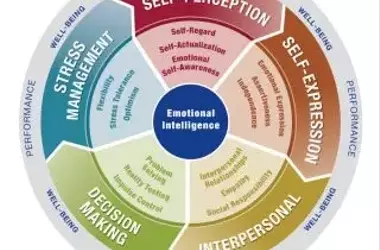
Emotional Intelligence: A Skill for Better Decision-Making
A recent study from Victoria University explores the role of emotional intelligence (EI) in high-stakes decision-making. Researchers found that understanding one's own emotions is a crucial component of EI, enabling individuals to make more rational choices, particularly in situations involving risk. This highlights the practical value of emotional awareness in navigating complex life scenarios.
 Dec 05, 2025
AI Detects Hidden Stress Markers in the Body
Researchers have pioneered an AI-powered tool capable of identifying chronic stress by measuring the volume of adrenal glands using standard chest CT scans. This innovative biomarker correlates with cortisol levels, stress assessments, and future cardiovascular risks, marking a significant advancement in quantifying the body's stress burden through imaging. The study highlights that increased adrenal volume is linked to heightened stress, greater allostatic load, and an elevated risk of heart failure and mortality, offering a scalable solution for early stress detection without additional procedures.
 Dec 05, 2025
Unlocking Happiness: A Neuroscientific Approach to Well-being Measurement
This article delves into an innovative neuroscientific method for quantifying happiness, moving beyond subjective self-reports. It introduces 'Immersion,' a brain network identified through two decades of research, which objectively measures social-emotional experiences. The piece highlights how this discovery, coupled with advances in wearable technology, led to the creation of a free app, 'SIX,' designed to help individuals enhance their emotional fitness and foster greater happiness by tracking valuable life experiences.
 Dec 05, 2025
Understanding Biophobia: Causes and Solutions for the Growing Fear of Nature
A recent study from Lund University delves into the escalating phenomenon of biophobia, defined as an aversion to nature. This comprehensive review synthesizes nearly 200 scientific articles, revealing that negative sentiments towards natural environments are shaped by a combination of external factors, such as urban living and media influence, and internal elements like individual health and emotional dispositions. The research highlights that reduced interaction with nature perpetuates avoidance, consequently diminishing exposure to its established mental and physical health benefits. Early positive encounters with nature and the cultivation of greener urban landscapes are proposed as vital strategies to counteract this emerging trend.
 Dec 05, 2025
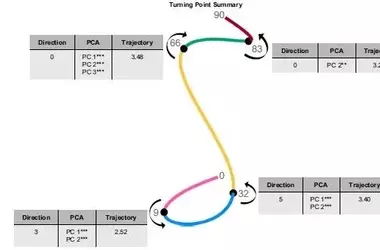
The Dynamic Evolution of the Human Brain: Five Epochs of Development
A groundbreaking study published in Nature Communications unveils a detailed analysis of how the human brain's structural networks transform across the lifespan. By examining diffusion MRIs from over 4,000 individuals ranging from infancy to old age, researchers identified four distinct 'turning points' that delineate five unique epochs of brain development. This research challenges earlier, simpler models, offering a multivariate and non-linear perspective on neural evolution, with profound implications for understanding cognitive function, mental health, and potential future interventions.
 Dec 05, 2025
MAPP Magazine: Embracing Collective Well-being
This article explores the October 2024 issue of MAPP Magazine, which delves into the evolving field of positive psychology. Moving beyond individual happiness, the magazine focuses on the "third wave" – considering well-being within groups, communities, and society as a whole. It features articles on collective joy, community connection, positive public service, and an interview with Dr. Tim Lomas, highlighting the importance of shared well-being in a world often marked by disconnection.