 Breaking News & Live Updates
- Breaking News & Live Updates
- Breaking News & Live Updates
- Breaking News & Live Updates
- Breaking News & Live Updates
- Breaking News & Live Updates
- Breaking News & Live Updates
- Breaking News & Live Updates
- Breaking News & Live Updates
- Breaking News & Live Updates
The Economic Value of Sleep: How Income and Age Influence Our Nightly Rest
A groundbreaking study in behavioral economics and sleep medicine has successfully quantified the financial value individuals place on their nocturnal rest. This investigation confirmed a dual-factor structure for the Monetary Sleep Value Questionnaire, assessing how personal income, age, and psychological perspectives dictate economic decisions concerning sleep.
Analyzing data from 455 adults across the United States, the study explored two key financial dimensions: an individual's readiness to pay for enhanced sleep quality, and the monetary compensation they would require to willingly forgo sleep. The findings underscore that age, income levels, and psychological profiles significantly influence these valuations, creating an economic blueprint to predict adherence to sleep recommendations and tailor health strategies.
This research offers valuable insights for clinicians, enabling them to design more effective health campaigns by framing sleep health in monetary terms relevant to a patient's financial lifestyle. By understanding whether an individual appreciates or devalues sleep economically, interventions can be customized to resonate more deeply, improving compliance and ultimately fostering better overall health and well-being. Ultimately, this new perspective highlights the profound connection between our financial realities and our most fundamental biological needs.
Other Articles

The Lingering Impact of Heavy Drinking on Cognitive Functioning in College Students
A study published in 'Alcohol: Clinical and Experimental Research' reveals that college students who engage in high-intensity drinking or blackouts experience significant cognitive impairments the following day. These include noticeable memory lapses and difficulties with mental tasks, suggesting that the effects of heavy alcohol consumption persist long after intoxication. The research highlights the need for interventions that connect immediate mental fog with prior extreme drinking to encourage healthier behaviors.

Cooling Cap Offers Relief for Depressive Symptoms
A recent study revealed that applying a cooling cap to the head can rapidly lessen symptoms of depression and promote a state of mental tranquility. The research, which involved a liquid-circulating cap set to 33 degrees Fahrenheit, found that just a 30-minute session significantly boosted alpha brain waves, indicating a relaxed state. This non-invasive method shows promise as a swift, low-risk tool for mental well-being.
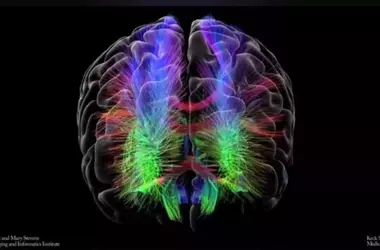
Bipolar Disorder and Brain Connectivity
A recent study conducted by researchers at the Stevens Neuroimaging and Informatics Institute at USC, in collaboration with the ENIGMA Bipolar Disorder Working Group, reveals that individuals with bipolar disorder exhibit less efficient brain communication networks. This large-scale meta-analysis, encompassing data from 449 bipolar patients and 510 healthy controls, utilized diffusion MRI and graph theory to map the brain's white matter pathways, offering critical insights into how illness progression and therapeutic interventions influence neural wiring.

74 Genetic Locations Linked to Anxiety Identified
The largest-ever genome-wide association study (GWAS) on anxiety has uncovered 74 genetic locations, including 39 novel ones, that are associated with the condition. These findings, published in Nature Human Behaviour, stem from analyzing genomic data of nearly 700,000 individuals, shifting the focus from binary clinical diagnoses to the continuous spectrum of anxiety symptom severity. The research highlights the role of genes like PCLO and SORCS3 in neural communication and suggests that while genetics contribute about 6% to anxiety differences, environmental factors are key to rising anxiety rates. The study also reveals genetic overlaps with other mental and physical health conditions.

The Emergence of AI Para-therapy: Redefining Mental Health Support
A 2026 survey reveals that 'therapy and companionship' is the primary application of generative AI, with nearly 20% of young individuals utilizing AI chatbots for mental health purposes, often without informing others. This phenomenon, termed 'para-therapy,' signifies an emotional engagement with AI that mimics therapeutic interactions but operates outside conventional mental health regulations and oversight, raising critical questions about its efficacy, safety, and the future of professional psychotherapy.

Understanding Narcissism in Social Media Interactions
A recent study explores how narcissistic traits manifest in daily social media behavior. Researchers found that narcissistic admiration is linked to positive self-presentation and optimistic expectations for social media engagement, while narcissistic rivalry is associated with negative posting behavior and pessimistic views on social interactions. The findings highlight the internal psychological processes driving narcissists' online conduct.