 Breaking News & Live Updates
- Breaking News & Live Updates
- Breaking News & Live Updates
- Breaking News & Live Updates
- Breaking News & Live Updates
- Breaking News & Live Updates
- Breaking News & Live Updates
- Breaking News & Live Updates
- Breaking News & Live Updates
- Breaking News & Live Updates
Understanding Narcissism in Social Media Interactions
Unmasking the Digital Self: Narcissism's Footprint on Social Media
The Digital Stage: Social Media as a Platform for Narcissistic Expression
Social media offers a unique environment for individuals to shape their public image and connect with a broad audience. For those with heightened narcissistic tendencies, these platforms become particularly attractive tools. Narcissists, who inherently seek attention and validation, find social media ideal for presenting an idealized version of themselves—through carefully chosen photos and posts—and for receiving immediate affirmations like likes and comments, which fuel their self-esteem. They often prefer superficial, extensive social networks over deep, intimate relationships, making the expansive yet often shallow nature of social media a perfect fit for their social preferences and their ability to make strong initial impressions without the need for sustained engagement.
Exploring Narcissistic Behaviors in Daily Online Interactions
Previous research has consistently demonstrated that individuals high in narcissism tend to have more online connections and exhibit greater activity on social media. However, these studies often overlook the granular, day-to-day dynamics of how narcissists leverage social media to fulfill their social needs. A recent investigation, detailed in the Journal of Research in Personality by Carmen Șurariu and her team, sheds light on the link between narcissistic traits and everyday posting habits, as well as the perceived social rewards derived from these online activities.
Methodology: Deconstructing Narcissism's Dual Dimensions
Participants in the study initially underwent assessments for narcissistic traits present within the general population, distinct from clinical narcissistic personality disorder diagnoses. The study utilized the Narcissistic Admiration and Rivalry Concept, which posits two primary strategies narcissists employ to maintain their inflated self-image. Narcissistic admiration involves actively seeking praise and attention, often through charming and appealing behaviors. Conversely, narcissistic rivalry entails self-enhancement by demeaning others, characterized by a propensity to belittle competitors and view others negatively. While these two traits frequently coexist, they can lead to vastly different social consequences: admiration often results in initial likeability, whereas rivalry is linked to hostile behavior and relationship difficulties. Over a 10-day period, participants completed daily surveys, reporting on their most recent social media post, its emotional tone, their efforts at positive self-presentation, and the perceived social impact, such as fostering closeness, attracting attention, sustaining existing connections, and initiating new relationships.
Study Outcomes: The Divergent Paths of Admiration and Rivalry Online
The research revealed that individuals characterized by high narcissistic admiration consistently engaged in more deliberate positive self-presentation and shared content that was generally more upbeat. In contrast, those prone to narcissistic rivalry exhibited the opposite pattern, investing less effort in positive self-display and posting less positive material overall. Regarding the social benefits of their online activities, participants high in narcissistic admiration anticipated that their posts would facilitate new relationships, irrespective of the conscious effort they put into making a good impression. This suggests a fundamental belief in their inherent attractiveness and charisma, which they expect to resonate with others effortlessly. Conversely, individuals high in narcissistic rivalry tended to believe their posts adversely affected their ability to forge new connections and even strained existing relationships. This perception remained consistent regardless of their efforts to present themselves positively, indicating that narcissistic rivalry fosters pessimistic expectations about how their online contributions are received.
Interpreting the Findings: Perceptions Versus Reality in the Digital Sphere
The study highlights that narcissistic admiration not only drives a more positive online self-image but also cultivates an expectation of favorable responses, regardless of the effort invested. They simply expect to impress. Conversely, narcissistic rivalry leads to negative assumptions about how their social media content will be perceived. A key takeaway from these findings is the significant role of internal perceptions. Narcissistic individuals hold specific expectations regarding others' reactions, independent of their own actions. Prior research confirms that narcissistic admiration often creates strong first impressions, while rivalry tends to alienate others. However, whether these dynamics translate precisely to social media interactions, and if participants' expectations about post reception align with reality, remains an open question. There often exists a disconnect between how social media users believe their content is received and the actual impressions they make. For instance, studies have shown that individuals with low self-esteem might use social media for open self-expression, but their tendency to post negative emotions can lead to unfavorable perceptions from others. People can also be skeptical of overly positive online personas, often feeling more connected to content that appears less contrived and more authentic. This suggests that those with high narcissistic admiration might merely believe they are making a strong impression, which may not always be the case in reality.
Other Articles
Unlocking the Mood-Boosting Power of Everyday Movement
A groundbreaking international study involving over 8,000 participants reveals a powerful, bidirectional link between light physical activity and positive mood. The research, which utilized wearable sensors and real-time tracking, demonstrates that even simple movements like chores or short walks can immediately elevate happiness and energy, subsequently inspiring further physical engagement. This continuous virtuous cycle challenges traditional notions of exercise, highlighting the profound psychological benefits of integrating more movement into daily life.
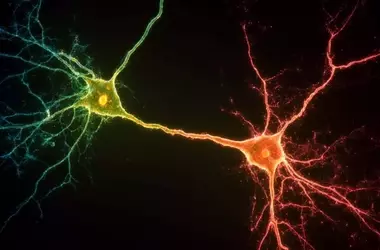
SSRIs Exert Divergent Effects on Serotonin Neurons
New research challenges the conventional understanding of the serotonin system, revealing that SSRIs prompt distinct serotonin neuron populations to react in opposing ways. This study utilized high-resolution spatial transcriptomics to map gene expression changes following both short- and long-term fluoxetine treatment. The findings suggest a molecular basis for the varied patient experiences, where initial adverse effects precede therapeutic benefits.

Early Outdoor Play Enhances Childhood Mental Well-being
A recent study highlights the long-term mental health benefits of outdoor play during preschool years. Children aged two to four who frequently engage in outdoor activities show a reduced likelihood of developing emotional and behavioral issues by age eight. This research, based on data from thousands of children, suggests that consistent outdoor play acts as a buffer against anxiety, depression, and hyperactivity, underscoring the importance of preserving public play spaces for children's developmental health.

Video Gaming Frequency Unrelated to Spatial Aptitude in New Research
A recent small-scale study investigated the connection between video game playing frequency and spatial abilities, finding no correlation. The research, published in *Frontiers in Psychology*, indicated that the frequency of playing action or non-action games did not impact performance on visual or auditory spatial tasks. This suggests that the amount of time spent gaming might not be a reliable predictor of spatial skill development, challenging some previous assumptions about the cognitive benefits of video games.

Understanding Hyperthymia: A Distinct Mood Temperament
Hyperthymia, a frequently overlooked mood temperament, is characterized by high energy, optimism, and self-assurance. It's often mistakenly identified as narcissistic personality disorder. Increased awareness of various mood temperaments could enhance psychiatric diagnoses and treatment approaches. This article delves into the nuances of hyperthymia, differentiating it from mania and narcissism, and highlights its importance in clinical understanding.
Uncovering the Brain's Rapid Processing of Multi-Digit Number Length
A recent study in Scientific Reports reveals that the human brain quickly processes the physical length of multi-digit numbers, indicating that length serves as an automatic cue for magnitude even before the brain fully processes the actual numerical value. This research highlights the brain's reliance on visual structure for quantitative judgments and suggests implications for mathematics education.