 Breaking News & Live Updates
- Breaking News & Live Updates
- Breaking News & Live Updates
- Breaking News & Live Updates
- Breaking News & Live Updates
- Breaking News & Live Updates
- Breaking News & Live Updates
- Breaking News & Live Updates
- Breaking News & Live Updates
- Breaking News & Live Updates
The Emergence of AI Para-therapy: Redefining Mental Health Support
Generative artificial intelligence (AI) has rapidly become a significant tool for emotional support and companionship, fundamentally altering perceptions of mental health assistance. A 2026 Harvard Business Review survey, analyzing nearly 50,000 online posts, confirmed for the second consecutive year that 'therapy and companionship' remains the leading use case for generative AI. This trend highlights a growing reliance on AI chatbots for emotional needs, with a considerable number of young people, approximately one in five, seeking mental health advice from these digital platforms, largely in secret. This development has introduced a new concept: 'para-therapy.' This term describes the emotional and relational engagement users have with AI, where the AI serves in a therapist-like capacity, either explicitly or implicitly. While these interactions can offer a sense of therapeutic support and even alleviate symptoms like depression, they starkly differ from professional psychotherapy. Para-therapy lacks the essential clinical framework, informed consent, ethical guidelines, and regulatory oversight that ensure the safety and effectiveness of traditional therapy, creating a significant regulatory gap in the evolving landscape of mental health care.
This shift towards AI-driven emotional support poses profound implications for the future of mental health services. As AI tools become more sophisticated, they are reshaping public expectations of what constitutes 'therapy' and influencing how individuals interact with mental health support, including traditional human therapists. The widespread adoption of para-therapy also raises concerns about its potential to disrupt existing therapeutic relationships, particularly when individuals engage with both AI and human therapists simultaneously. While AI chatbots offer scalable and affordable alternatives, filling a crucial gap for many, particularly those with limited access to professional care, there are inherent risks. The lack of clinical oversight means that individuals with acute or severe mental health conditions may not receive the specialized care they require, potentially exacerbating their struggles. The question of whether 'something is better than nothing' remains contentious, underscoring the urgent need for a clear distinction between AI-provided emotional support and regulated, professional psychotherapy. This distinction is vital for ensuring user safety, promoting effective mental health outcomes, and guiding the responsible development of AI in healthcare.
The Rise of AI Para-therapy: A New Frontier in Emotional Support
The increasing integration of artificial intelligence into daily life has given rise to 'para-therapy,' a novel form of emotional engagement where individuals utilize generative AI for companionship and mental health support. A recent study indicated that nearly one-fifth of adolescents and young adults in the United States engage with AI chatbots for mental health advice, with a significant majority finding these interactions beneficial, yet often keeping their usage private. This phenomenon extends beyond younger demographics, with a substantial percentage of adults also turning to general-purpose AI for emotional sustenance. This trend is not merely a convenience but represents a profound transformation in how people perceive and access mental health support. The distinction between AI-driven 'para-therapy' and traditional psychotherapy lies in the former's lack of a structured therapeutic framework, professional licensure, ethical boundaries, and regulatory oversight. While AI can offer empathetic responses and personalized advice, it operates outside the established safeguards of professional mental health care, raising concerns about its long-term impact and potential risks, particularly for vulnerable populations.
The burgeoning field of AI para-therapy is reshaping societal expectations of mental health care, as the accessible and often anonymous nature of AI interactions influences how individuals engage with emotional support. This shift can create a paradoxical situation where the immediate perceived benefits of AI support, such as reduced depressive symptoms or anxiety, overshadow the critical need for professional, regulated care. The lack of transparency and clinical accountability in AI-based emotional support mechanisms means that users may not fully comprehend the limitations or potential dangers, especially if they are experiencing severe mental health challenges. Moreover, the integration of AI into mental health support could impact existing therapeutic relationships, potentially leading to triangulation or a splitting effect if a person simultaneously engages with both an AI and a human therapist. Addressing this regulatory void is crucial to ensure that the development and deployment of AI in mental health are guided by ethical principles, prioritize user safety, and complement rather than undermine the established standards of professional psychotherapy.
Navigating the Regulatory Gap: Distinguishing AI Support from Professional Psychotherapy
The widespread adoption of general-purpose AI models for emotional support has created a significant regulatory gap, positioning 'para-therapy' outside the traditional oversight mechanisms governing mental health services. Unlike licensed psychotherapy, which adheres to strict professional standards, ethical guidelines, and legal requirements such as informed consent, patient privacy (e.g., HIPAA), and mandated reporting, AI-based emotional support operates in a largely unregulated environment. This absence of formal governance means that AI chatbots, despite offering seemingly helpful interactions and personalized advice, are not held to the same standards of accountability, safety, and efficacy as human therapists. The analogy drawn to the nutritional supplement or yoga wellness industries underscores the inherent risks: consumers may perceive AI-driven support as a legitimate therapeutic intervention without the assurance of clinical validation or protective regulations. This poses a critical challenge for public health, as the lines between generalized emotional support and specialized therapeutic care become increasingly blurred.
The lack of regulatory clarity for AI para-therapy necessitates a robust discussion on how to differentiate and manage these emerging forms of mental health support. Professional psychotherapy provides a unique path to healing through human connection, the ability to navigate complex emotional landscapes, and the dynamic process of rupture and repair within a secure therapeutic relationship. These elements, including the capacity for attunement, co-regulation, and confronting human limitations, are inherently challenging for AI to replicate, even with advanced simulations. As AI continues to evolve, there are growing concerns within the therapist community about potential labor replacement and the erosion of professional distinctiveness. Therefore, it is imperative to establish clear guidelines and frameworks that address the ethical, safety, and efficacy considerations of AI in mental health. This includes defining what constitutes professional therapy versus AI-enabled emotional support, ensuring transparency for users, and developing regulatory mechanisms that protect individuals while fostering innovation in mental health care. The goal is to harness the benefits of AI without compromising the integrity and safety of therapeutic practice.
Other Articles

Understanding Narcissism in Social Media Interactions
A recent study explores how narcissistic traits manifest in daily social media behavior. Researchers found that narcissistic admiration is linked to positive self-presentation and optimistic expectations for social media engagement, while narcissistic rivalry is associated with negative posting behavior and pessimistic views on social interactions. The findings highlight the internal psychological processes driving narcissists' online conduct.
Unlocking the Mood-Boosting Power of Everyday Movement
A groundbreaking international study involving over 8,000 participants reveals a powerful, bidirectional link between light physical activity and positive mood. The research, which utilized wearable sensors and real-time tracking, demonstrates that even simple movements like chores or short walks can immediately elevate happiness and energy, subsequently inspiring further physical engagement. This continuous virtuous cycle challenges traditional notions of exercise, highlighting the profound psychological benefits of integrating more movement into daily life.
SSRIs Exert Divergent Effects on Serotonin Neurons
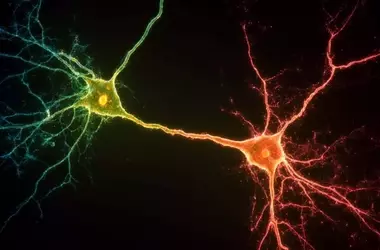
New research challenges the conventional understanding of the serotonin system, revealing that SSRIs prompt distinct serotonin neuron populations to react in opposing ways. This study utilized high-resolution spatial transcriptomics to map gene expression changes following both short- and long-term fluoxetine treatment. The findings suggest a molecular basis for the varied patient experiences, where initial adverse effects precede therapeutic benefits.

Early Outdoor Play Enhances Childhood Mental Well-being
A recent study highlights the long-term mental health benefits of outdoor play during preschool years. Children aged two to four who frequently engage in outdoor activities show a reduced likelihood of developing emotional and behavioral issues by age eight. This research, based on data from thousands of children, suggests that consistent outdoor play acts as a buffer against anxiety, depression, and hyperactivity, underscoring the importance of preserving public play spaces for children's developmental health.

Video Gaming Frequency Unrelated to Spatial Aptitude in New Research
A recent small-scale study investigated the connection between video game playing frequency and spatial abilities, finding no correlation. The research, published in *Frontiers in Psychology*, indicated that the frequency of playing action or non-action games did not impact performance on visual or auditory spatial tasks. This suggests that the amount of time spent gaming might not be a reliable predictor of spatial skill development, challenging some previous assumptions about the cognitive benefits of video games.

Understanding Hyperthymia: A Distinct Mood Temperament
Hyperthymia, a frequently overlooked mood temperament, is characterized by high energy, optimism, and self-assurance. It's often mistakenly identified as narcissistic personality disorder. Increased awareness of various mood temperaments could enhance psychiatric diagnoses and treatment approaches. This article delves into the nuances of hyperthymia, differentiating it from mania and narcissism, and highlights its importance in clinical understanding.