 Breaking News & Live Updates
- Breaking News & Live Updates
- Breaking News & Live Updates
- Breaking News & Live Updates
- Breaking News & Live Updates
- Breaking News & Live Updates
- Breaking News & Live Updates
- Breaking News & Live Updates
- Breaking News & Live Updates
- Breaking News & Live Updates
Cognitive Restoration in Psychosis: A Decade-Long Investigation
A recent extensive study has illuminated the complex and varied trajectory of psychosis, highlighting that the condition does not adhere to a singular, predictable course. This comprehensive decade-long investigation delved into the dynamic interplay among cerebral development, pharmacological treatments, and the cognitive manifestations experienced by 357 patients.
The research introduced an innovative percentile-based analytical approach, akin to the growth charts employed in pediatric care for tracking height and weight, to pinpoint atypical brain volumes. Findings indicate that an individual's initial psychotic episode is often characterized by a noticeable decrease in cortical volume, predominantly in regions abundant with serotonin and dopamine receptors. However, the study also revealed that clinical stabilization and therapeutic interventions possess the capacity to decelerate the pace of cerebral degradation over time.
This pioneering study suggests that while a significant reduction in brain matter is observed at the onset of psychosis, the brain is not destined for irreversible decline. The ability of medical treatment to attenuate this process and facilitate a degree of cognitive restoration offers a hopeful perspective for those living with psychosis. It underscores the critical need for personalized therapeutic strategies that acknowledge the unique biological and clinical profiles of each patient, paving the way for more effective long-term management and improved quality of life.
Other Articles
 Feb 20, 2026
Cohabitation, Not Marriage, Enhances Well-being for Older Adults
A new study indicates that older couples living together experience a boost in life satisfaction, with no additional psychological benefit from formal marriage. Challenging traditional gender stereotypes, the research reveals both men and women gain equally from cohabitation, and neither gender suffers disproportionately after a relationship dissolution. These findings, published in the International Journal of Behavioral Development, suggest a shift in societal norms where cohabitation holds significant emotional value.
 Feb 19, 2026
Liver-Brain Communication Mimics Exercise Benefits in Aging and Alzheimer's
Researchers have discovered a liver protein, GPLD1, that is produced during exercise and enhances the brain's protective barrier, improving memory in aging mice. This finding offers a promising new avenue for pharmaceutical interventions to replicate the cognitive advantages of physical activity for older adults and those unable to exercise, potentially benefiting individuals with Alzheimer's disease.
 Feb 18, 2026
Video Games Show Potential for ADHD Attention Improvement
New research suggests that specifically designed video games could offer slight improvements in attention for children with ADHD and similar neurodevelopmental conditions. Although promising within a research context, the benefits are not substantial enough for these games to be a primary treatment. The study, published in "Psychiatry Research," highlights the potential for digital interventions as a supplementary tool when combined with established therapies.
 Feb 18, 2026
Brain Stimulation May Help Lonely Individuals Process Negative Social Cues
New research from the Polish Academy of Sciences suggests that targeted electrical stimulation to the brain's frontal lobe can alter how lonely individuals perceive negative social interactions. The study, published in Biological Psychology, indicates that while lonely people might report reduced negativity after stimulation, their underlying brain activity patterns related to emotional processing may not show a similar change. This highlights a potential disconnect between conscious feelings and physiological responses in those experiencing loneliness.
 Feb 18, 2026
Ibogaine and Magnesium Combination Accelerates "Auto-Psychotherapy" in PTSD Treatment
A study published in npj Mental Health Research indicates that a combination of ibogaine and magnesium can facilitate a rapid, self-directed healing process dubbed "auto-psychotherapy" in U.S. Special Operations veterans dealing with PTSD. This treatment enables individuals to re-examine traumatic memories, reframe their life narratives, and experience a perceived physical repair of their brain.
 Feb 18, 2026
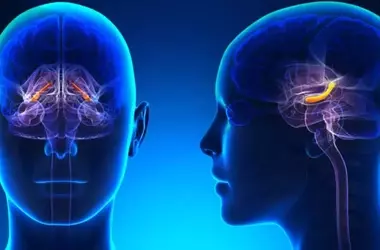
Left Hippocampus Size Predicts Antidepressant Efficacy
New research from Japan indicates that individuals with a larger left hippocampus volume and greater leftward laterality are more likely to respond positively to escitalopram, an antidepressant. The study, published in *Translational Psychiatry*, also observed an increased volume in the right hippocampus and right hippocampal head in responders. These findings suggest that brain structure could be a key factor in predicting treatment outcomes for depression, potentially guiding personalized therapeutic approaches.