 Breaking News & Live Updates
- Breaking News & Live Updates
- Breaking News & Live Updates
- Breaking News & Live Updates
- Breaking News & Live Updates
- Breaking News & Live Updates
- Breaking News & Live Updates
- Breaking News & Live Updates
- Breaking News & Live Updates
- Breaking News & Live Updates
Cohabitation, Not Marriage, Enhances Well-being for Older Adults
A recent comprehensive analysis of long-term data indicates that for older adults, the act of cohabiting with a romantic partner significantly improves life satisfaction. However, formalizing the relationship through marriage does not appear to offer any further psychological advantages if the couple is already living together. This research also challenges long-held gender stereotypes, demonstrating that men and women benefit equally from new partnerships and exhibit similar resilience following a relationship's end. These compelling insights were recently published in the esteemed International Journal of Behavioral Development.
The Nuances of Partnership: What Truly Boosts Happiness in Later Life?
In an insightful study, Iris V. Wahring, a distinguished researcher from Humboldt University Berlin and the University of Vienna, alongside a team including Urmimala Ghose, Christiane A. Hoppmann, Nilam Ram, and Denis Gerstorf, delved into the profound impact of romantic relationships on the mental well-being of middle-aged and older individuals. Their investigation, rooted in data from the Health and Retirement Study, meticulously tracked 2,840 participants from 2006 to 2022. This extensive dataset allowed the researchers to observe the dynamic shifts in depressive symptoms and life satisfaction following three pivotal relationship transitions: separation, moving in with a partner, and marriage. A crucial methodological innovation was the use of propensity score matching, creating 'virtual twins' within the data to isolate the true effect of relationship transitions from pre-existing individual differences. Surprisingly, the study revealed that while men reported lower external emotional support than women, neither gender experienced a significant decline in well-being after a separation, suggesting robust emotional resilience in older adults. Furthermore, moving in with a partner consistently led to a noticeable increase in life satisfaction, a benefit shared equally by both men and women, dispelling the notion of a 'male bonus' in happiness. The study's most striking finding was that the ceremonial act of marriage offered no additional boost in life satisfaction or reduction in depressive symptoms for couples already cohabiting. This indicates that the practical realities of sharing a home and daily life are the primary drivers of well-being, rather than the legal status of marriage. These findings resonate with evolving societal norms, where cohabitation has become a widely accepted and emotionally fulfilling arrangement, diminishing the unique psychological sway once attributed solely to marriage. While the study's conclusions are based on a Western, industrialized context and focused on heterosexual relationships, providing a stable, nuanced view of how these life events shape the emotional landscape over time.
This groundbreaking research compels us to reconsider outdated notions about gender roles in relationships and the psychological significance of marriage, particularly in later life. It highlights the profound importance of companionship and shared living experiences for well-being, transcending traditional markers of commitment. As a society, we should recognize and value the diverse forms that loving partnerships take, understanding that emotional support and a shared life are paramount, irrespective of formal legalities. This study encourages a more inclusive perspective on relationships, emphasizing resilience and adaptability in navigating life's emotional terrain.
Other Articles
 Feb 19, 2026
Liver-Brain Communication Mimics Exercise Benefits in Aging and Alzheimer's
Researchers have discovered a liver protein, GPLD1, that is produced during exercise and enhances the brain's protective barrier, improving memory in aging mice. This finding offers a promising new avenue for pharmaceutical interventions to replicate the cognitive advantages of physical activity for older adults and those unable to exercise, potentially benefiting individuals with Alzheimer's disease.
 Feb 18, 2026
Video Games Show Potential for ADHD Attention Improvement
New research suggests that specifically designed video games could offer slight improvements in attention for children with ADHD and similar neurodevelopmental conditions. Although promising within a research context, the benefits are not substantial enough for these games to be a primary treatment. The study, published in "Psychiatry Research," highlights the potential for digital interventions as a supplementary tool when combined with established therapies.
 Feb 18, 2026
Brain Stimulation May Help Lonely Individuals Process Negative Social Cues
New research from the Polish Academy of Sciences suggests that targeted electrical stimulation to the brain's frontal lobe can alter how lonely individuals perceive negative social interactions. The study, published in Biological Psychology, indicates that while lonely people might report reduced negativity after stimulation, their underlying brain activity patterns related to emotional processing may not show a similar change. This highlights a potential disconnect between conscious feelings and physiological responses in those experiencing loneliness.
 Feb 18, 2026
Ibogaine and Magnesium Combination Accelerates "Auto-Psychotherapy" in PTSD Treatment
A study published in npj Mental Health Research indicates that a combination of ibogaine and magnesium can facilitate a rapid, self-directed healing process dubbed "auto-psychotherapy" in U.S. Special Operations veterans dealing with PTSD. This treatment enables individuals to re-examine traumatic memories, reframe their life narratives, and experience a perceived physical repair of their brain.
 Feb 18, 2026
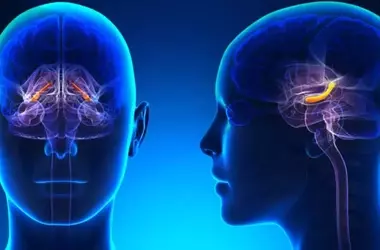
Left Hippocampus Size Predicts Antidepressant Efficacy
New research from Japan indicates that individuals with a larger left hippocampus volume and greater leftward laterality are more likely to respond positively to escitalopram, an antidepressant. The study, published in *Translational Psychiatry*, also observed an increased volume in the right hippocampus and right hippocampal head in responders. These findings suggest that brain structure could be a key factor in predicting treatment outcomes for depression, potentially guiding personalized therapeutic approaches.
 Feb 17, 2026
Exercise: A Natural Antidote to Rumination in Depression
A German study discovered that just 30 minutes of moderate physical activity significantly reduced rumination in individuals experiencing depression, compared to sedentary periods. This positive effect was observed through both self-reported feelings and brainwave (EEG) measurements. The findings support the Distraction Hypothesis, suggesting exercise helps shift focus away from repetitive negative thoughts.