 Breaking News & Live Updates
- Breaking News & Live Updates
- Breaking News & Live Updates
- Breaking News & Live Updates
- Breaking News & Live Updates
- Breaking News & Live Updates
- Breaking News & Live Updates
- Breaking News & Live Updates
- Breaking News & Live Updates
- Breaking News & Live Updates
The Brain's Unconscious Filter: How Negative Words Are Automatically Suppressed
Conventional wisdom suggests that emotionally charged language, whether a shouted insult or a disturbing phrase, effortlessly captures our attention. However, a recent investigation published in Psychological Science posits a counterintuitive mechanism: our brains might be actively filtering out such negative vocalizations before they even register in our conscious minds.
Researchers at the Hebrew University of Jerusalem observed that individuals engaged in a focused visual task were less likely to consciously perceive negative spoken words compared to neutral ones. This discovery sheds light on the intricate process by which the brain selects what information enters our conscious awareness and what remains outside it. Lead author Gal R. Chen emphasized that our conscious perceptions of what we notice do not always align with our unconscious processing. While much of our brain's activity operates beneath the surface of consciousness, the precise mechanisms governing the selection of information for conscious experience, especially in auditory processing, are not well understood. Understanding this unconscious filtering could illuminate how nonconscious cues influence our thoughts, emotions, and behaviors.
The study involved 101 Hebrew-speaking adults who were instructed to identify visual patterns while simultaneously listening to a stream of meaningless sounds interspersed with real Hebrew words, either negative or neutral in emotional valence. Contrary to initial hypotheses that negative stimuli would be more noticeable, participants consistently recognized neutral words more frequently than negative ones. This result persisted even when the experiment was repeated with a larger vocabulary and under less demanding visual task conditions. Researchers speculate that the cognitive system might avoid the 'cost' of consciously processing negative information, suggesting an unconscious bias to suppress potentially detrimental stimuli. This unconscious gatekeeping mechanism could be a protective function, preventing unnecessary distractions or emotional burdens.
These findings pave the way for new avenues of research into mental health conditions. Chen suggests that future studies could explore whether this unconscious filtering operates differently in individuals grappling with anxiety disorders, phobias, or post-traumatic stress disorder, who might lack this inherent selective bias. While acknowledging the study's limitations, such as focusing on single words rather than complex conversations, the current research underscores the profound and often underestimated role of the nonconscious mind in shaping our daily experiences and perceptions.
Other Articles

The Economic Value of Sleep: How Income and Age Influence Our Nightly Rest
A recent study delves into the financial worth individuals attribute to their sleep, revealing a complex interplay between demographic factors and psychological profiles. The research, utilizing a novel questionnaire, found that income and age significantly shape a person's willingness to invest in better sleep quality or demand compensation for sacrificing it. This pioneering work establishes an economic framework for understanding sleep compliance and could lead to more personalized health interventions.

The Lingering Impact of Heavy Drinking on Cognitive Functioning in College Students
A study published in 'Alcohol: Clinical and Experimental Research' reveals that college students who engage in high-intensity drinking or blackouts experience significant cognitive impairments the following day. These include noticeable memory lapses and difficulties with mental tasks, suggesting that the effects of heavy alcohol consumption persist long after intoxication. The research highlights the need for interventions that connect immediate mental fog with prior extreme drinking to encourage healthier behaviors.
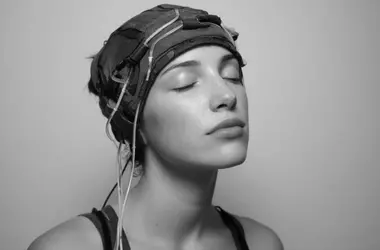
Cooling Cap Offers Relief for Depressive Symptoms
A recent study revealed that applying a cooling cap to the head can rapidly lessen symptoms of depression and promote a state of mental tranquility. The research, which involved a liquid-circulating cap set to 33 degrees Fahrenheit, found that just a 30-minute session significantly boosted alpha brain waves, indicating a relaxed state. This non-invasive method shows promise as a swift, low-risk tool for mental well-being.
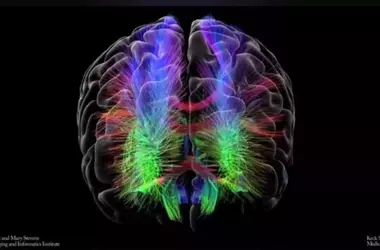
Bipolar Disorder and Brain Connectivity
A recent study conducted by researchers at the Stevens Neuroimaging and Informatics Institute at USC, in collaboration with the ENIGMA Bipolar Disorder Working Group, reveals that individuals with bipolar disorder exhibit less efficient brain communication networks. This large-scale meta-analysis, encompassing data from 449 bipolar patients and 510 healthy controls, utilized diffusion MRI and graph theory to map the brain's white matter pathways, offering critical insights into how illness progression and therapeutic interventions influence neural wiring.

74 Genetic Locations Linked to Anxiety Identified
The largest-ever genome-wide association study (GWAS) on anxiety has uncovered 74 genetic locations, including 39 novel ones, that are associated with the condition. These findings, published in Nature Human Behaviour, stem from analyzing genomic data of nearly 700,000 individuals, shifting the focus from binary clinical diagnoses to the continuous spectrum of anxiety symptom severity. The research highlights the role of genes like PCLO and SORCS3 in neural communication and suggests that while genetics contribute about 6% to anxiety differences, environmental factors are key to rising anxiety rates. The study also reveals genetic overlaps with other mental and physical health conditions.

The Emergence of AI Para-therapy: Redefining Mental Health Support
A 2026 survey reveals that 'therapy and companionship' is the primary application of generative AI, with nearly 20% of young individuals utilizing AI chatbots for mental health purposes, often without informing others. This phenomenon, termed 'para-therapy,' signifies an emotional engagement with AI that mimics therapeutic interactions but operates outside conventional mental health regulations and oversight, raising critical questions about its efficacy, safety, and the future of professional psychotherapy.