 Breaking News & Live Updates
- Breaking News & Live Updates
- Breaking News & Live Updates
- Breaking News & Live Updates
- Breaking News & Live Updates
- Breaking News & Live Updates
- Breaking News & Live Updates
- Breaking News & Live Updates
- Breaking News & Live Updates
- Breaking News & Live Updates
The Brain's Aesthetic Secret: How Energy Efficiency Shapes Our Perception of Beauty
New research suggests that our appreciation for what is beautiful might have a surprising biological basis: the brain's drive for efficiency. A study featured in PNAS Nexus indicates that visual stimuli which demand less energy for neural processing are often judged as more aesthetically pleasing. This groundbreaking insight implies that our visual preferences could be an evolutionary mechanism designed to conserve the brain's precious metabolic resources.
Unveiling the Neural Underpinnings of Aesthetic Preference
In a fascinating convergence of psychology and neuroscience, researchers Yikai Tang, William A. Cunningham, and Dirk B. Walther from the University of Toronto delved into the age-old idiom, 'easy on the eyes.' Their central hypothesis posited an inverse relationship between aesthetic appeal and the metabolic cost of neural processing. In simpler terms, if an image requires less effort for our brain to 'see,' we are more likely to find it beautiful.
To rigorously test this idea, the team implemented a dual approach. First, they employed a sophisticated computational model, specifically a deep convolutional neural network known as VGG-19. This artificial intelligence, meticulously trained to categorize diverse objects and scenes, mirrored the hierarchical structure of the human visual cortex. Researchers fed this model nearly 5,000 varied real-world images, meticulously calculating a 'metabolic cost' for each. This cost was quantified by the number and intensity of active artificial neurons, with fewer active units indicating greater processing efficiency.
The computational findings were then juxtaposed with human aesthetic judgments. A vast dataset of aesthetic ratings from over 1,000 participants, who had evaluated the same images, revealed a compelling pattern. A strong negative correlation emerged: images that demanded less energy from the artificial network consistently received higher aesthetic ratings from human observers. As processing cost diminished, reported pleasure soared.
To validate the significance of this correlation, the experiment was rerun on untrained neural networks. These networks, identical in structure but lacking object recognition experience, did not exhibit the same pattern, thereby underscoring that the preference for efficiency is deeply ingrained in how visual information is organized and learned.
Moving beyond simulation, the researchers extended their investigation to the human brain itself. Four participants underwent functional magnetic resonance imaging (fMRI) while viewing the extensive image set. This cutting-edge technology tracked changes in blood oxygen levels, a reliable indicator of neuronal metabolic activity. Analysis focused on key visual processing regions, from the early visual cortex, which handles fundamental visual features, to higher-level areas responsible for complex scene and object recognition. The human fMRI data strikingly corroborated the AI model's results: higher metabolic activity in visual areas was consistently linked to lower aesthetic ratings. When the visual cortex had to exert more effort to interpret an image, the reported enjoyment declined. This connection was particularly pronounced in brain regions handling intricate scene information.
These findings collectively propose an 'energy-conservation heuristic' at play within our visual system. It appears that our brains seek an optimal balance: enough visual information to be engaging, but not so much that it becomes metabolically burdensome. The images we instinctively deem most attractive are those that offer rich visual data without demanding excessive neural expenditure. This concept resonates with the 'processing fluency' theory in psychology, which posits that easily processed information elicits positive emotional responses. The current research provides a tangible, biological foundation for this psychological principle.
While visual processing areas favor efficiency, the study observed a different trend in the Default Mode Network, a brain region associated with self-reflection. Here, increased activity occasionally corresponded with heightened enjoyment, suggesting that while the initial visual intake prioritizes ease, deeper cognitive engagement can also contribute to pleasure. However, the overarching conclusion remains: the 'beauty' perceived by our eyes is largely a testament to visual efficiency.
This study represents a significant leap forward in understanding the biological roots of aesthetic preference, suggesting that beauty is not merely a cultural construct but also a deeply embedded mechanism for optimizing brain energy use.
This research profoundly shifts our perspective on aesthetics, moving beyond subjective taste or cultural conditioning to reveal a fundamental biological imperative. It compels us to consider that our appreciation for beauty might be, at its core, a sophisticated evolutionary strategy to optimize brain function. As a reader, I find this particularly enlightening; it suggests that even our most sublime experiences, like gazing at a beautiful landscape or artwork, are influenced by the silent, ceaseless work of our brains managing their precious energy. This connection between the seemingly abstract concept of beauty and the concrete reality of metabolic efficiency offers a fresh lens through which to explore human perception and preference. It opens new avenues for interdisciplinary research, prompting questions about how this principle might extend to other sensory experiences and even influence our broader decision-making processes. The elegance of nature, the simplicity of a well-designed object—perhaps these are not just pleasing to the eye, but also, quite literally, 'easy on the brain.'
Other Articles
 Dec 09, 2025
The Essential Role of Sleep for Adolescent Well-being
Adolescent sleep deprivation is a prevalent issue with significant consequences, including increased anxiety, irritability, and declining academic performance. This lack of sleep can also mimic symptoms of ADHD, impairing focus and motivation. Many teenagers normalize their exhaustion due to peer behaviors, and their undeveloped sense of long-term consequences necessitates parental intervention to establish healthy sleep routines. Prioritizing sleep is fundamental for overall adolescent health, impacting emotional regulation, cognitive function, and social engagement.
 Dec 07, 2025
Blue Light Exposure: Age-Dependent Effects on Brain Excitability
A recent study published in "Neurobiology of Sleep and Circadian Rhythms" reveals that blue light exposure can directly modify cortical excitability in the human brain, with distinct effects observed in young adults and adolescents. While moderate blue light enhances brain responsiveness in young adults, higher intensities may diminish this effect. Adolescents, however, show no significant changes, suggesting age-related differences in how light influences brain function. These findings emphasize the complex interaction between light, age, and brain physiology, highlighting the need for age-specific lighting recommendations.
 Dec 05, 2025
The Profound Link Between Warmth, Hugging, and Self-Perception
Recent research highlights that temperature changes significantly impact how individuals perceive their own bodies. This 'thermoception' plays a crucial role in emotions, identity, and mental well-being by creating a direct 'skin-to-brain' connection that bolsters bodily self-awareness. Disruptions in thermal perception are often seen in conditions like stroke, anorexia, depression, and trauma-related disorders, suggesting potential new avenues for sensory-based therapies and prosthetic design.
 Dec 05, 2025
Brain Plasticity Peaks at Day's End, Study Finds
New research suggests the brain's ability to learn and form memories may be highest at the end of the day, despite feelings of fatigue. This challenges the notion that optimal cognitive function aligns with peak alertness, proposing specific temporal windows for neural processing and adaptation.
 Dec 05, 2025
MAPP Magazine: Global Perspectives on Well-Being
This edition of MAPP Magazine explores the multifaceted nature of well-being across different cultures, moving beyond the Western-centric view that has often dominated positive psychology research. It highlights concepts like Japanese "ikigai," the Latin American well-being paradox, and Finnish "sisu," emphasizing that a truly comprehensive understanding of human flourishing requires diverse cultural insights. The articles presented aim to broaden perspectives on what constitutes a meaningful and happy life globally.
 Dec 05, 2025
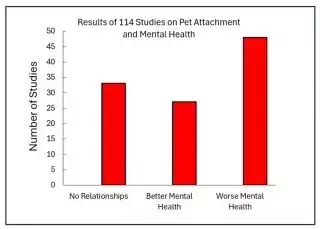
The Complex Relationship Between Pet Ownership and Mental Well-being
Recent research challenges the common belief that strong pet attachments universally lead to better mental health. A comprehensive review of over 100 studies reveals mixed findings, with many showing no link or even a negative correlation between intense pet bonds and psychological well-being. Notably, anxious attachment styles in pet owners are frequently associated with increased distress, suggesting that the nature, rather than just the strength, of the human-animal bond plays a critical role in mental health outcomes.