 Breaking News & Live Updates
- Breaking News & Live Updates
- Breaking News & Live Updates
- Breaking News & Live Updates
- Breaking News & Live Updates
- Breaking News & Live Updates
- Breaking News & Live Updates
- Breaking News & Live Updates
- Breaking News & Live Updates
- Breaking News & Live Updates
Brain Circuitry: Acetylcholine's Role in Serotonin Release Unveiled
A groundbreaking study has shed light on the intricate communication networks within the brain, revealing a direct link between acetylcholine and serotonin release. This finding suggests a sophisticated, coordinated system of chemical signaling that could be fundamental to understanding complex behaviors and psychiatric conditions. The research specifically examined how this interaction unfolds in the striatum, a brain area vital for forming habits and driving goal-oriented actions, offering new perspectives on disorders characterized by repetitive behaviors.
This investigation into the brain's neurochemical landscape has pinpointed a fascinating interplay between two crucial neurotransmitters. By uncovering how acetylcholine can directly trigger serotonin release, scientists have opened new avenues for exploring the root causes of conditions like obsessive-compulsive disorder. The study emphasizes the localized nature of these interactions, indicating that specific brain regions, such as the striatum, act as command centers where these chemical dialogues precisely regulate our thoughts and actions. This nuanced understanding moves us closer to developing more targeted and effective therapeutic strategies for a range of neurological and psychiatric challenges.
The Direct Influence of Acetylcholine on Serotonin Signaling
Recent scientific inquiry has unveiled a pivotal role for acetylcholine in modulating serotonin levels within the brain, establishing a direct connection that underpins various neural functions. This revelation challenges previous assumptions about the independent operations of these vital chemical messengers, indicating a more integrated and orchestrated system. The study meticulously tracked this interaction within the striatum, a brain region known for its critical involvement in habit formation and motor control. Researchers observed that specialized cholinergic interneurons, acting as local conductors, utilize acetylcholine to trigger serotonin release, thereby influencing information flow in a highly localized manner. This discovery provides a deeper understanding of how the brain manages its complex chemical symphony, potentially clarifying the biological basis of certain behavioral patterns and psychiatric conditions.
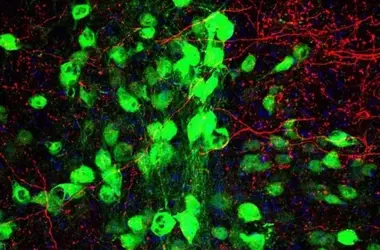
The groundbreaking work conducted by researchers at the Hebrew University of Jerusalem and Stony Brook University delved into the specifics of this neurochemical relationship. They employed advanced genetic tools and microscopic techniques to visualize serotonin activity in real-time within mouse brain tissue. By introducing a fluorescent protein that illuminates upon serotonin binding, the team directly observed spikes in serotonin release following electrical stimulation. Crucially, they demonstrated that blocking nicotinic acetylcholine receptors significantly diminished this serotonin surge, confirming acetylcholine's direct role. Furthermore, optogenetic techniques were used to precisely activate cholinergic interneurons, leading to a massive, light-induced serotonin release that was only inhibited when acetylcholine receptors were blocked. This rigorous methodology confirmed that these interneurons are indeed the primary drivers of local serotonin release, suggesting a finely tuned mechanism that can go awry in conditions such as obsessive-compulsive disorder.
Implications for Compulsive Behaviors and Therapeutic Development
The intricate relationship between acetylcholine and serotonin, particularly its influence on localized brain signaling, holds significant implications for understanding and treating compulsive behaviors. The research highlighted that an overactive cholinergic system, as observed in genetically modified mice exhibiting OCD-like behaviors, leads to an excessive serotonin release. This "hijacked" signaling pathway could explain the persistence and difficulty in suppressing repetitive actions characteristic of obsessive-compulsive disorder. By demonstrating how a dysregulation in acetylcholine can drive serotonin into overdrive, the study offers a compelling biological explanation for the manifestation of such conditions. This new insight paves the way for a paradigm shift in therapeutic approaches, moving beyond broad-spectrum treatments to highly targeted interventions.
The findings from this study suggest that interventions focusing on modulating acetylcholine activity in specific brain regions could offer a more precise treatment strategy for disorders like OCD. Current therapeutic methods often involve general alterations of serotonin levels across the entire brain, which can lead to various side effects. However, by understanding the localized control acetylcholine exerts over serotonin, future treatments could be developed to specifically target the dysfunctional interactions in affected brain areas. While further research is needed to fully comprehend how these mechanisms operate in living humans and how environmental factors might trigger such chemical releases, this study represents a crucial step forward. It underscores the potential for developing highly selective therapies that could restore the delicate balance of neurochemical communication, ultimately improving outcomes for individuals struggling with compulsive behaviors and related neurological conditions.
Other Articles
 Apr 27, 2026
Fashion's Impact on Mental Wellness for Middle-Aged Women
A recent study highlights the crucial link between clothing satisfaction and the mental well-being of middle-aged women. When these women are pleased with their fashion choices, they report greater overall happiness and less social avoidance. This research sheds light on how the fashion industry's oversight of this demographic can negatively affect their psychological state, underscoring the need for more inclusive and age-appropriate apparel options.
 Apr 27, 2026
Implementing Positive Psychology Assessments: A Practitioner's Guide
This article offers an in-depth guide for practitioners, coaches, and HR professionals on selecting and applying positive psychology measures. It covers the rationale behind using assessments, a framework for choosing appropriate tools, a step-by-step workflow for implementation, and practical scripts for client interactions. The goal is to facilitate objective progress tracking, enhance client awareness, and build stronger relationships through evidence-based practices.
 Apr 25, 2026
Mediterranean Diet Benefits Linked to Tiny Mitochondrial Proteins
A recent study suggests that the health benefits of the Mediterranean diet may be due to tiny proteins called mitochondrial microproteins. Researchers found that older adults who follow this diet closely have higher levels of Humanin and SHMOOSE, which protect against heart disease and cognitive decline. This discovery offers a new cellular-level explanation for how this diet promotes healthy aging.
 Apr 24, 2026
Self-Perception and Social Expectation Misalignment Drives Loneliness in Borderline Personality Disorder
A recent study published in "Comprehensive Psychiatry" explores how the discrepancy between an individual's self-perception of social preferences and their expectations of others' social preferences contributes to loneliness in people with Borderline Personality Disorder (BPD). This misalignment, where individuals with BPD view themselves as more prosocial but anticipate selfishness from others, creates a cycle of misunderstanding and disappointment, intensifying feelings of isolation.
 Apr 23, 2026
Moderate Caffeine Intake Does Not Trigger Panic Attacks but Influences Behavioral Choices, Study Finds
A recent study published in the Journal of Psychopharmacology indicates that moderate caffeine consumption is unlikely to induce panic attacks in individuals diagnosed with panic disorder. However, it may increase their tendency to avoid uncomfortable situations. This research offers valuable insights for managing anxiety symptoms while maintaining daily dietary habits.
 Apr 22, 2026
New Brain Pathway Links Tourette's and OCD
Researchers have discovered a neural pathway connecting the brain's motor cortex, responsible for movement, to the insular cortex, which handles emotions and self-awareness. This pathway, identified through a thalamic relay, offers a new understanding of how motor tics in Tourette's syndrome can influence emotional processing. The findings suggest a common biological basis for Tourette's and co-occurring conditions like OCD, paving the way for less invasive treatment approaches such as ultrasound neuromodulation.