 Breaking News & Live Updates
- Breaking News & Live Updates
- Breaking News & Live Updates
- Breaking News & Live Updates
- Breaking News & Live Updates
- Breaking News & Live Updates
- Breaking News & Live Updates
- Breaking News & Live Updates
- Breaking News & Live Updates
- Breaking News & Live Updates
Implementing Positive Psychology Assessments: A Practitioner's Guide
In the realm of positive psychology, the systematic application of measurement tools is crucial for understanding and fostering client growth. This comprehensive guide outlines the process for practitioners to effectively choose, utilize, and interpret various positive psychology assessments. By integrating these validated measures, professionals can move beyond subjective intuition to establish an objective foundation for tracking progress, clarifying goals, and strengthening the therapeutic or coaching relationship. The article provides a structured approach, from selecting the right assessment based on client context and purpose, to implementing a clear workflow, and communicating results with clients using strengths-based language, all while adhering to ethical considerations and professional boundaries.
The effective use of positive psychology measures transforms client interactions into data-driven collaborations. When clients are presented with their own progress data, it fosters greater self-awareness and trust in the process, enabling them to witness their own development, however gradual. This approach encourages intentional growth toward strengths and provides a clear picture of patterns, rather than relying on guesswork. By starting with a focused, minimal set of measures and gradually expanding, practitioners can build a robust, measurement-based practice that aligns with the core principles of positive psychology: helping individuals understand themselves more deeply and cultivate their inherent strengths for a flourishing life.
Selecting Appropriate Positive Psychology Measures
Choosing the correct positive psychology assessment involves aligning the tool with the client's specific situation, the objective of the intervention, and their individual requirements. A fundamental principle is to match the assessment instrument to the professional setting, whether it's one-on-one coaching, organizational development, or HR. Shorter, conversation-provoking tools are often more effective in individual coaching, while well-researched and reliable instruments are preferred for broader organizational contexts where comparative data across groups is essential. The purpose of the intervention further guides selection; a broad outcome measure is suitable for establishing a baseline, whereas a focused process measure targets specific areas like mindfulness or locus of control. Consistency is key, meaning the same questionnaire should be reused under similar conditions to evaluate the impact of an intervention.
Practical considerations and client characteristics also play a significant role in measure selection. The client's available time and literacy level should inform the choice, as a brief, well-validated assessment completed thoroughly is far more beneficial than a lengthy questionnaire rushed through. It's vital to meet clients at their current state; for those managing chronic stress or low mood, a single, focused measure is more appropriate than an extensive intake. Importantly, wellbeing tools should never replace clinical evaluations, and clients with clinical-level distress must be referred to trained therapists. The objective is to identify assessments that are most pertinent for each individual, team, or organization, thereby ensuring that the insights gained are both relevant and actionable.
Integrating Measurement into Practice Workflow and Interpretation
A structured workflow is critical for integrating measurement-based practices into coaching, organizational, and educational settings. The process begins with obtaining informed consent and clearly explaining the assessment's purpose, including what is being measured, how results will be utilized, who will access them, and emphasizing that scores are descriptive, not diagnostic. Practitioners should select a minimal set of one to three measures that directly address the client's concerns, recognizing that an excessive number of questionnaires can yield less useful data. Administering and scoring these assessments consistently, under uniform conditions (e.g., same time of day, format, minimal distractions), ensures the reliability of the data collected, with immediate scoring allowing for clarification of any incomplete responses.
Interpreting results with a strengths-based perspective is paramount. Debriefing sessions should collaboratively review scores, highlighting client strengths and exploring areas for growth with curiosity rather than a problem-focused mindset. It's crucial to remember that positive psychology measures provide data points, not diagnoses. These results then inform the creation of specific, measurable goals and interventions. Regular re-measurement, typically every four to eight weeks, allows for tracking progress and guiding subsequent steps. When interpreting scores, practitioners must consider the psychometric properties of consistency (reliability) and validity, understanding that most tools use comparative norms rather than clinical cutoffs. Awareness of common pitfalls, such as clients providing socially desirable answers, cultural differences that may affect responses, and distinguishing real change from random variation, is essential for accurate and ethical interpretation. Using prepared scripts can facilitate clear communication during these stages, introducing measures, debriefing results, normalizing low scores, explaining limitations, and setting expectations for progress monitoring.
Other Articles
 Apr 25, 2026
Mediterranean Diet Benefits Linked to Tiny Mitochondrial Proteins
A recent study suggests that the health benefits of the Mediterranean diet may be due to tiny proteins called mitochondrial microproteins. Researchers found that older adults who follow this diet closely have higher levels of Humanin and SHMOOSE, which protect against heart disease and cognitive decline. This discovery offers a new cellular-level explanation for how this diet promotes healthy aging.
 Apr 24, 2026
Self-Perception and Social Expectation Misalignment Drives Loneliness in Borderline Personality Disorder
A recent study published in "Comprehensive Psychiatry" explores how the discrepancy between an individual's self-perception of social preferences and their expectations of others' social preferences contributes to loneliness in people with Borderline Personality Disorder (BPD). This misalignment, where individuals with BPD view themselves as more prosocial but anticipate selfishness from others, creates a cycle of misunderstanding and disappointment, intensifying feelings of isolation.
 Apr 23, 2026
Moderate Caffeine Intake Does Not Trigger Panic Attacks but Influences Behavioral Choices, Study Finds
A recent study published in the Journal of Psychopharmacology indicates that moderate caffeine consumption is unlikely to induce panic attacks in individuals diagnosed with panic disorder. However, it may increase their tendency to avoid uncomfortable situations. This research offers valuable insights for managing anxiety symptoms while maintaining daily dietary habits.
 Apr 22, 2026
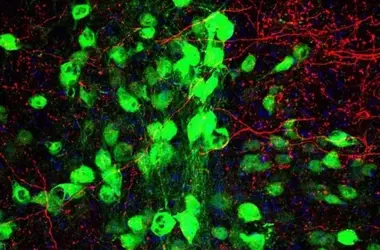
New Brain Pathway Links Tourette's and OCD
Researchers have discovered a neural pathway connecting the brain's motor cortex, responsible for movement, to the insular cortex, which handles emotions and self-awareness. This pathway, identified through a thalamic relay, offers a new understanding of how motor tics in Tourette's syndrome can influence emotional processing. The findings suggest a common biological basis for Tourette's and co-occurring conditions like OCD, paving the way for less invasive treatment approaches such as ultrasound neuromodulation.
 Apr 22, 2026
Unraveling Mental Illness: A Machine Learning Approach to Cellular Brain Activity
Scientists have developed PhysMAP, a new machine learning tool that deciphers the electrical signals of individual neuron types to understand their role in mental illnesses. This innovation allows researchers to identify specific cells involved in conditions like schizophrenia and major depressive disorder directly from living brain recordings, paving the way for targeted psychiatric treatments without genetic manipulation.
 Apr 22, 2026
Achieving Digital Harmony: Overcoming Screen Dependence for Enhanced Well-being
In an era where digital tools are woven into daily life, maintaining digital well-being is crucial. This article explores strategies for mindful technology use, emphasizing the importance of setting boundaries and fostering a balanced relationship with screens. By understanding the impact of digital engagement on mental, physical, and emotional health, individuals can transform passive consumption into intentional interaction, leading to a more hopeful and balanced digital experience. It delves into the pitfalls of excessive screen time and offers practical advice for establishing healthier digital habits.