 Breaking News & Live Updates
- Breaking News & Live Updates
- Breaking News & Live Updates
- Breaking News & Live Updates
- Breaking News & Live Updates
- Breaking News & Live Updates
- Breaking News & Live Updates
- Breaking News & Live Updates
- Breaking News & Live Updates
- Breaking News & Live Updates
Self-Perception and Social Expectation Misalignment Drives Loneliness in Borderline Personality Disorder
New research indicates that a divergence between how individuals with Borderline Personality Disorder (BPD) perceive their own social inclinations and what they anticipate from others in social situations can perpetuate a cycle of misunderstanding and disillusionment, ultimately escalating feelings of loneliness. This significant finding was recently published in the journal Comprehensive Psychiatry.
Borderline Personality Disorder is a complex mental health condition characterized by persistent challenges in emotional regulation, self-identity, behavioral patterns, and interpersonal relationships. Individuals living with BPD frequently experience intense and rapidly shifting emotions. Core features of this disorder include a deep-seated fear of abandonment, highly volatile relationships, impulsive actions, and an unstable sense of self. Additionally, some may contend with chronic feelings of emptiness, uncontrollable anger, or stress-induced alterations in perception, such as paranoia.
The onset of BPD typically occurs in late adolescence or early adulthood. Its diagnosis can be complicated by co-occurring conditions like depression, anxiety, post-traumatic stress disorder (PTSD), substance use issues, eating disorders, or bipolar disorder.
Ruben Vonderlin and his research team sought to understand if individuals with BPD exhibited different social value orientations and expectations compared to healthy control participants. Their primary objective was to investigate whether a mismatch between these personal and social perspectives correlated with the degree of loneliness experienced by those with BPD.
Social value orientations refer to relatively stable preferences individuals hold regarding how resources and outcomes should be distributed among themselves and others. These orientations can span a spectrum from self-serving preferences, where personal gain is prioritized, to prosocial preferences, which emphasize fairness and positive outcomes for all. Conversely, expectations from others pertain to one's beliefs about the social value preferences of other people.
The researchers hypothesized that individuals with BPD might view themselves as having strong prosocial values while simultaneously expecting others to be considerably more selfish and unjust. This perceived disparity between their self-image and their external social expectations could be a key factor in generating feelings of loneliness.
The study involved 60 participants diagnosed with Borderline Personality Disorder and 60 healthy individuals, carefully matched for educational background and gender. Each group comprised 8 men and 52 women. As anticipated, participants with BPD displayed more severe symptoms of the disorder and reported higher levels of loneliness compared to the healthy control group.
Participants underwent assessments to gauge their own social value orientations and their beliefs about the social values of others. This was achieved using a slider task that required them to allocate resources between themselves and an unknown person. They also completed the Justice Sensitivity Inventory, which measures the tendency to perceive and react strongly to injustice, whether experienced personally, observed, benefited from, or perpetrated. Justice sensitivity encompasses various dimensions, including reactions to being a victim, an observer, a beneficiary, or a perpetrator of injustice.
The findings revealed a more significant disparity between participants' self-reported social values and their expectations of others' social values in the BPD group compared to the healthy controls. Specifically, individuals with BPD saw themselves as more prosocial than the control group, yet there was no significant difference between the two groups in their perceptions of others' social values. Similarly, the BPD group exhibited a greater divergence between their own justice sensitivity and their expectations of others' justice sensitivity, particularly concerning injustices affecting third parties. These participants tended to believe they were more attuned to injustice, especially when observing or benefiting from it, than they expected others to be.
Further analysis highlighted a link between perceiving oneself as highly prosocial and experiencing increased loneliness among BPD participants, an association absent in the control group. Loneliness was also correlated with the magnitude of the discrepancy between one's own justice sensitivity and that of others, but exclusively within the BPD group, particularly in scenarios involving observed or benefited injustice.
The researchers concluded that individuals generally perceive themselves as more prosocial and concerned about injustice than they expect others to be. This discrepancy is notably amplified in Borderline Personality Disorder. Elevated prosocial preferences and justice sensitivity may make individuals with BPD particularly susceptible to noticing injustices in social interactions, potentially triggering more intense emotional responses like anger, moral outrage, or guilt. Strongly held ideals regarding prosocial behaviors and justice might impose unrealistic demands on the social conduct individuals strive for. This misalignment between self-perception and expectations of others' moral behavior can leave individuals with BPD vulnerable to profound feelings of loneliness.
While this study advances our understanding of Borderline Personality Disorder, certain limitations were noted by the authors. The sample, primarily consisting of individuals seeking treatment and predominantly female, may restrict the generalizability of the findings. Furthermore, the absence of a clinical control group (e.g., patients with other personality disorders) leaves open the question of whether these mechanisms are unique to BPD or are shared across other mental health conditions. Lastly, the cross-sectional, laboratory-based design of the study precludes the establishment of causal relationships.
Other Articles
 Apr 23, 2026
Moderate Caffeine Intake Does Not Trigger Panic Attacks but Influences Behavioral Choices, Study Finds
A recent study published in the Journal of Psychopharmacology indicates that moderate caffeine consumption is unlikely to induce panic attacks in individuals diagnosed with panic disorder. However, it may increase their tendency to avoid uncomfortable situations. This research offers valuable insights for managing anxiety symptoms while maintaining daily dietary habits.
 Apr 22, 2026
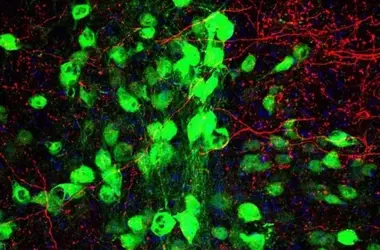
New Brain Pathway Links Tourette's and OCD
Researchers have discovered a neural pathway connecting the brain's motor cortex, responsible for movement, to the insular cortex, which handles emotions and self-awareness. This pathway, identified through a thalamic relay, offers a new understanding of how motor tics in Tourette's syndrome can influence emotional processing. The findings suggest a common biological basis for Tourette's and co-occurring conditions like OCD, paving the way for less invasive treatment approaches such as ultrasound neuromodulation.
 Apr 22, 2026
Unraveling Mental Illness: A Machine Learning Approach to Cellular Brain Activity
Scientists have developed PhysMAP, a new machine learning tool that deciphers the electrical signals of individual neuron types to understand their role in mental illnesses. This innovation allows researchers to identify specific cells involved in conditions like schizophrenia and major depressive disorder directly from living brain recordings, paving the way for targeted psychiatric treatments without genetic manipulation.
 Apr 22, 2026
Achieving Digital Harmony: Overcoming Screen Dependence for Enhanced Well-being
In an era where digital tools are woven into daily life, maintaining digital well-being is crucial. This article explores strategies for mindful technology use, emphasizing the importance of setting boundaries and fostering a balanced relationship with screens. By understanding the impact of digital engagement on mental, physical, and emotional health, individuals can transform passive consumption into intentional interaction, leading to a more hopeful and balanced digital experience. It delves into the pitfalls of excessive screen time and offers practical advice for establishing healthier digital habits.
 Apr 20, 2026
Weight Training Enhances Cognitive Function and Mental Health in Senior Women
A recent clinical trial published in the Journal of Affective Disorders demonstrates that older women can significantly improve memory, cognitive function, and reduce anxiety through weightlifting, regardless of intensity. This study underscores the profound psychological benefits of structured physical exercise as a non-pharmacological intervention for the aging mind, offering a powerful tool against cognitive decline and mood disorders in later life.
 Apr 19, 2026
Belief in Chemical Imbalance Extends Antidepressant Use
A recent study suggests that individuals who attribute their depression or anxiety to a "chemical imbalance" tend to remain on antidepressants for significantly longer durations. This belief also correlates with a reduced likelihood of attempting to discontinue medication, even when symptoms are mild. The findings highlight the profound impact of patient perceptions on long-term treatment adherence.