 Breaking News & Live Updates
- Breaking News & Live Updates
- Breaking News & Live Updates
- Breaking News & Live Updates
- Breaking News & Live Updates
- Breaking News & Live Updates
- Breaking News & Live Updates
- Breaking News & Live Updates
- Breaking News & Live Updates
- Breaking News & Live Updates
Fashion's Impact on Mental Wellness for Middle-Aged Women
A new research initiative has revealed the significant connection between contentment with apparel options and the psychological health of women in their middle years. This demographic, often overlooked by the mainstream fashion industry, demonstrates enhanced mental wellness and reduced tendencies for social withdrawal when their clothing preferences are met. The study emphasizes the critical role of suitable fashion in fostering a positive self-image and active social engagement among these women.
The Psychological Resonance of Apparel Choices
The contemporary fashion landscape frequently overlooks the needs of middle-aged women, prioritizing younger demographics and trends. This oversight creates a paradox where a group with considerable purchasing power and professional standing often feels invisible to major clothing brands. Researchers Jekaterina Rogaten and Viviana Rullo initiated their study to bridge this gap, driven by personal observations and the striking absence of academic investigation into how fashion impacts the mental well-being of this age group. Their work seeks to highlight that the issue extends beyond mere aesthetics, deeply influencing self-perception and social behavior.
The scientists' motivation stemmed from a recognition of how societal perceptions of age shift, creating feelings of invisibility despite growing personal freedom. This shared experience prompted their exploration into how the fashion industry's neglect affects middle-aged women. They noted that despite significant demographic shifts, with the median age in many developed countries increasing, the industry remains largely focused on youth. This study aims to demonstrate the mutual benefits for both consumers and businesses in understanding and addressing the unique fashion needs of middle-aged women, potentially uncovering a vast, underserved market.
Addressing the Overlooked Needs of a Key Demographic
The study, which surveyed 252 women in the UK aged 38 to 67, identified fashion satisfaction as a significant predictor of overall well-being. Participants who were content with available clothing options reported higher levels of optimism and a decreased likelihood of social avoidance. This suggests that access to appropriate and appealing attire serves as a protective factor against withdrawing from social interactions, thereby boosting mood and promoting mental health. The researchers found this correlation to be independent of age anxiety, meaning the psychological benefits of suitable fashion were experienced even by women with concerns about aging.
Analysis of open-ended responses revealed several key challenges. Participants frequently cited a lack of suitable options, expressing frustration with a market dominated by either overly revealing youth-oriented styles or conservative, matronly garments. Fit and sizing were also major concerns, as body shapes change with age, and standard retail sizing often fails to accommodate these physical transformations. Additionally, women sought higher quality, natural fabrics but found them difficult to afford in a market saturated with cheap, fast fashion. The shift to online shopping and inadequate in-store experiences further compounded their difficulties, reinforcing the sentiment among these women that they are largely overlooked by the fashion industry, with significant consequences for their mental well-being and sense of societal belonging.
Other Articles
 Apr 27, 2026
Implementing Positive Psychology Assessments: A Practitioner's Guide
This article offers an in-depth guide for practitioners, coaches, and HR professionals on selecting and applying positive psychology measures. It covers the rationale behind using assessments, a framework for choosing appropriate tools, a step-by-step workflow for implementation, and practical scripts for client interactions. The goal is to facilitate objective progress tracking, enhance client awareness, and build stronger relationships through evidence-based practices.
 Apr 25, 2026
Mediterranean Diet Benefits Linked to Tiny Mitochondrial Proteins
A recent study suggests that the health benefits of the Mediterranean diet may be due to tiny proteins called mitochondrial microproteins. Researchers found that older adults who follow this diet closely have higher levels of Humanin and SHMOOSE, which protect against heart disease and cognitive decline. This discovery offers a new cellular-level explanation for how this diet promotes healthy aging.
 Apr 24, 2026
Self-Perception and Social Expectation Misalignment Drives Loneliness in Borderline Personality Disorder
A recent study published in "Comprehensive Psychiatry" explores how the discrepancy between an individual's self-perception of social preferences and their expectations of others' social preferences contributes to loneliness in people with Borderline Personality Disorder (BPD). This misalignment, where individuals with BPD view themselves as more prosocial but anticipate selfishness from others, creates a cycle of misunderstanding and disappointment, intensifying feelings of isolation.
 Apr 23, 2026
Moderate Caffeine Intake Does Not Trigger Panic Attacks but Influences Behavioral Choices, Study Finds
A recent study published in the Journal of Psychopharmacology indicates that moderate caffeine consumption is unlikely to induce panic attacks in individuals diagnosed with panic disorder. However, it may increase their tendency to avoid uncomfortable situations. This research offers valuable insights for managing anxiety symptoms while maintaining daily dietary habits.
 Apr 22, 2026
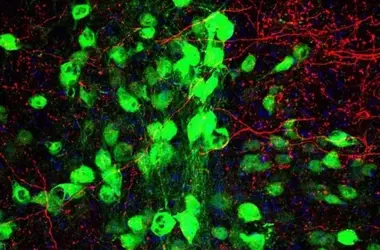
New Brain Pathway Links Tourette's and OCD
Researchers have discovered a neural pathway connecting the brain's motor cortex, responsible for movement, to the insular cortex, which handles emotions and self-awareness. This pathway, identified through a thalamic relay, offers a new understanding of how motor tics in Tourette's syndrome can influence emotional processing. The findings suggest a common biological basis for Tourette's and co-occurring conditions like OCD, paving the way for less invasive treatment approaches such as ultrasound neuromodulation.
 Apr 22, 2026
Unraveling Mental Illness: A Machine Learning Approach to Cellular Brain Activity
Scientists have developed PhysMAP, a new machine learning tool that deciphers the electrical signals of individual neuron types to understand their role in mental illnesses. This innovation allows researchers to identify specific cells involved in conditions like schizophrenia and major depressive disorder directly from living brain recordings, paving the way for targeted psychiatric treatments without genetic manipulation.