 Breaking News & Live Updates
- Breaking News & Live Updates
- Breaking News & Live Updates
- Breaking News & Live Updates
- Breaking News & Live Updates
- Breaking News & Live Updates
- Breaking News & Live Updates
- Breaking News & Live Updates
- Breaking News & Live Updates
- Breaking News & Live Updates
Stress Hormone Disrupts Brain's Navigation System
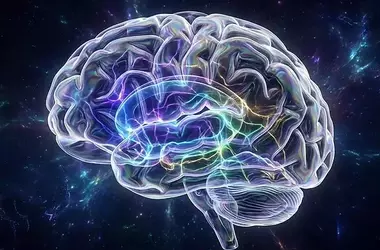
A recent study highlights that the stress hormone cortisol significantly interferes with the brain's ability to navigate. This disruption specifically targets grid cells located in the entorhinal cortex, which are crucial for spatial orientation. Individuals under the influence of cortisol struggle more with navigation tasks, particularly in environments lacking clear landmarks. This research offers insights into how chronic stress might contribute to neurodegenerative conditions like Alzheimer's disease, given that the entorhinal cortex is one of the first brain regions affected by the disease.
The findings indicate that the normal, precise firing patterns of grid cells become "fuzzy" due to cortisol, effectively blurring the brain's internal map. When the primary navigation system is compromised, the brain attempts to compensate by activating other regions, such as the caudate nucleus, suggesting a less efficient backup strategy. This mechanism underscores the importance of stress management not only for immediate cognitive function but also for long-term brain health.
Cortisol's Impact on Internal Navigation
When experiencing stress, individuals often find it harder to orient themselves, a phenomenon now linked directly to the stress hormone cortisol. This hormone acts by interfering with grid cells in the entorhinal cortex, a brain region essential for spatial navigation. Researchers at Ruhr University Bochum, Germany, demonstrated that cortisol causes these cells to fire in a less distinct, or "fuzzy," pattern, effectively degrading the brain's internal coordinate system. This impairment is particularly noticeable in environments devoid of external cues, where the brain must rely solely on its inherent sense of direction. The study involved participants undertaking a virtual navigation task while their brain activity was monitored via MRI, revealing that those who received cortisol performed significantly worse than their placebo-treated counterparts.
The study, published in PLOS Biology, included 40 healthy men who completed navigation tasks under both cortisol and placebo conditions. The primary finding was a marked decrease in navigational accuracy when cortisol was administered, irrespective of the presence of landmarks. This suggests that the stress hormone directly undermines the precision of grid cell activity. When the entorhinal cortex's grid cells faltered, increased activity was observed in the caudate nucleus, indicating the brain's attempt to engage alternative, albeit less efficient, navigation strategies. This compensatory mechanism highlights the critical role of grid cells as the brain's primary "GPS" and the substantial impact of stress on their function.
Implications for Brain Health and Alzheimer's Disease
The disruption of grid cells by cortisol carries significant implications for understanding the broader effects of stress on brain health, particularly its potential link to Alzheimer's disease. The entorhinal cortex, home to these crucial navigation cells, is notably one of the first brain regions to suffer damage in Alzheimer's patients. Given that chronic stress is a known risk factor for dementia, this research provides a mechanistic explanation for how prolonged exposure to stress hormones could destabilize this vulnerable area. The temporary impairment observed in the study, induced by a single dose of cortisol, suggests that sustained high levels of cortisol could lead to more lasting destabilization, thereby increasing susceptibility to neurodegenerative conditions.
While the study showed a temporary effect, the researchers emphasize that chronic stress maintains elevated cortisol levels, potentially leading to long-term issues in the entorhinal cortex. This connection between stress, grid cell dysfunction, and Alzheimer's pathology underscores the importance of stress management as a preventative measure for cognitive decline. Protecting the brain's "hardware" through effective stress reduction strategies may be crucial for maintaining spatial navigation abilities and mitigating the risk of neurodegenerative diseases. The findings call for further investigation into the precise mechanisms by which chronic stress influences the entorhinal cortex and how these insights can be translated into therapeutic intervention
Other Articles
 Mar 12, 2026
Personality Traits and Alcohol Relapse
New research from France indicates that individuals with a strong 'novelty-seeking' personality trait are at a higher risk of relapsing into alcohol use after treatment. The study, involving 88 adults undergoing alcohol withdrawal, found that those who relapsed scored higher on novelty-seeking and lower on harm avoidance. This suggests that personalized treatment plans considering individual personality profiles could improve recovery outcomes.
 Mar 12, 2026
Mastering Conflict Resolution to Strengthen Connections
This article explores practical strategies for repairing strained conversations and rebuilding trust after disagreements. It emphasizes that effective repair focuses on acknowledging one's role and impact, rather than dwelling on blame or intent. By using simple communication scripts and fostering an environment of empathy, individuals can transform conflict into opportunities for deeper understanding and stronger relationships. The goal is to move beyond mere problem-solving to genuinely restore safety and connection.
 Mar 11, 2026
Regular Exercise Enhances Brain's BDNF Response for Improved Cognitive Function
A recent study published in Brain Research reveals that engaging in a new exercise regimen not only builds physical endurance but also trains the brain to release a higher concentration of a crucial restorative protein. Adults who improved their physical fitness over several months demonstrated a more significant surge in this brain-boosting molecule following a single workout. This heightened chemical reaction may elucidate how consistent physical activity contributes to superior cognitive abilities and focus.
 Mar 09, 2026
Misophonia: A Closer Look at its Links to Mental Health and Auditory Disorders
New research shows that misophonia, a condition causing strong negative reactions to specific sounds, is frequently linked with other mental health issues like depression and anxiety, as well as auditory problems such as tinnitus. This study, based on a national sample of U.S. adults, highlights the complex nature of misophonia and its significant impact on daily life, underscoring the need for a better understanding of its underlying mechanisms and co-occurring conditions.
 Mar 09, 2026
Forgiveness and Well-being: A Global Perspective
A large-scale global study reveals that the tendency to forgive others is consistently linked to enhanced overall well-being. This research, spanning 23 countries and over 200,000 individuals, highlights forgiveness as a crucial element for human flourishing, positively impacting psychological and social health. The findings suggest that cultivating a forgiving disposition can be a valuable strategy for improving mental and emotional health worldwide.
 Mar 07, 2026
The Rise of AI in Mental Health Support: A Global Perspective
A recent global study reveals a significant public inclination towards using generative AI, like ChatGPT, for mental health counseling and companionship. While offering benefits such as non-judgmental interaction and 24/7 availability, experts caution against AI replacing professional care and highlight potential long-term cognitive impacts, including on memory and learning functions.