 Breaking News & Live Updates
- Breaking News & Live Updates
- Breaking News & Live Updates
- Breaking News & Live Updates
- Breaking News & Live Updates
- Breaking News & Live Updates
- Breaking News & Live Updates
- Breaking News & Live Updates
- Breaking News & Live Updates
- Breaking News & Live Updates
Social Chatbots Linked to Higher Psychological Distress, Study Reveals
Recent research indicates a significant correlation between the use of social artificial intelligence companions and increased levels of psychological distress, particularly among younger individuals. While these AI tools are frequently promoted as sources of camaraderie and emotional sustenance, findings from a comprehensive study suggest that their use is often associated with feelings of isolation and mental struggles rather than enhancing overall well-being. The study's insights call into question the capacity of these digital entities to fulfill complex human emotional needs, despite their growing sophistication and widespread adoption.
The consistent connection observed across multiple countries between engagement with social chatbots and a decline in mental well-being presents a nuanced challenge for the evolving landscape of human-computer interaction. It underscores the critical distinction between superficial digital engagement and genuine, supportive interpersonal relationships. As AI technology continues to advance, a deeper understanding of these dynamics is essential to ensure that such innovations truly serve to benefit human psychological health rather than inadvertently contributing to distress.
The Paradox of AI Companionship: Distress and Demographics
A recent study published in the Journal of Social and Personal Relationships reveals a striking link between the use of social AI chatbots and increased psychological distress, particularly among younger demographics. Contrary to their marketing as sources of companionship, these AI tools appear to be more frequently used by individuals already experiencing loneliness and emotional struggles, rather than those seeking to enhance an already secure social life. The research, which surveyed thousands of adults across six European nations—Finland, France, Germany, Ireland, Italy, and Poland—consistently found that users of social chatbots reported higher levels of anxiety, depression, and lower mental well-being compared to non-users. This cross-cultural consistency challenges the notion that these technologies effectively alleviate mental health burdens, suggesting instead that they may be a coping mechanism for pre-existing distress. The study also noted that chatbot users were predominantly younger, with some demographic variations across countries, such as a lower likelihood of female users in Germany, Ireland, and Poland.
The research delved into the demographic and psychological profiles of social chatbot users, employing robust statistical methods to analyze data from the longitudinal "Self & Technology" study. Participants provided insights into their frequency of chatbot use, their mental health status via the Mental Health Inventory, loneliness levels using the University of California Loneliness Scale, and self-esteem through a single-item measure. A key finding was the consistent association between social chatbot usage and heightened psychological distress across all six European countries. This suggests that the individuals drawn to these AI companions are often those in greater emotional need. For instance, in France, Germany, Italy, and Poland, chatbot users reported significantly higher levels of loneliness. Interestingly, the study found no direct correlation between chatbot use and the frequency of face-to-face social contact, implying that AI companions do not necessarily replace human interaction but coexist with it. While one unexpected finding in France linked chatbot use to higher self-esteem, the overall trend points to a complex relationship where AI, despite its potential, may not be a complete solution for profound emotional challenges. This emphasizes the need for further longitudinal studies to understand the causal nature of these associations and the true impact of AI on long-term well-being.
Navigating the Nuances: Impact on Well-being and Future Directions
The study highlights a critical paradox: while social chatbots are often designed to offer support and companionship, their current usage patterns frequently correlate with higher psychological distress and loneliness. This suggests that rather than serving as a primary solution for mental health concerns, these AI tools might be sought out by individuals already struggling, potentially acting as a superficial outlet rather than a source of deep emotional succor. The researchers emphasize that these chatbots may function as "weak ties" in a social network, providing temporary conversation but lacking the depth required to effectively buffer against significant emotional challenges. The inherent awareness that interactions are simulated can limit the AI's ability to alleviate profound feelings of loneliness. Therefore, understanding the underlying motivations for chatbot use is crucial for developing future AI technologies that genuinely contribute to human well-being, moving beyond mere conversational utility to foster healthier digital relationships.
The findings from this cross-national study provoke essential questions about the efficacy and long-term implications of social chatbots on mental health. With usage varying across countries—from 8.67% in Ireland to 17.93% in Italy—and a consistent demographic trend of younger users, the research points to a complex interplay between technology, loneliness, and psychological distress. While the study effectively established associations through its cross-sectional design, it acknowledges limitations in determining causality. Future research must adopt longitudinal approaches to track changes in users' well-being over time, distinguishing whether distress drives chatbot use or if the use itself contributes to distress. Moreover, exploring specific user motivations, such as seeking non-judgmental spaces or temporary boosts in self-esteem (as observed in some French users), will be vital. As AI continues to become more integrated into daily life, understanding how individuals form bonds with these digital entities and whether such perceptions genuinely influence well-being will be paramount. This critical examination will ensure that AI companions evolve to address emotional needs more effectively and ethically, supporting digital well-being in an increasingly technologically reliant world.
Other Articles
 Dec 03, 2025
The Perilous Unregulated Market of Mushroom Edibles
The increasing popularity of mushroom edibles, often marketed as nootropics, is raising significant health concerns. With limited regulation and a lack of transparent labeling, consumers are unknowingly exposed to potentially toxic compounds from various mushroom species, including some that can cause severe adverse reactions. This article delves into the dangers of this booming, unregulated market.
 Dec 03, 2025
Dietary Patterns and Cognitive Health: A Scientific Review
A recent study published in "Scientific Reports" suggests that diets rich in vegetables, berries, fish, and whole grains may help decelerate memory loss and safeguard brain health. The research highlights the cognitive benefits of both the Mediterranean and MIND diets, with the latter potentially offering a slight advantage due to its targeted neuroprotective ingredients.
 Dec 03, 2025
Understanding Neurodiversity: Perceptions of Terminology Among Neurodivergent Adults
A recent study explored neurodivergent individuals' perceptions of the terms "neurodiversity" and "neurodivergent." Findings indicate widespread familiarity and personal use of "neurodivergent" to self-describe, highlighting its role as a unifying label. However, the research also uncovered significant frustration with the common misuse of "neurodiverse" to describe individuals rather than groups, underscoring a critical need for accurate terminology to avoid misrepresentation and stigma. The study emphasizes the importance of precise language in fostering inclusion and respect within the neurodivergent community.
 Dec 03, 2025
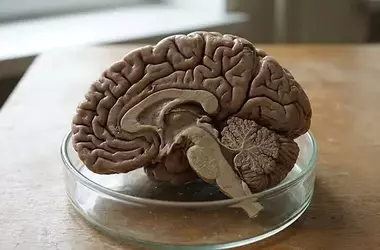
Brain Folding Patterns and ADHD Treatment Outcomes
A recent study published in Translational Psychiatry suggests that the degree of cortical gyrification, or brain folding patterns, in specific frontal regions of the brain may predict the effectiveness of ADHD treatments in adults. While neither group psychotherapy nor methylphenidate showed overall superiority to control conditions, individuals with higher gyrification in certain frontal areas tended to experience greater symptom reduction. This research highlights the potential of brain structure to inform personalized treatment approaches for ADHD.
 Dec 03, 2025
Understanding and Addressing Men's Mental Health Challenges
This article explores the common mental health challenges faced by men, including loneliness, stress, depression, and anxiety. It discusses the societal and cultural factors that often prevent men from seeking help and outlines the signs and symptoms of these conditions. The piece emphasizes that these issues are treatable and provides practical strategies and resources for men to improve their mental well-being, highlighting that seeking support is a sign of strength.
 Dec 01, 2025
Leveraging Life Coaching Templates for Effective Client Progression
Life coaching templates are invaluable tools that provide structure, clarity, and consistency to coaching sessions. They aid coaches in guiding clients through personal and professional development by offering structured approaches, relevant exercises, and ethical guidelines. These templates streamline administrative tasks, track client progress, and ensure a results-driven approach, ultimately enhancing the coaching practice's professionalism and effectiveness.