 Breaking News & Live Updates
- Breaking News & Live Updates
- Breaking News & Live Updates
- Breaking News & Live Updates
- Breaking News & Live Updates
- Breaking News & Live Updates
- Breaking News & Live Updates
- Breaking News & Live Updates
- Breaking News & Live Updates
- Breaking News & Live Updates
Insecure Narcissism Linked to Obsessive Celebrity Fandom
A recent study published in Behavioral Sciences highlights a compelling link between insecure personality characteristics and an intense, unreciprocated devotion to famous individuals. This one-sided connection, known as a parasocial relationship, offers insight into why some people become overly fixated on celebrities.
This extreme fascination with public figures is increasingly prevalent in contemporary society, ranging from casual interest to unhealthy fixations that disrupt daily life. Psychologists often interpret this progression through a framework of absorption and addiction. In this context, individuals with an underdeveloped sense of self may use their idolization of a celebrity as a coping mechanism, with increasing engagement potentially leading to addictive and problematic behaviors. Researchers Lawrence Locker Jr. and Jeff Klibert, alongside Joshua L. Williams, aimed to understand the specific psychological drivers behind this obsessive fan behavior, building on their prior work that identified vulnerable narcissism as a stronger predictor of celebrity worship than grandiose narcissism.
To investigate this, the research team surveyed 293 undergraduate students, focusing on their levels of vulnerable narcissism, commitment to one-sided relationships, and extreme celebrity attachment. The findings showed a strong correlation between higher levels of vulnerable narcissism and greater celebrity attachment, with parasocial relationship commitment acting as a partial mediator. This indicates that individuals with vulnerable narcissistic traits tend to form deep, imaginary bonds with public figures as a way to manage negative emotions, and these bonds, in turn, can foster an unhealthy, obsessive attachment. Notably, the study found that the link between vulnerable narcissism and celebrity worship diminished significantly in the absence of a strong parasocial commitment, underscoring the critical role of this perceived connection.
This research underscores that for some, celebrity attachment functions as a maladaptive coping strategy. Individuals grappling with low self-esteem or psychological distress may utilize these one-sided relationships to compensate for unfulfilling social lives and to find meaning. It's crucial to acknowledge the study's limitations, including its reliance on a specific demographic, which suggests a need for more diverse samples in future research. Understanding these underlying psychological vulnerabilities is vital, especially with the rise of modern technology and social media, which facilitate the rapid formation of parasocial connections. Such insights can help us identify why some individuals transition from mere fans to those with problematic levels of absorption, highlighting the importance of fostering healthy self-identity and genuine social connections.
Other Articles
 Apr 02, 2026
Brain Scans Uncover Neural Signatures of Dark Personality Traits
A new study reveals that individuals with dark triad personality traits (narcissism, Machiavellianism, and psychopathy) exhibit distinct brain activity patterns, even at rest. Researchers found increased baseline activity in areas associated with strategic planning and reduced activity in regions linked to empathy and self-reflection. This research, published in "Cognitive, Affective, & Behavioral Neuroscience," sheds light on the neurobiological underpinnings of these complex personality types and opens avenues for future interventions.
 Apr 01, 2026
AI Reshapes Political Persuasion Theories: Simplicity Over Customization
A recent study employing generative AI challenges long-standing academic beliefs about political persuasion. The research indicates that while AI can effectively shift political views, highly tailored messages or interactive dialogues with bots are no more impactful than a single, well-formulated general argument. This suggests that the perceived advantages of microtargeting and cognitive elaboration in political messaging might be overstated, with basic, persuasive communication proving equally effective.
 Mar 30, 2026
The Art of Science Communication: Tailoring Content for Different Social Media Platforms
A new study explores how scientists can effectively disseminate knowledge across various social media platforms. Researchers found that successful science communication requires adapting content styles to suit the unique characteristics of TikTok, Instagram, and YouTube, as well as the specific scientific discipline being discussed. The findings highlight the importance of understanding audience engagement metrics and linguistic nuances to maximize reach and impact in the digital age.
 Mar 30, 2026
Understanding Psychopathic Traits: Empathy in Social Interactions
A new study explores how psychopathic traits affect empathy in real-world social interactions. It reveals that while individuals with psychopathic tendencies can identify others' emotions, they struggle with actually sharing those feelings, both emotionally and physiologically. This research highlights the limitations of traditional empathy assessments and proposes a shift towards more naturalistic observation methods to better understand the nuances of empathy.
 Mar 29, 2026
Social Media Usage and Loneliness in Young Adults
A new study reveals that reducing social media to one hour daily can significantly lower loneliness in young adults with depression and anxiety. This behavioral change benefits all participants equally, regardless of gender or tendency for social comparison. The findings suggest that managing screen time is a crucial strategy for mental well-being in vulnerable populations, highlighting the importance of real-world interactions over digital connections.
 Mar 27, 2026
Smartphone Overuse Linked to Brain Changes Affecting Emotion Regulation
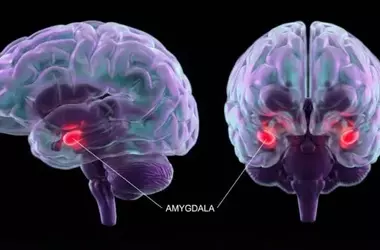
A recent study published in "BMC Psychology" reveals that young adults struggling with excessive smartphone use exhibit altered brain connectivity patterns within the amygdala, a key region for emotional processing. These neural differences are associated with difficulties in managing negative emotions, suggesting a physiological basis for problematic smartphone habits and their impact on mental well-being.