 Breaking News & Live Updates
- Breaking News & Live Updates
- Breaking News & Live Updates
- Breaking News & Live Updates
- Breaking News & Live Updates
- Breaking News & Live Updates
- Breaking News & Live Updates
- Breaking News & Live Updates
- Breaking News & Live Updates
- Breaking News & Live Updates
The Art of Science Communication: Tailoring Content for Different Social Media Platforms
In our increasingly interconnected world, the way scientific insights are conveyed to the general public heavily relies on digital communication channels. Researchers have uncovered that various social media platforms and academic subjects demand distinct approaches to content creation to captivate broad audiences. This groundbreaking study emphasizes that while concise and factual videos resonate most effectively on TikTok, more elaborate and subtly humorous explanations tend to flourish on YouTube. These significant discoveries have recently been published in the journal Computers in Human Behavior.
The research team meticulously analyzed the performance of leading science communicators across Instagram, TikTok, and YouTube. They curated a sample of sixty accounts representing five diverse academic fields: arts and humanities, health sciences, experimental sciences, social sciences, and engineering. By gathering the twenty most popular videos from each profile, totaling twelve hundred videos from early 2022 to late 2023, the researchers employed analytical software to quantify engagement metrics such as comments, user reactions, and viewership. They further utilized voice recognition and linguistic analysis tools to transcribe and evaluate the emotional tone, subjectivity, and irony present in the video content, uncovering fascinating behavioral patterns unique to each platform.
The study's findings indicate that TikTok excels in generating high levels of immediate audience interaction through objective language and intense emotional spikes, favoring quick, attention-grabbing delivery. Instagram, conversely, thrives on visually engaging content presented with a positive emotional framework, often leveraging popular hashtags and optimistic narratives. YouTube, while yielding fewer per-post likes and comments, offers a fertile ground for in-depth, extended explanations, where creators successfully employ subjectivity and irony to sustain audience interest. Furthermore, the research revealed that audience expectations shift based on the scientific discipline; objective presentations are favored in physics and engineering, whereas social sciences benefit from subjective opinions and ironic commentary that spark debate. Health science communication succeeds with relatable, factual information, and experimental sciences thrive on a blend of positive emotions and moderate humor.
This comprehensive study offers invaluable guidance for emerging science communicators, underscoring that effective outreach in the digital sphere is not a one-size-fits-all endeavor. By strategically adapting content styles to align with platform characteristics and disciplinary norms, communicators can foster greater public understanding and appreciation of scientific advancements. The success of science communication on social media ultimately hinges on understanding and creatively responding to the diverse needs and preferences of a global audience, transforming complex information into accessible and engaging narratives that empower and inform the public.
Other Articles
 Mar 30, 2026
Understanding Psychopathic Traits: Empathy in Social Interactions
A new study explores how psychopathic traits affect empathy in real-world social interactions. It reveals that while individuals with psychopathic tendencies can identify others' emotions, they struggle with actually sharing those feelings, both emotionally and physiologically. This research highlights the limitations of traditional empathy assessments and proposes a shift towards more naturalistic observation methods to better understand the nuances of empathy.
 Mar 29, 2026
Social Media Usage and Loneliness in Young Adults
A new study reveals that reducing social media to one hour daily can significantly lower loneliness in young adults with depression and anxiety. This behavioral change benefits all participants equally, regardless of gender or tendency for social comparison. The findings suggest that managing screen time is a crucial strategy for mental well-being in vulnerable populations, highlighting the importance of real-world interactions over digital connections.
 Mar 27, 2026
Smartphone Overuse Linked to Brain Changes Affecting Emotion Regulation
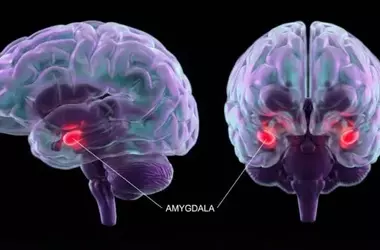
A recent study published in "BMC Psychology" reveals that young adults struggling with excessive smartphone use exhibit altered brain connectivity patterns within the amygdala, a key region for emotional processing. These neural differences are associated with difficulties in managing negative emotions, suggesting a physiological basis for problematic smartphone habits and their impact on mental well-being.
 Mar 25, 2026
The Power of Truth: Research Shows Accuracy Outperforms Misinformation
A new study reveals that truthful messages are more persuasive and shared more often than false information, challenging the common belief that falsehoods spread easily. The research, published in the Journal of Personality and Social Psychology, suggests that social media platform design, not human preference, might be responsible for misinformation's perceived advantage.
 Mar 23, 2026
Fairness, Not Envy, Drives Left-Leaning Support for Wealth Redistribution
A recent study challenges the "politics of envy" narrative, revealing that left-leaning individuals support wealth redistribution primarily due to perceived unfairness in wealth accumulation, rather than malicious envy. The research, published in the Personality and Social Psychology Bulletin, indicates that when wealth is seen as undeserved, support for redistribution rises, regardless of underlying envious tendencies. This shifts the focus from emotional resentment to a belief in meritocracy as the core driver.
 Mar 21, 2026
The Influence of Higher Education on the Development of Progressive Social Views Among Intellectually Gifted Individuals
A recent study published in the Personality and Social Psychology Bulletin explores the intricate relationship between childhood intelligence, college attendance, and the adoption of progressive social attitudes in adulthood. Researchers found that while higher intelligence is generally associated with non-traditional beliefs, college education acts as a critical moderator, significantly amplifying this correlation. This suggests that intellectual aptitude, when combined with the stimulating environment of higher education, propels individuals to question conventional norms and embrace more progressive ideologies during their formative adult years.