 Breaking News & Live Updates
- Breaking News & Live Updates
- Breaking News & Live Updates
- Breaking News & Live Updates
- Breaking News & Live Updates
- Breaking News & Live Updates
- Breaking News & Live Updates
- Breaking News & Live Updates
- Breaking News & Live Updates
- Breaking News & Live Updates
Understanding Psychopathic Traits: Empathy in Social Interactions
A recent study published in Cognition and Emotion sheds light on how psychopathic tendencies impact emotional connection during interpersonal exchanges. The research indicates that individuals displaying psychopathic characteristics may adeptly recognize the emotional states of others, yet they encounter difficulties in genuinely experiencing those emotions themselves. This investigation underscores a divergence between the capacity to intellectually comprehend emotions and the ability to feel them, challenging conventional approaches to empathy assessment.
Historically, the examination of empathy has largely relied on self-report questionnaires or static visual stimuli within controlled laboratory settings. However, such methods often strip away the dynamic, interactive components inherent to genuine human connection. An emerging viewpoint in psychological research advocates for adopting more interactive methodologies to observe empathy as it naturally unfolds.
This shift toward interactive study is particularly crucial for understanding psychopathy, a personality construct characterized by traits such as manipulative behaviors, impulsiveness, risk-taking, and a diminished sense of remorse. A hallmark feature of psychopathy is a notable deficiency in empathy.
Prior investigations into psychopathic traits have predominantly utilized artificial laboratory environments. The authors of this new study aimed to determine whether the empathy deficits linked to psychopathy would manifest differently in the context of authentic conversations. Matthias Burghart, a postdoctoral researcher at the Max Planck Institute for the Study of Crime, Security and Law, emphasized the need for this novel approach: “Traditional research on empathy in psychopathy has almost exclusively relied on questionnaires or tasks where people react to emotional pictures or videos. While these methods capture some aspects of empathy, they do not accurately reflect how empathy functions in daily life.”
The study sought to move beyond the confines of the lab by observing actual social interactions. “Outside the lab, empathy typically develops through interactions with other people. For this reason, we wanted to study empathy in a more naturalistic setting by observing real social interactions between two people. As an added benefit, this approach also allowed us to examine physiological synchrony in psychopathy for the first time,” Burghart explained.
The researchers recruited 82 participants from New Zealand, forming 41 pairs for the study. Approximately half of these pairs consisted of individuals with pre-existing relationships, such as friends or romantic partners, while the other half were strangers meeting for the first time. Each participant completed a standard personality survey to assess psychopathic traits, including fearless dominance, self-centered impulsivity, and coldheartedness.
Self-centered impulsivity is characterized by reckless conduct and poor self-regulation. Coldheartedness describes a profound emotional detachment and general indifference toward others. Following the survey, participants wore specialized vests equipped with sensors to monitor their heart rate and electrodermal activity throughout the experiment. Electrodermal activity measures subtle changes in skin conductance due to sweat gland activity, reflecting physiological arousal or emotional responses. These physiological measurements enabled the scientists to investigate physiological synchrony, which refers to the spontaneous alignment of physical responses between two interacting individuals. The study hypothesized that individuals with higher psychopathic traits would exhibit less of this physical alignment during conversations.
During the experiment, each pair engaged in four six-minute discussions about significant life events, including positive experiences, negative occurrences, and major regrets. The researchers captured video and physiological data as participants conversed naturally. Afterward, each participant rewatched the videos, continuously rating their own emotional intensity using a computer mouse. They then watched the videos again, this time rating their perception of their partner's emotional intensity.
This methodology allowed for the measurement of two distinct facets of empathy. The first, empathic accuracy, gauges the ability to correctly infer another person's emotions by comparing a participant's guess with their partner's self-reported emotional intensity. The second, affective sharing, assesses the extent to which individuals actually experience the same emotions as their conversational partner, determined by the alignment of self-reported emotional intensity between both individuals.
The findings indicated that pairs who knew each other demonstrated greater empathic accuracy, meaning friends and partners were better at estimating each other's emotional intensity than strangers. However, even strangers showed a significant capacity for accurate emotional perception. Interestingly, the study found no correlation between psychopathic traits and empathic accuracy. Individuals with higher psychopathic traits were equally capable of discerning another person's emotional state, suggesting their cognitive ability to recognize feelings remained intact.
However, psychopathic traits significantly impacted emotional and physical connections. Self-centered impulsivity was associated with reduced levels of affective sharing, meaning individuals with this trait were less likely to genuinely experience the emotions of their conversational partners. The physiological data supported a similar trend: while heart rates did not synchronize, skin responses did align for many pairs. Notably, coldheartedness correlated with lower physiological synchrony, indicating a physical disconnection that mirrored their emotional detachment. The nature of the conversation topics did not alter these outcomes.
Burghart commented to PsyPost that “Empathy problems in psychopathy may be broader than previously thought. We found that physiological synchrony, which is an automatic process that occurs between people during interaction, may also be reduced. This could help explain why people with psychopathic traits struggle with affective empathy and opens up an exciting new direction for future research.” The implications of these results suggest that the difficulties individuals with psychopathic traits face in empathy extend beyond cognitive understanding to encompass a diminished capacity for shared emotional experience and physiological attunement during social interactions.
These conclusions, however, warrant careful consideration due to certain limitations. The study involved a relatively small sample size, which could affect the statistical power and generalizability of the findings. Therefore, the results should be viewed as preliminary and necessitate validation through larger-scale investigations. Additionally, the unstructured nature of the conversations, where participants freely interacted, introduced variability in conversational dynamics. Future research could explore the impact of diverse conversational styles and incorporate them into data analysis to further refine our understanding of empathy in psychopathy.
Other Articles
 Mar 29, 2026
Social Media Usage and Loneliness in Young Adults
A new study reveals that reducing social media to one hour daily can significantly lower loneliness in young adults with depression and anxiety. This behavioral change benefits all participants equally, regardless of gender or tendency for social comparison. The findings suggest that managing screen time is a crucial strategy for mental well-being in vulnerable populations, highlighting the importance of real-world interactions over digital connections.
 Mar 27, 2026
Smartphone Overuse Linked to Brain Changes Affecting Emotion Regulation
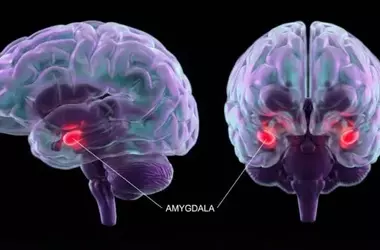
A recent study published in "BMC Psychology" reveals that young adults struggling with excessive smartphone use exhibit altered brain connectivity patterns within the amygdala, a key region for emotional processing. These neural differences are associated with difficulties in managing negative emotions, suggesting a physiological basis for problematic smartphone habits and their impact on mental well-being.
 Mar 25, 2026
The Power of Truth: Research Shows Accuracy Outperforms Misinformation
A new study reveals that truthful messages are more persuasive and shared more often than false information, challenging the common belief that falsehoods spread easily. The research, published in the Journal of Personality and Social Psychology, suggests that social media platform design, not human preference, might be responsible for misinformation's perceived advantage.
 Mar 23, 2026
Fairness, Not Envy, Drives Left-Leaning Support for Wealth Redistribution
A recent study challenges the "politics of envy" narrative, revealing that left-leaning individuals support wealth redistribution primarily due to perceived unfairness in wealth accumulation, rather than malicious envy. The research, published in the Personality and Social Psychology Bulletin, indicates that when wealth is seen as undeserved, support for redistribution rises, regardless of underlying envious tendencies. This shifts the focus from emotional resentment to a belief in meritocracy as the core driver.
 Mar 21, 2026
The Influence of Higher Education on the Development of Progressive Social Views Among Intellectually Gifted Individuals
A recent study published in the Personality and Social Psychology Bulletin explores the intricate relationship between childhood intelligence, college attendance, and the adoption of progressive social attitudes in adulthood. Researchers found that while higher intelligence is generally associated with non-traditional beliefs, college education acts as a critical moderator, significantly amplifying this correlation. This suggests that intellectual aptitude, when combined with the stimulating environment of higher education, propels individuals to question conventional norms and embrace more progressive ideologies during their formative adult years.
 Mar 20, 2026
The Power of Narrative: Crafting Engaging Dating Profiles
New research suggests that using storytelling in online dating profiles significantly increases empathy and romantic interest, outperforming simple bullet-point lists. This approach humanizes individuals, fostering deeper emotional connections and more meaningful initial interactions, similar to how brands use narratives to captivate consumers.