 Breaking News & Live Updates
- Breaking News & Live Updates
- Breaking News & Live Updates
- Breaking News & Live Updates
- Breaking News & Live Updates
- Breaking News & Live Updates
- Breaking News & Live Updates
- Breaking News & Live Updates
- Breaking News & Live Updates
- Breaking News & Live Updates
Brain Scans Uncover Neural Signatures of Dark Personality Traits
A groundbreaking study has unveiled the intrinsic neural architecture underlying the 'dark triad' personality traits: narcissism, Machiavellianism, and psychopathy. Researchers utilized resting-state fMRI scans to map baseline brain activity in individuals exhibiting these characteristics. The findings point to heightened activity in cognitive control networks, crucial for strategic thinking and manipulation, coupled with diminished activity in areas governing empathy and introspection. This comprehensive whole-brain analysis, published in 'Cognitive, Affective, & Behavioral Neuroscience,' advances our understanding of how these antagonistic personalities are biologically manifested, moving beyond previous limited regional studies.
Neural Fingerprints of Antagonistic Personalities Revealed in Groundbreaking Study
In a significant neuroimaging investigation, researchers led by Richard Bakiaj of the University of Trento, Italy, have identified distinct brain activity patterns associated with the dark triad personality traits. The study, drawing on data from two hundred German adults who completed standardized personality questionnaires and underwent functional magnetic resonance imaging (fMRI) scans, provides a nuanced understanding of the neural underpinnings of narcissism, Machiavellianism, and psychopathy.
The research, published in the esteemed journal 'Cognitive, Affective, & Behavioral Neuroscience,' focused on detecting changes in blood flow and oxygenation within the brain during a resting state. This method allowed the team to capture spontaneous neural network activity without the influence of specific cognitive tasks. By employing unsupervised machine learning, brain signals were categorized into twenty distinct neurobiological networks, circumventing subjective anatomical biases. The analysis pinpointed how low-frequency spectral power, an indicator of intrinsic neural excitability, correlated with personality scores.
A key discovery was the increased baseline activity in the central executive network (CEN) among individuals scoring high on dark personality traits. This network, responsible for goal maintenance and problem-solving, suggests a chronically primed cognitive state geared towards strategic social manipulation. Specifically, a positive correlation was found between elevated CEN activity and Machiavellianism, implying a neural predisposition for deceptive tactics and evaluating others' emotional responses. Conversely, a reduction in activity was observed in the posterior segment of the default mode network (DMN). The DMN, vital for self-referential thought and empathy, showed dampened spontaneous activity in participants with higher dark personality scores. This reduction is posited to underlie blunted introspection and diminished empathy, characteristic features of narcissism and psychopathy. The parieto-occipital area, a region within the DMN previously linked to impulsivity, also exhibited decreased activity, aligning with the impulsive and risk-taking behaviors often seen in psychopathic individuals. This suggests a hindrance to future-oriented thinking, leading to reckless decisions.
These contrasting patterns indicate that dark personality features are characterized by enhanced goal-directed vigilance alongside impaired introspective and empathic processing. The study suggests that the brains of these individuals prioritize instrumental manipulation over emotional connection, providing a network-level signature for antagonistic behaviors.
While shedding new light on the biological basis of dark triad traits, the researchers acknowledge several limitations. The reliance on self-reported questionnaires for personality assessment may be influenced by self-presentation bias. Furthermore, the observational nature of the study prevents the establishment of causality, leaving open the question of whether these brain patterns cause the traits or are shaped by them over time. The absence of detailed demographic information also limited the exploration of environmental and cultural influences.
Future longitudinal studies are crucial to track the development of these neural networks over an individual's lifespan, clarifying whether these patterns are immutable biological traits or subject to change. Such research could inform targeted therapeutic interventions for pathological antisocial behaviors.
Insights into the Neural Basis of Personality
This research offers a compelling perspective on the neurobiological underpinnings of personality. It highlights how complex behavioral traits, like those within the dark triad, are not merely psychological constructs but are deeply embedded in our neural architecture. The interplay between enhanced strategic processing and reduced empathic capacity paints a vivid picture of how individuals with these traits navigate the social world. This study serves as a vital step towards understanding the brain's role in shaping our moral compass and social interactions, potentially paving the way for more effective interventions for extreme antisocial behaviors in the future.
Other Articles
 Apr 01, 2026
AI Reshapes Political Persuasion Theories: Simplicity Over Customization
A recent study employing generative AI challenges long-standing academic beliefs about political persuasion. The research indicates that while AI can effectively shift political views, highly tailored messages or interactive dialogues with bots are no more impactful than a single, well-formulated general argument. This suggests that the perceived advantages of microtargeting and cognitive elaboration in political messaging might be overstated, with basic, persuasive communication proving equally effective.
 Mar 30, 2026
The Art of Science Communication: Tailoring Content for Different Social Media Platforms
A new study explores how scientists can effectively disseminate knowledge across various social media platforms. Researchers found that successful science communication requires adapting content styles to suit the unique characteristics of TikTok, Instagram, and YouTube, as well as the specific scientific discipline being discussed. The findings highlight the importance of understanding audience engagement metrics and linguistic nuances to maximize reach and impact in the digital age.
 Mar 30, 2026
Understanding Psychopathic Traits: Empathy in Social Interactions
A new study explores how psychopathic traits affect empathy in real-world social interactions. It reveals that while individuals with psychopathic tendencies can identify others' emotions, they struggle with actually sharing those feelings, both emotionally and physiologically. This research highlights the limitations of traditional empathy assessments and proposes a shift towards more naturalistic observation methods to better understand the nuances of empathy.
 Mar 29, 2026
Social Media Usage and Loneliness in Young Adults
A new study reveals that reducing social media to one hour daily can significantly lower loneliness in young adults with depression and anxiety. This behavioral change benefits all participants equally, regardless of gender or tendency for social comparison. The findings suggest that managing screen time is a crucial strategy for mental well-being in vulnerable populations, highlighting the importance of real-world interactions over digital connections.
 Mar 27, 2026
Smartphone Overuse Linked to Brain Changes Affecting Emotion Regulation
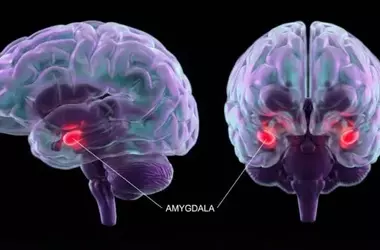
A recent study published in "BMC Psychology" reveals that young adults struggling with excessive smartphone use exhibit altered brain connectivity patterns within the amygdala, a key region for emotional processing. These neural differences are associated with difficulties in managing negative emotions, suggesting a physiological basis for problematic smartphone habits and their impact on mental well-being.
 Mar 25, 2026
The Power of Truth: Research Shows Accuracy Outperforms Misinformation
A new study reveals that truthful messages are more persuasive and shared more often than false information, challenging the common belief that falsehoods spread easily. The research, published in the Journal of Personality and Social Psychology, suggests that social media platform design, not human preference, might be responsible for misinformation's perceived advantage.