 Breaking News & Live Updates
- Breaking News & Live Updates
- Breaking News & Live Updates
- Breaking News & Live Updates
- Breaking News & Live Updates
- Breaking News & Live Updates
- Breaking News & Live Updates
- Breaking News & Live Updates
- Breaking News & Live Updates
- Breaking News & Live Updates
Integrating Jewish Spirituality in Psychotherapy: A Subtle Approach
A recent study sheds light on the nuanced ways psychotherapists in Israel incorporate Jewish spirituality into their practice. This research explores how these professionals navigate their spiritual beliefs within a clinical setting, demonstrating a careful balance between personal conviction and client-centered care. The findings reveal a dynamic process of "veiling and unveiling" spiritual elements, tailored to foster a strong therapeutic relationship and ensure culturally sensitive treatment.
Israeli Therapists Master the Art of Spiritual Integration
In a groundbreaking qualitative study, Ofra Mayseless and Marianna Ruah-Midbar Shapiro, researchers whose work was published in Spirituality in Clinical Practice in 2025, explored the methodologies employed by 15 certified Israeli psychotherapists in integrating Jewish spirituality into their therapeutic work. These professionals, ranging in age from 33 to 74 with an average of 18 years of experience, came from diverse spiritual backgrounds including religious, secular, ultra-Orthodox, and those believing in a universal "superpower or energy." They served a wide spectrum of clients, from secular to various Jewish denominations and even non-Jews. Through in-depth, two-hour individual interviews, the therapists discussed their clinical methods, spiritual views, interventions, and ethical dilemmas. The research revealed that these therapists prioritize caution, often refraining from overtly branding their practice as “Jewish spiritual psychotherapy” or introducing explicit religious content too early. This strategic approach, termed “veiling and unveiling,” allows for a flexible integration of spiritual elements as rapport deepens. The therapists exhibited a universalistic perspective on identity and treatment, rejecting rigid labels and believing their methods could benefit a broad range of individuals. They skillfully employed language, using metaphors and concepts that resonate with both religious and secular clients, sometimes drawing from Jewish texts in a universal manner. Prayer was also utilized, ranging from private contemplation by the therapist to client-invited participation, always adapted to the client's spiritual comfort and clinical appropriateness. This culturally sensitive approach ensures that spiritual integration enhances rather than hinders the therapeutic alliance, aligning with best practices in the field.
This study offers profound insights into the delicate balance required when integrating spirituality into psychotherapy. It highlights the importance of cultural sensitivity and flexibility, demonstrating that therapists can remain authentic to their beliefs while prioritizing the client’s comfort and trust. The "veiling and unveiling" strategy provides a valuable model for practitioners across different spiritual traditions, suggesting that subtle, adaptive integration can be more effective than overt declarations. Ultimately, this research underscores the power of a client-centered approach, where spiritual interventions are carefully introduced to support healing and growth, rather than to impose beliefs.
Other Articles
 Mar 25, 2026
The "Blandification" of Writing: How LLMs Shape Our Text
A recent study indicates that using Large Language Models (LLMs) for writing assistance tends to make text more neutral and less personal. This finding aligns with an earlier MIT study showing decreased author ownership when LLMs are involved. The research suggests that while LLMs can overreach in editing, a conscious and managed approach to their use may be beneficial, allowing writers to maintain their unique voice while leveraging AI for specific tasks.
 Mar 24, 2026
The Evolutionary Advantage of Infant Dependency
New research challenges the conventional perception of human infant helplessness as a biological flaw. Instead, it posits that the unique combination of advanced sensory capabilities and limited motor skills in human babies fosters an extended period of intense social engagement and reliance. This dependency is not a deficit, but a fundamental evolutionary mechanism driving human adaptability, collaborative social structures, and the genesis of morality, by forging profound, lasting bonds between infants and their caregivers.
 Mar 24, 2026
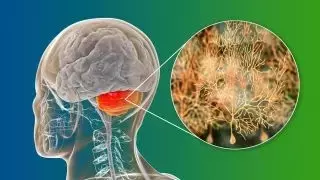
Making Mistakes: The Key to Mastering New Skills
New research indicates that making obvious errors is crucial for optimizing brain function and accelerating skill acquisition. The cerebellum, responsible for muscle memory, utilizes clear error signals to fine-tune movements. Instead of solely focusing on perfect repetition, embracing significant mistakes can activate a "hidden circuit" in the brain, lifting inhibitory brakes and promoting neuroplasticity, thus leading to genuine mastery.
 Mar 24, 2026
Understanding Relapse in Alcohol Use Disorder: Beyond the Short-Term
Alcohol Use Disorder (AUD) is a chronic condition, and relapse can occur even years after sustained sobriety. A recent study highlights that these late relapses are rarely sudden, but rather a gradual process influenced by biological, psychological, and social factors, often stemming from reduced engagement in recovery activities. The study emphasizes the importance of long-term monitoring, continuous care, and community support, challenging the misconception that early abstinence guarantees lifelong recovery and advocating for better clinician education on evidence-based support options like Alcoholics Anonymous.
 Mar 23, 2026
New Study Explores Psilocybin's Role in Brain Plasticity and Antidepressant Effects
A recent study in the Journal of Psychopharmacology explores how psilocybin, found in magic mushrooms, may alleviate depression. The research suggests that psilocybin's interaction with serotonin receptors and its ability to enhance brain cell flexibility are key mechanisms. This study, conducted on mice, investigates the relationship between dosage, receptor activation, and behavioral changes, alongside molecular modifications in brain regions vital for mood and cognition.
 Mar 22, 2026
The Genetic Underpinnings of Aesthetic Chills in Response to Art
New research suggests that the sensation of aesthetic chills, often experienced when deeply moved by music or visual art, has a partial genetic basis. The study, published in PLOS Genetics, indicates that both physical and emotional responses to art may stem from a shared biological foundation. This groundbreaking work used genomic data from over 15,000 individuals to explore the link between specific DNA variations and the propensity to experience these intense artistic reactions, revealing that genetics play a significant role.