 Breaking News & Live Updates
- Breaking News & Live Updates
- Breaking News & Live Updates
- Breaking News & Live Updates
- Breaking News & Live Updates
- Breaking News & Live Updates
- Breaking News & Live Updates
- Breaking News & Live Updates
- Breaking News & Live Updates
- Breaking News & Live Updates
The "Blandification" of Writing: How LLMs Shape Our Text
Emerging research sheds light on how Large Language Models (LLMs) are influencing written communication, pointing towards a trend of increased neutrality and diminished personal expression in texts crafted with AI assistance. This phenomenon, dubbed the “blandification” of writing, suggests a shift in how content is generated and perceived.
The Impact of AI on Written Expression
In a detailed analysis, scientists recently published findings indicating that relying on LLMs for writing tasks can lead to a significant increase in emotionally neutral responses. For instance, in a study exploring the link between financial prosperity and happiness, LLM-assisted texts demonstrated approximately a 70% rise in neutral stances. This outcome echoes previous academic investigations, notably one from MIT, which observed a noticeable reduction in authors' sense of ownership over their work when LLMs were employed in the drafting process.
Personal experiences with these advanced AI tools further substantiate these observations. When instructing an LLM for mere spell-checking, it often exhibits an assertive inclination towards broader revisions, frequently suggesting the removal of distinct, personal phrases in favor of more generalized or factual statements. This preference underscores the AI's tendency to streamline language, sometimes at the cost of individual voice and idiosyncratic flair.
A curious dichotomy, termed the “paradox of preferences,” was highlighted by the study's researchers. Although essays produced with LLM assistance garnered high satisfaction ratings, they scored lower on crucial metrics such as creativity and the reflection of a unique personal voice, compared to human-authored or even LLM-influenced compositions. Natasha Jaques, a lead researcher in this field, aptly summarizes this effect as the “blandification” of writing.
Unlike earlier advancements in writing technology, such as basic grammar and spell checks, LLMs wield a far more extensive influence. Their capabilities extend beyond superficial corrections, delving into the very essence and interpretation of the text. This deeper intervention can, intentionally or not, imbue a piece of writing with a distinct formality and a less personal tone, thereby reshaping its underlying message.
Navigating the Future of AI-Assisted Writing
The “blandifying” influence of LLMs can be viewed as another manifestation of technology's pervasive impact on homogenizing thought and behavior, drawing parallels to concepts like Neil Postman's “technopoly” or Jacques Ellul's “technique.” Rather than succumbing to extreme views of technological optimism or pessimism, a judicious and intentional engagement with LLMs appears to be the most prudent path forward. This involves maintaining a clear purpose and conscious application of these tools, while closely monitoring ongoing studies that illuminate their evolving effects on human cognition and expression.
With empirical evidence now affirming LLMs' propensity to dilute individuality in writing, users can adapt their strategies. For instance, leveraging an LLM to review an already completed draft seems less detrimental to cognitive processes than having the AI compose the text from scratch. This cautious approach is particularly vital given the often slow pace of academic research and the rapid development cycles of AI technologies, where tools can undergo multiple updates before new studies are even published. Therefore, an informed and controlled integration of LLMs is essential to harness their benefits while preserving the unique qualities of human authorship.
The advent of LLMs presents a fascinating challenge and opportunity for writers. While these tools offer undeniable efficiencies and capabilities, they also demand a critical awareness of their impact on creativity and personal expression. As we continue to integrate AI into our creative processes, the ability to consciously manage and direct these technologies will be paramount. This situation encourages us to reflect on what we value in writing—authenticity, individual voice, or sheer efficiency—and how we can strike a balance to ensure that technology serves human creativity rather than overshadowing it. It prompts us to consider how to teach and practice writing in an age where AI can effortlessly generate text, emphasizing the unique human elements that algorithms cannot replicate.
Other Articles
 Mar 24, 2026
The Evolutionary Advantage of Infant Dependency
New research challenges the conventional perception of human infant helplessness as a biological flaw. Instead, it posits that the unique combination of advanced sensory capabilities and limited motor skills in human babies fosters an extended period of intense social engagement and reliance. This dependency is not a deficit, but a fundamental evolutionary mechanism driving human adaptability, collaborative social structures, and the genesis of morality, by forging profound, lasting bonds between infants and their caregivers.
 Mar 24, 2026
Making Mistakes: The Key to Mastering New Skills
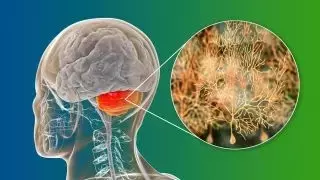
New research indicates that making obvious errors is crucial for optimizing brain function and accelerating skill acquisition. The cerebellum, responsible for muscle memory, utilizes clear error signals to fine-tune movements. Instead of solely focusing on perfect repetition, embracing significant mistakes can activate a "hidden circuit" in the brain, lifting inhibitory brakes and promoting neuroplasticity, thus leading to genuine mastery.
 Mar 24, 2026
Understanding Relapse in Alcohol Use Disorder: Beyond the Short-Term
Alcohol Use Disorder (AUD) is a chronic condition, and relapse can occur even years after sustained sobriety. A recent study highlights that these late relapses are rarely sudden, but rather a gradual process influenced by biological, psychological, and social factors, often stemming from reduced engagement in recovery activities. The study emphasizes the importance of long-term monitoring, continuous care, and community support, challenging the misconception that early abstinence guarantees lifelong recovery and advocating for better clinician education on evidence-based support options like Alcoholics Anonymous.
 Mar 23, 2026
New Study Explores Psilocybin's Role in Brain Plasticity and Antidepressant Effects
A recent study in the Journal of Psychopharmacology explores how psilocybin, found in magic mushrooms, may alleviate depression. The research suggests that psilocybin's interaction with serotonin receptors and its ability to enhance brain cell flexibility are key mechanisms. This study, conducted on mice, investigates the relationship between dosage, receptor activation, and behavioral changes, alongside molecular modifications in brain regions vital for mood and cognition.
 Mar 22, 2026
The Genetic Underpinnings of Aesthetic Chills in Response to Art
New research suggests that the sensation of aesthetic chills, often experienced when deeply moved by music or visual art, has a partial genetic basis. The study, published in PLOS Genetics, indicates that both physical and emotional responses to art may stem from a shared biological foundation. This groundbreaking work used genomic data from over 15,000 individuals to explore the link between specific DNA variations and the propensity to experience these intense artistic reactions, revealing that genetics play a significant role.
 Mar 21, 2026
Achieving Synergy: The Imperative of Human-AI Alignment for Effective Collaboration
New research highlights that AI's effectiveness in the workplace hinges not on its inherent intelligence but on achieving "cognitive alignment" with human collaborators. The study, conducted by Assistant Professor Bei Yan at Stevens School of Business, posits that the common "plug-and-play" approach to AI integration often fails due to fundamental differences in how humans and machines process information. For successful human-AI teamwork, a gradual process of "hybrid cognitive alignment" is crucial, where shared expectations develop through ongoing interaction and experience. This emphasizes that AI's true value lies in its collaborative potential, not just its standalone capabilities.