 Breaking News & Live Updates
- Breaking News & Live Updates
- Breaking News & Live Updates
- Breaking News & Live Updates
- Breaking News & Live Updates
- Breaking News & Live Updates
- Breaking News & Live Updates
- Breaking News & Live Updates
- Breaking News & Live Updates
- Breaking News & Live Updates
The Evolutionary Advantage of Infant Dependency
A recent study published in Child Development Perspectives by developmental psychology researchers at the University of Ottawa re-examines the concept of human infant vulnerability. They argue that this apparent weakness is, in fact, a cornerstone of human nature, prompting an extended period of deep social engagement and nurturing. This unique blend of highly developed sensory systems and underdeveloped motor skills is suggested to be a crucial catalyst for our species' distinctive capacity for adaptation, cooperation, and the development of ethical frameworks, rather than merely a consequence of the 'obstetrical dilemma' or a sign of biological immaturity.
This innovative perspective highlights that human newborns, unlike most animal offspring, possess acute sensory faculties alongside significant motor limitations. This 'sensory-motor gap' compels infants to depend heavily on their caregivers and communities, fostering intricate social interactions over a prolonged period. This extended phase of dependency is not a passive state; babies are active participants, utilizing their sharp observational skills to meaningfully contribute to and influence their social environments from birth. This period of early reliance, far from being a disadvantage, is seen as essential for shaping our complex social architectures and driving cultural progress.
The researchers propose that the inherent helplessness of human infants necessitates fundamental bonds of care between individuals and the collective, which may be the reliable origin of human morality. This profound interaction ensures survival and lays the groundwork for cooperative societies. By looking beyond the traditional view of infant frailty, we can appreciate this extended developmental phase as a powerful evolutionary strategy that has profoundly shaped who we are as a species, fostering a unique blend of intelligence, sociality, and ethical reasoning.
This exploration into the evolutionary underpinnings of infant dependency illuminates a powerful narrative about human resilience and the profound impact of caregiving. It suggests that our inherent need for connection from the earliest stages of life is not a weakness but a fundamental strength that cultivates empathy, fosters cooperation, and ultimately defines our shared humanity.
Other Articles
 Mar 24, 2026
Making Mistakes: The Key to Mastering New Skills
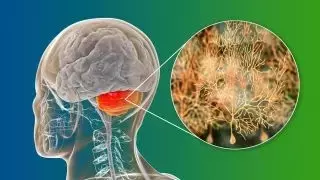
New research indicates that making obvious errors is crucial for optimizing brain function and accelerating skill acquisition. The cerebellum, responsible for muscle memory, utilizes clear error signals to fine-tune movements. Instead of solely focusing on perfect repetition, embracing significant mistakes can activate a "hidden circuit" in the brain, lifting inhibitory brakes and promoting neuroplasticity, thus leading to genuine mastery.
 Mar 24, 2026
Understanding Relapse in Alcohol Use Disorder: Beyond the Short-Term
Alcohol Use Disorder (AUD) is a chronic condition, and relapse can occur even years after sustained sobriety. A recent study highlights that these late relapses are rarely sudden, but rather a gradual process influenced by biological, psychological, and social factors, often stemming from reduced engagement in recovery activities. The study emphasizes the importance of long-term monitoring, continuous care, and community support, challenging the misconception that early abstinence guarantees lifelong recovery and advocating for better clinician education on evidence-based support options like Alcoholics Anonymous.
 Mar 23, 2026
New Study Explores Psilocybin's Role in Brain Plasticity and Antidepressant Effects
A recent study in the Journal of Psychopharmacology explores how psilocybin, found in magic mushrooms, may alleviate depression. The research suggests that psilocybin's interaction with serotonin receptors and its ability to enhance brain cell flexibility are key mechanisms. This study, conducted on mice, investigates the relationship between dosage, receptor activation, and behavioral changes, alongside molecular modifications in brain regions vital for mood and cognition.
 Mar 22, 2026
The Genetic Underpinnings of Aesthetic Chills in Response to Art
New research suggests that the sensation of aesthetic chills, often experienced when deeply moved by music or visual art, has a partial genetic basis. The study, published in PLOS Genetics, indicates that both physical and emotional responses to art may stem from a shared biological foundation. This groundbreaking work used genomic data from over 15,000 individuals to explore the link between specific DNA variations and the propensity to experience these intense artistic reactions, revealing that genetics play a significant role.
 Mar 21, 2026
Achieving Synergy: The Imperative of Human-AI Alignment for Effective Collaboration
New research highlights that AI's effectiveness in the workplace hinges not on its inherent intelligence but on achieving "cognitive alignment" with human collaborators. The study, conducted by Assistant Professor Bei Yan at Stevens School of Business, posits that the common "plug-and-play" approach to AI integration often fails due to fundamental differences in how humans and machines process information. For successful human-AI teamwork, a gradual process of "hybrid cognitive alignment" is crucial, where shared expectations develop through ongoing interaction and experience. This emphasizes that AI's true value lies in its collaborative potential, not just its standalone capabilities.
 Mar 20, 2026
New Study Challenges 'Designer Dog' Temperament Myth
A comprehensive study involving over 9,400 dogs reveals that popular designer crossbreeds, such as Cockapoos, Cavapoos, and Labradoodles, often display more undesirable behaviors compared to their purebred ancestors. The research, utilizing the Canine Behavioral Assessment and Research Questionnaire (C-BARQ), contradicts the common belief that these hybrids are inherently better-behaved or easier to train. While Labradoodles demonstrated a more balanced temperament, Cockapoos exhibited the highest frequency of problematic behaviors, including aggression and hyperactivity. These findings highlight a potential disconnect between the surging popularity of designer dogs and a thorough understanding of their actual behavioral profiles and welfare requirements.