 Breaking News & Live Updates
- Breaking News & Live Updates
- Breaking News & Live Updates
- Breaking News & Live Updates
- Breaking News & Live Updates
- Breaking News & Live Updates
- Breaking News & Live Updates
- Breaking News & Live Updates
- Breaking News & Live Updates
- Breaking News & Live Updates
Beyond the Five: Unveiling the Myriad Dimensions of Human Sensation
Our daily lives, often dominated by visual and auditory inputs from screens, frequently lead us to overlook the extensive range of our sensory system. Yet, at every moment, our senses are actively engaged. Whether it's discerning the varied textures of objects, noticing the subtle tension in our muscles, or appreciating the delicate softness of a fresh pastry, our perceptual apparatus is constantly at work. From the stimulating tingle of toothpaste in the morning to the refreshing rush of shower water, the fragrant scent of shampoo, and the comforting aroma of freshly brewed coffee, our world is a symphony of sensations.
Historically, the ancient philosopher Aristotle proposed a model of five senses, akin to his belief in five fundamental elements of the world, a concept that modern understanding has superseded. Contemporary neuroscience now posits that human beings may possess as many as 22 to 33 different senses. Our interaction with the world is inherently multisensory; we don't process sight, sound, smell, and touch in isolation. Instead, these perceptions merge into a cohesive and integrated experience of our environment and our inner state. For example, what we feel can subtly influence what we see, and conversely, visual cues can alter our auditory perception. The scent of a shampoo, for instance, can modify our perception of hair texture, making it seem silkier if it carries a rose fragrance. Similarly, the odors in low-fat yogurts can create an impression of richness and thickness without any change in their actual composition, demonstrating how flavor perception is deeply intertwined with viscosity when liquids are consumed.
Among these expanded sensory capacities are proprioception, which grants us an awareness of our body's position without visual input, and interoception, enabling us to monitor internal bodily changes like heart rate fluctuations or hunger. Our sense of balance, crucial for navigating our environment, integrates information from our inner ear's vestibular system with visual and proprioceptive data. Furthermore, we experience a sense of agency over our movements, a feeling that can be disrupted in stroke patients, leading to disassociation from their own limbs. Another fascinating aspect is the sense of ownership, where individuals, again often stroke patients, might perceive a body part as alien despite retaining sensation within it. Even our traditional senses are composites; touch, for example, encompasses pain, temperature, itch, and tactile feelings. The act of 'tasting' food is a complex interplay of touch, smell, and gustation, creating the rich flavors we enjoy, with smell often playing a dominant role. These olfactory compounds, released during chewing and sipping, travel from the mouth to the nose, contributing significantly to our flavor perception. Additionally, sight itself is influenced by our vestibular system, as evidenced by the altered visual perception of an aircraft cabin's tilt during ascent, illustrating the integrated nature of our sensory experiences.
The intricate mechanisms of human sensation continue to be a fertile ground for discovery, where philosophers, neuroscientists, and psychologists collaborate to unravel the mysteries of perception. Through interactive exhibits and ongoing research, we gain profound insights into how our senses operate and how our intuitive understanding of them often falls short. By consciously engaging with our surroundings, such as noticing the nuances of a walk outdoors or savoring a meal, we can cultivate a deeper appreciation for the sophisticated and harmonious interplay of our senses, which collectively construct our vibrant reality.
Other Articles
 Apr 08, 2026
The Brain's Innate Grasp of Musical Structure: A New Study Reveals Universal Understanding Beyond Formal Training
A recent study published in "Psychological Science" indicates that humans naturally acquire the fundamental rules of music through lifelong exposure, irrespective of formal training. Both seasoned musicians and those without musical backgrounds demonstrate comparable abilities in utilizing harmonic context to anticipate and recall musical patterns, suggesting a shared cognitive mechanism for processing musical structure. This research challenges the notion that explicit instruction is necessary for a deep understanding of music theory.
 Apr 07, 2026
Rational Arguments Outperform Emotional Appeals in Online Persuasion
New research from Cornell University suggests that impassive, fact-based arguments are more effective in changing opinions online than emotional pleas. A study involving 6,400 participants found that individuals, regardless of political alignment, viewed emotional expressions of fear or sadness as less authentic and appropriate. This skepticism was particularly pronounced with visual emotional cues, leading to the perception of manipulative intent rather than genuine concern.
 Apr 07, 2026
Your Brain's Reward System: A Driver for Imagining the Future
A new theory proposes that the brain's reward system reinforces "mental time travel" – the act of imagining future scenarios. When we envision successful solutions, dopamine is released, encouraging this cognitive behavior. While beneficial for planning, this system can be 'hijacked' by mental disorders, leading to catastrophizing. The theory suggests psychotherapy can retrain the brain for constructive future-thinking.
 Apr 06, 2026
Pigeons' Behavioral Flexibility Challenges Traditional Learning Theories
A new study reveals that pigeons, when rewarded for various button-pecking sequences, do not settle on a single, most efficient pattern. Instead, they maintain behavioral variability, continuously exploring different sequences. This 'edge of chaos' behavior suggests an inherent drive for flexibility, challenging the century-old Law of Effect and hinting at a biological basis for adaptive variation and creativity in unpredictable environments.
 Apr 04, 2026
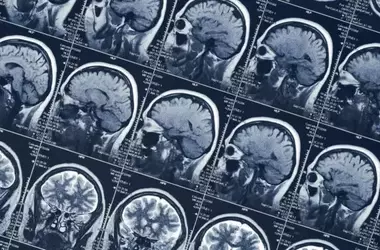
Brain Scans Uncover Neural Mechanisms of Self-Induced Psychedelic-like Trance
A recent neuroimaging investigation has shed light on the brain activity of an individual who can voluntarily enter a profound visionary state without the aid of drugs. The study revealed significant alterations in brain connectivity during this non-ordinary state of consciousness, with decreased visual and somatosensory connections and increased activity in frontoparietal control regions. This groundbreaking research, published in NeuroImage, offers unprecedented insights into the brain's capacity for self-induced altered states, akin to psychedelic experiences.
 Apr 01, 2026
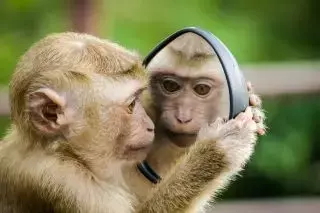
Interconnected Minds: Lessons from Nature for Mental Well-being
This article explores the concept of the mind as an interconnected system, extending beyond individual brains to encompass bodily sensations and interpersonal relationships. Drawing insights from animal studies on group homeostasis in mice and the phenomenon of mirror neurons in monkeys, the piece argues that mental health challenges cannot be addressed solely through individual-focused interventions. It advocates for a holistic approach that recognizes and fosters the inherent interconnectedness of human minds to achieve collective well-being.