 Breaking News & Live Updates
- Breaking News & Live Updates
- Breaking News & Live Updates
- Breaking News & Live Updates
- Breaking News & Live Updates
- Breaking News & Live Updates
- Breaking News & Live Updates
- Breaking News & Live Updates
- Breaking News & Live Updates
- Breaking News & Live Updates
Your Brain's Reward System: A Driver for Imagining the Future
The human brain possesses a remarkable capacity to project itself into future scenarios, a phenomenon known as "mental time travel." This complex cognitive process, which allows individuals to simulate upcoming events and potential outcomes, has long intrigued scientists. A groundbreaking theory suggests that this future-oriented thinking is not merely a deliberate act of planning, but rather a self-reinforcing habit driven by the brain's intrinsic reward mechanisms. This understanding could revolutionize therapeutic approaches for mental health conditions by re-calibrating how our brains anticipate and react to future possibilities.
Professor Ekrem Dere, from Ruhr University Bochum and Sorbonne Université, posits that engaging in mental time travel activates the brain's reward system, thereby encouraging this behavior. His research, detailed in the journal Psychological Review, suggests that when we mentally rehearse a successful resolution to a problem, our brain releases dopamine. This neurochemical reward essentially "pays" us for the cognitive effort expended, transforming future-oriented contemplation into a learned behavior through a process akin to operant conditioning.
Dere's self-reinforcement hypothesis draws parallels to a universal learning principle: behaviors that are rewarded tend to recur more frequently. In this context, if imagining a future solution proves beneficial, the brain's reward system activates, solidifying the mental plan and increasing the likelihood of such future simulations. This theory can be empirically tested using functional magnetic resonance imaging (fMRI), with the expectation that individuals who frequently engage in mental time travel would exhibit a more reactive mesolimbic dopamine system—the brain's primary reward circuit.
However, this adaptive mechanism has a darker side. In the context of mental health disorders such as depression or anxiety, this system can be "hijacked." Instead of facilitating constructive planning, the brain might project negative past experiences into the future, leading to chronic catastrophizing. These negative projections can foster detrimental emotions, undermine self-esteem, and trigger maladaptive safety and avoidance behaviors, potentially making mental disorders chronic. Therefore, a key therapeutic implication of this theory is to retrain the brain to foster constructive future-thinking while disrupting the reward loop associated with negative projections.
The distinction between productive planning and debilitating worry lies in whether a solution is found. While envisioning a resolution triggers a dopamine release, merely catastrophizing without a constructive outcome reinforces fear. This framework also offers insight into individual differences, suggesting that those with a more responsive dopamine system may find the intellectual satisfaction of a good plan more rewarding, leading them to engage in mental time travel more frequently than those who prefer to live spontaneously.
This innovative perspective highlights that mental time travel, while inherently beneficial for navigating life's complexities, is intricately linked to our brain's reward circuitry. Understanding this connection opens avenues for psychological interventions aimed at fostering adaptive future-thinking and breaking cycles of negative mental projections, ultimately empowering individuals to shape their future narratives more positively.
Other Articles
 Apr 06, 2026
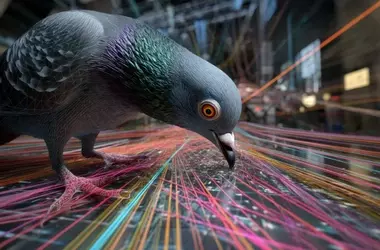
Pigeons' Behavioral Flexibility Challenges Traditional Learning Theories
A new study reveals that pigeons, when rewarded for various button-pecking sequences, do not settle on a single, most efficient pattern. Instead, they maintain behavioral variability, continuously exploring different sequences. This 'edge of chaos' behavior suggests an inherent drive for flexibility, challenging the century-old Law of Effect and hinting at a biological basis for adaptive variation and creativity in unpredictable environments.
 Apr 04, 2026
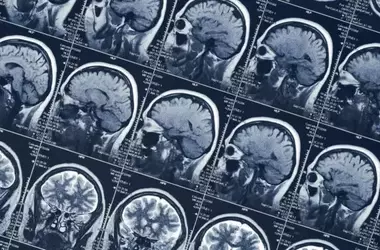
Brain Scans Uncover Neural Mechanisms of Self-Induced Psychedelic-like Trance
A recent neuroimaging investigation has shed light on the brain activity of an individual who can voluntarily enter a profound visionary state without the aid of drugs. The study revealed significant alterations in brain connectivity during this non-ordinary state of consciousness, with decreased visual and somatosensory connections and increased activity in frontoparietal control regions. This groundbreaking research, published in NeuroImage, offers unprecedented insights into the brain's capacity for self-induced altered states, akin to psychedelic experiences.
 Apr 01, 2026
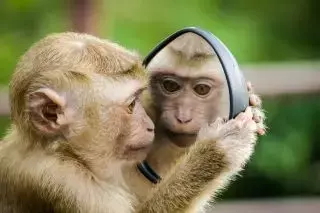
Interconnected Minds: Lessons from Nature for Mental Well-being
This article explores the concept of the mind as an interconnected system, extending beyond individual brains to encompass bodily sensations and interpersonal relationships. Drawing insights from animal studies on group homeostasis in mice and the phenomenon of mirror neurons in monkeys, the piece argues that mental health challenges cannot be addressed solely through individual-focused interventions. It advocates for a holistic approach that recognizes and fosters the inherent interconnectedness of human minds to achieve collective well-being.
 Mar 31, 2026
A New Perspective on Depression: Beyond the 'Broken Brain' Theory
A groundbreaking study challenges the long-held belief that depression is solely a brain disorder caused by chemical imbalances. Instead, it proposes that depression can be a functional signal from the brain, indicating unmet needs in one's life. This alternative perspective, supported by recent research, suggests that reframing depression as a purposeful signal, rather than a sign of a 'broken brain,' can lead to more optimistic outcomes and empower individuals in their recovery journey. The study highlights the potential harm of the 'broken brain' narrative and advocates for a more nuanced understanding of this complex condition.
 Mar 29, 2026
The Allure of “Dark” Personalities in Relationships
Why do some individuals find themselves repeatedly drawn to partners with challenging traits? This article explores the intriguing phenomenon of why people with so-called “light” personalities might be more inclined to enter relationships with those exhibiting “dark” personality traits, such as Machiavellianism and sadism. Drawing on research from a speed-dating study, it delves into the concept of complementarity in relationships and offers insights into the potential pitfalls for individuals who are overly forgiving.
 Mar 27, 2026
AI Revolutionizes Personality Assessment, Enhancing Speed and Accuracy
Researchers at the University of East London have unveiled a groundbreaking machine learning approach that significantly accelerates and refines the DISC personality assessment. This innovative method slashes the traditional 40-question test to a mere 10 highly informative questions, while maintaining over 91% accuracy. Furthermore, it moves beyond rigid categorical assignments, enabling the identification of complex, blended personality profiles, thereby offering more nuanced insights crucial for modern workplace applications in recruitment and team building.