 Breaking News & Live Updates
- Breaking News & Live Updates
- Breaking News & Live Updates
- Breaking News & Live Updates
- Breaking News & Live Updates
- Breaking News & Live Updates
- Breaking News & Live Updates
- Breaking News & Live Updates
- Breaking News & Live Updates
- Breaking News & Live Updates
The Brain's Innate Grasp of Musical Structure: A New Study Reveals Universal Understanding Beyond Formal Training
A new research initiative offers compelling evidence that the human brain possesses an intrinsic capacity to comprehend the foundational principles of music, a skill developed merely through consistent auditory engagement over time. This revelation suggests that a profound understanding of music's underlying structure isn't exclusively reserved for those with formal education in musical theory.
This groundbreaking study involved a series of four experiments utilizing scrambled and intact piano compositions. Participants, divided into groups of trained musicians and non-musicians, underwent tests evaluating their musical memory, predictive abilities, and event segmentation. Strikingly, both cohorts exhibited similar improvements in memory and prediction accuracy as the musical pieces became less disarranged, implying a universal cognitive mechanism at play. While musicians showed a slight edge in explicitly identifying structural alterations, the overall pattern of learning and processing remained consistent across all participants, highlighting the brain's remarkable adaptability to musical patterns.
The findings illuminate that our minds implicitly grasp complex harmonic relationships, enabling us to anticipate future notes and parse continuous musical streams into meaningful segments. This innate ability, cultivated through passive listening, underscores music's role as a fundamental aspect of human cognition, transcending cultural and educational boundaries. It suggests that our engagement with music is far more intuitive and deeply rooted than previously imagined, showcasing an unconscious mastery of musical language.
This research broadens our understanding of how the human brain processes and interprets artistic forms, demonstrating an inherent ability to decode complex structures without explicit instruction. It encourages us to appreciate the subtle yet profound ways our daily experiences shape our cognitive frameworks and suggests a universal appreciation for order and harmony that extends beyond conventional learning, fostering a sense of connection and understanding through the universal language of music.
Other Articles
 Apr 07, 2026
Rational Arguments Outperform Emotional Appeals in Online Persuasion
New research from Cornell University suggests that impassive, fact-based arguments are more effective in changing opinions online than emotional pleas. A study involving 6,400 participants found that individuals, regardless of political alignment, viewed emotional expressions of fear or sadness as less authentic and appropriate. This skepticism was particularly pronounced with visual emotional cues, leading to the perception of manipulative intent rather than genuine concern.
 Apr 07, 2026
Your Brain's Reward System: A Driver for Imagining the Future
A new theory proposes that the brain's reward system reinforces "mental time travel" – the act of imagining future scenarios. When we envision successful solutions, dopamine is released, encouraging this cognitive behavior. While beneficial for planning, this system can be 'hijacked' by mental disorders, leading to catastrophizing. The theory suggests psychotherapy can retrain the brain for constructive future-thinking.
 Apr 06, 2026
Pigeons' Behavioral Flexibility Challenges Traditional Learning Theories
A new study reveals that pigeons, when rewarded for various button-pecking sequences, do not settle on a single, most efficient pattern. Instead, they maintain behavioral variability, continuously exploring different sequences. This 'edge of chaos' behavior suggests an inherent drive for flexibility, challenging the century-old Law of Effect and hinting at a biological basis for adaptive variation and creativity in unpredictable environments.
 Apr 04, 2026
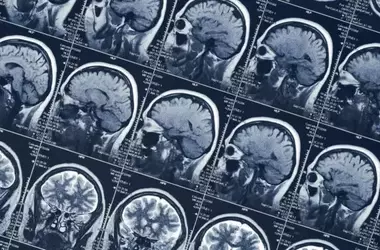
Brain Scans Uncover Neural Mechanisms of Self-Induced Psychedelic-like Trance
A recent neuroimaging investigation has shed light on the brain activity of an individual who can voluntarily enter a profound visionary state without the aid of drugs. The study revealed significant alterations in brain connectivity during this non-ordinary state of consciousness, with decreased visual and somatosensory connections and increased activity in frontoparietal control regions. This groundbreaking research, published in NeuroImage, offers unprecedented insights into the brain's capacity for self-induced altered states, akin to psychedelic experiences.
 Apr 01, 2026
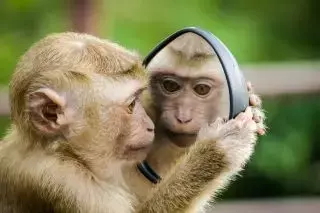
Interconnected Minds: Lessons from Nature for Mental Well-being
This article explores the concept of the mind as an interconnected system, extending beyond individual brains to encompass bodily sensations and interpersonal relationships. Drawing insights from animal studies on group homeostasis in mice and the phenomenon of mirror neurons in monkeys, the piece argues that mental health challenges cannot be addressed solely through individual-focused interventions. It advocates for a holistic approach that recognizes and fosters the inherent interconnectedness of human minds to achieve collective well-being.
 Mar 31, 2026
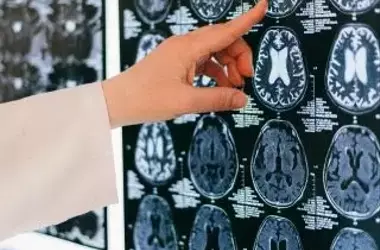
A New Perspective on Depression: Beyond the 'Broken Brain' Theory
A groundbreaking study challenges the long-held belief that depression is solely a brain disorder caused by chemical imbalances. Instead, it proposes that depression can be a functional signal from the brain, indicating unmet needs in one's life. This alternative perspective, supported by recent research, suggests that reframing depression as a purposeful signal, rather than a sign of a 'broken brain,' can lead to more optimistic outcomes and empower individuals in their recovery journey. The study highlights the potential harm of the 'broken brain' narrative and advocates for a more nuanced understanding of this complex condition.