 Breaking News & Live Updates
- Breaking News & Live Updates
- Breaking News & Live Updates
- Breaking News & Live Updates
- Breaking News & Live Updates
- Breaking News & Live Updates
- Breaking News & Live Updates
- Breaking News & Live Updates
- Breaking News & Live Updates
- Breaking News & Live Updates
Wearable Technology's Insights into Healthy Aging
Wearable fitness technology has transcended basic step counting, evolving into sophisticated tools that provide a comprehensive view of our physiological state. These devices, commonly found on our wrists, capture a diverse range of health indicators that are invaluable for understanding and promoting healthy aging. They allow us to monitor vital signs and activity levels continuously, transforming how we perceive and manage our daily health.
The integration of real-time physiological data from these trackers with an individual's self-reported daily experiences offers profound insights into the complex interplay between stress, emotional regulation, and physical health. Specifically, metrics like heart rate and heart rate variability reveal how our bodies react to daily pressures and adapt to environmental demands. Elevated heart rate often signals stress-induced physiological responses, while greater heart rate variability indicates enhanced resilience. Furthermore, the objective measurement of daily activity, including step counts and active minutes, helps researchers understand the role of exercise in stress mitigation. Similarly, these trackers provide detailed information on both the duration and quality of sleep, offering objective data on sleep stages that can be crucial for assessing the impact of stress on rest and recovery.
The continuous data collected by these commercial fitness trackers facilitates a deeper understanding of human resilience and the most effective strategies for managing stress and promoting overall well-being. By combining objective physiological data with subjective experiences, researchers can identify patterns and correlations that were previously difficult to observe. This holistic approach not only advances scientific understanding but also empowers individuals to make informed decisions about their lifestyle, fostering a proactive stance towards maintaining health and vitality as they age.
Embracing the advancements in wearable technology allows us to become more aware of our body's signals and how our daily choices impact our health. It's a powerful reminder that with greater understanding comes the ability to cultivate habits that support resilience, promote emotional balance, and ultimately contribute to a healthier, more fulfilling life journey.
Other Articles
 Dec 05, 2025
The Quest for Ultimate Authority: Navigating Truth, Lies, and Opinions
This article delves into the critical question of where individuals place their ultimate authority. It explores the human tendency to rely on diverse sources like family, friends, wealth, or even oneself for wisdom and guidance. The piece emphasizes that relying on personal opinion without factual basis can lead to misinterpretations and flawed decisions, advocating for a deeper search for truth and a clear distinction between verified facts and mere conjecture, especially in crucial aspects of life and faith.
 Dec 05, 2025
The Overlooked Art of Listening in Relationships
Effective listening is frequently undervalued in interpersonal connections, yet it forms the bedrock of strong relationships. This article delves into the critical components of true listening, moving beyond mere hearing to encompass humility, focus, and curiosity. It explores common obstacles to attentive listening and provides insights into how cultivating this skill can profoundly enhance understanding and connection with others.
 Dec 05, 2025
Redefining Masculinity: The True Strength of 'WIMPS'
This article challenges traditional notions of masculinity, arguing that 'real men' embody traits of mercy, power, and selflessness, rather than a focus on 'flashing their ME.' Drawing from the biblical book of Titus, it emphasizes that genuine strength lies in a life lived according to sound doctrine and focused on glorifying God, ultimately fostering healthier relationships.
 Dec 05, 2025
Building Resilience to Everyday Stressors for Healthy Aging
This article explores how psychological resilience to minor daily stressors contributes to aging well. Drawing on the American Psychological Association's 'Stress in America' survey, it highlights individual differences in stress coping mechanisms. The piece defines daily stressors as common inconveniences and discusses resilience as an adaptive process. It emphasizes the importance of effective stress response for long-term health and outlines five practical strategies to enhance resilience, including physical activity, social engagement, pursuing hobbies, savoring positive moments, and prioritizing sleep. These approaches aim to mitigate the negative health consequences associated with heightened emotional reactivity to daily hassles.
 Dec 05, 2025
Navigating Relationships: Are You Part of the Solution or the Problem?
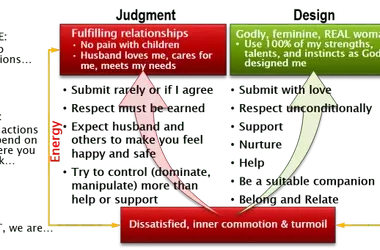
This article explores how individual 'judgments' in relationships, stemming from inherent male and female designs, can lead to painful and unfulfilling interactions. It highlights the oscillation between a 'design structure' focused on godly living and a 'judgment structure' driven by self-interest. The piece argues that understanding and overcoming these judgments, particularly within marriage, is crucial for fostering healthy and divinely-guided connections, ultimately offering a path to becoming part of the solution rather than contributing to relational problems.
 Dec 05, 2025
Understanding the Freedom V Principle: A Guide to Self-Governance and Responsible Liberty
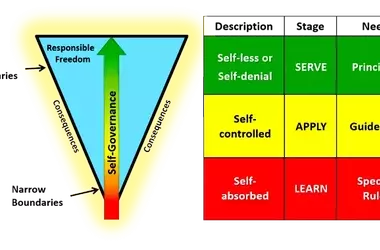
This article explores the "Freedom V Principle," a concept designed to illustrate the intricate relationship between individual freedom and self-governance. It delves into the graphical representation of this principle, explaining how boundaries define acceptable behavior, how freedom expands with increased self-governance, and the consequences of exceeding these established limits. The article also introduces a three-tiered model of self-governance, ranging from self-absorbed to selfless, highlighting its applicability in various organizational and relational contexts.