 Breaking News & Live Updates
- Breaking News & Live Updates
- Breaking News & Live Updates
- Breaking News & Live Updates
- Breaking News & Live Updates
- Breaking News & Live Updates
- Breaking News & Live Updates
- Breaking News & Live Updates
- Breaking News & Live Updates
- Breaking News & Live Updates
Teaching Your Canine Companion Human Names
Many dogs already possess an intuitive understanding of the names of the people they cohabit with, often observing the consistent linkage of specific words to certain individuals. This natural learning stems from how frequently humans use each other's names in daily interactions – for greetings, attracting attention, or simply locating someone. Moreover, the announcement of a person's arrival, such as "Josh is home!", further reinforces these associations. Consequently, your canine companion may already be familiar with your name and those of your family members. However, for dogs that haven't quite grasped this concept, there's a straightforward and enjoyable game that can effectively teach them human names.
Engaging Your Dog with the "Family Circle" Game
An excellent and simple technique to help your dog learn the names of household members is a playful activity known as "Family Circle." This interactive game involves a few easy steps:
- Begin by having at least three people sit in a spacious circle.
- One individual, let's call her Sarah, initiates the game by asking, "Where's Michael?"
- Upon hearing his name, Michael should then call the dog to come to him.
- If the dog successfully goes to Michael, it should be rewarded with a tasty treat or positive reinforcement. If the dog approaches another person, it should be gently ignored.
- Next, it becomes Michael's turn to prompt the dog, perhaps by asking, "Where's Sarah?"
- Sarah then calls the dog to her.
- Should the dog respond correctly by going to Sarah, she provides the reward.
- This pattern continues, with each person taking a turn to call the dog, thereby reinforcing the name-to-person connection.
It's important to note that this game is most effective with three or more participants. With only two people, a dog might merely learn to go to the person who didn't just speak, rather than truly associating a name with an individual.
Advancing the Training: Enhancing Difficulty and Practical Applications
Initially, during the "Family Circle" training, your dog should always be verbally directed to the person whose name is called, and that person should also call the dog. Furthermore, the person should remain within the dog's line of sight. As your dog's proficiency grows, you can gradually eliminate the direct "come" cue, allowing the dog to respond solely to the name. Eventually, the game can be played with the designated person out of sight, challenging your dog to locate them using their newly acquired understanding of names.
This training offers numerous practical advantages. It can be invaluable in scenarios where a person is temporarily out of sight or earshot, or even in more serious situations like finding a lost individual. The game also serves as an excellent practice for your dog's recall abilities. Beyond these benefits, it provides physical exercise for your dog without requiring constant movement from you, and it offers significant mental stimulation, keeping your dog engaged and content even when you are occupied with other tasks. It's a truly win-win situation for both dog and owner.
Other Articles
 Jan 12, 2026
The Art of Canine Communication: Understanding Your Dog's Interpretation of Tone
Dogs are highly attuned to the nuances of human speech, particularly vocal tone. This article explores how pet owners can leverage this understanding to enhance training and strengthen their bond with their furry companions. It emphasizes that while dogs may not grasp every word, they interpret the emotion and intent behind our voices, influencing their behavior and emotional state. Effective communication with dogs involves conscious control over our tone, ensuring it's consistently positive and clear, especially during training.
 Jan 12, 2026
The Indispensable Kong: A Dog Owner's Essential Tool
This article highlights the profound utility of Kongs in enriching a dog's life, from basic training to managing challenging situations. It delves into the history of Kong's invention by Joe Markham and provides detailed, tiered strategies for stuffing Kongs, ranging from simple to advanced techniques. The piece also offers practical advice on integrating Kongs into daily routines to alleviate stress for both pets and owners, emphasizing convenience and variety in their use and preparation.
 Jan 12, 2026
Jogging with Your Canine Companion: A Guide to Safe and Enjoyable Runs
This article offers comprehensive advice for dog owners considering running with their pets. It covers crucial aspects such as assessing your dog's suitability for running, considering weather conditions, gradually introducing them to the activity, selecting appropriate gear, and monitoring their well-being throughout. The piece emphasizes prioritizing the dog's safety and comfort while highlighting the benefits of this shared activity.
 Jan 12, 2026
The Path to Becoming a Professional Dog Trainer
Becoming a successful dog trainer involves not just working with canines but also effectively guiding their human companions. This career path necessitates a blend of theoretical knowledge, hands-on experience, and formal certification. Aspiring trainers should focus on positive reinforcement methods, continuous learning, and gaining practical exposure to various dog behaviors. Specialization can also open up diverse career opportunities within the field.
 Jan 12, 2026
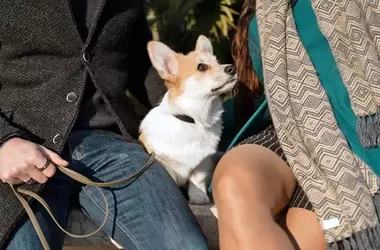
Do Dogs Understand Their Names as Identity or as a Command?
Many dog owners believe their pets understand their names as a form of identity, similar to how humans perceive their own names. However, scientific research suggests a more complex reality. While dogs certainly react to their names, this reaction is often a conditioned response to a cue for attention rather than a deep sense of self-recognition. This article delves into how dogs learn and interpret their names, exploring the fascinating interplay between canine cognition and human communication.
 Jan 12, 2026
Effective Training Strategies for Older Dogs
It's a common misconception that senior dogs cannot learn new behaviors. This article dispels that myth, emphasizing that older dogs are fully capable of training, and doing so can significantly enrich their lives and strengthen the bond with their owners. It covers crucial considerations for training older dogs, such as understanding age-related changes, adapting training methods, and using positive reinforcement to ensure a successful and enjoyable experience for both the dog and the owner.