 Breaking News & Live Updates
- Breaking News & Live Updates
- Breaking News & Live Updates
- Breaking News & Live Updates
- Breaking News & Live Updates
- Breaking News & Live Updates
- Breaking News & Live Updates
- Breaking News & Live Updates
- Breaking News & Live Updates
- Breaking News & Live Updates
Speech Analysis for Psychiatric Diagnosis
A groundbreaking computer-based method has emerged, demonstrating the potential to revolutionize psychiatric diagnosis by analyzing mere minutes of recorded speech. This innovative approach holds promise for identifying various mental health conditions, with a particular focus on psychotic disorders such as schizophrenia and bipolar disorder. By leveraging advanced analytical techniques, the research addresses long-standing challenges in early detection and aims to provide clinicians with a more robust tool for patient assessment.
This pioneering research introduces a sophisticated computer-based method designed to analyze brief speech samples, typically around five minutes in duration, to aid in the differential diagnosis of various psychiatric conditions. The primary objective is to enhance the early identification of disorders like schizophrenia, psychosis, and bipolar disorder, where timely intervention significantly impacts patient outcomes. The methodology moves beyond traditional diagnostic approaches by integrating speech pattern analysis, offering a non-invasive and potentially more objective assessment tool. This development marks a crucial step forward in addressing the complexities of psychiatric diagnosis, particularly in conditions where early treatment is paramount.

Advancing Early Psychiatric Diagnosis through Speech Analysis
A novel computer-based method analyzes short speech recordings to differentiate psychiatric conditions, including schizophrenia, psychosis, and bipolar disorder. This innovation aims to improve early diagnosis, which is critical for better outcomes in psychotic disorders. The method tackles current hurdles by standardizing speech sample collection, using larger datasets, and expanding its diagnostic utility beyond isolated psychosis. This research highlights the significant potential of AI-driven tools in transforming mental health assessment and intervention strategies.
The newly developed computer-based method offers a significant leap forward in psychiatric diagnostics, utilizing only about five minutes of recorded speech to help distinguish among individuals grappling with various mental health challenges, notably schizophrenia, psychosis, and bipolar disorder. This technological advancement is particularly geared towards enabling earlier detection, a factor unequivocally linked to improved long-term outcomes in psychotic conditions. The research endeavors to overcome existing barriers to the clinical application of speech analysis by advocating for a standardized protocol for collecting speech samples—a departure from the often-inconsistent laboratory-based recordings of the past. Furthermore, the initiative is focused on incorporating larger, more diverse patient cohorts to ensure the robustness and generalizability of the findings, alongside broadening the diagnostic scope beyond solely identifying psychosis to reliably differentiate it from other related conditions. This comprehensive approach promises to usher in a new era of precision in mental health assessment.
Integrating Speech Characteristics and Machine Learning for Clinical Application
For years, researchers have recognized the correlation between speech patterns and key psychosis symptoms, such as disorganized thought and altered vocal expression. Recent efforts combine these insights with machine learning to detect illness, gauge symptom severity, or predict relapse. This new study exemplifies this trend, hypothesizing that AI-assisted speech analysis can yield valuable clinical data. The method improves diagnostic accuracy by standardizing data collection, increasing sample sizes, and broadening its clinical utility across various psychiatric conditions.
The understanding that speech and language patterns are intricately linked to core symptoms of psychosis, including disorganized thought processes, alterations in vocal expression, and diminished emotional reactivity, has long been a subject of scientific inquiry. Building upon this foundational knowledge, contemporary research has increasingly focused on integrating various speech characteristics with advanced machine-learning algorithms. This fusion aims to achieve several critical objectives: more accurately detecting the presence of psychotic illness, quantitatively assessing the severity of symptoms, and even predicting potential relapses. The current paper underscores this innovative trend, operating under the central hypothesis that computer- or AI-aided analysis of recorded speech can furnish clinicians with remarkably useful and actionable information. A key strength of this methodology lies in its concerted effort to address prior limitations that hindered clinical adoption. This includes establishing a standardized approach for the collection of speech samples, moving beyond the confines of controlled laboratory settings. Furthermore, the research emphasizes the use of significantly larger sample sizes and a broader clinical scope, ensuring that the diagnostic utility extends beyond merely identifying psychosis to accurately distinguishing it from other psychiatric conditions, thereby enhancing both the precision and applicability of the diagnostic tool.
Other Articles
 Dec 10, 2025
Unraveling the Stress-Protection Mechanism: A Novel Genetic Insight
Groundbreaking research published in Molecular Psychiatry delves into the intricate mechanisms by which stress hormones influence our health. Led by Dr. Brian F. Corbett and Dr. Seema Bhatnagar, the study reveals how glucocorticoid receptors regulate a crucial gene that shields us from chronic stress. This discovery not only clarifies the body's stress response but also highlights a unique protective role in females, even without overt stress, offering new avenues for understanding and mitigating stress-related disorders.
 Dec 10, 2025
Unraveling the Neural Basis of Motivation Decline in Aging and Isolation
This article explores the intricate relationship between aging, social isolation, and reduced motivation, particularly in the context of psychiatric conditions like depression. Drawing insights from a study conducted on mice, it delves into the physiological and neurological underpinnings of this decline, proposing that both factors independently and synergistically contribute to diminished engagement in effortful activities. The research, led by Drs. McCall and Imai, highlights potential avenues for understanding and potentially mitigating motivation loss.
 Dec 10, 2025
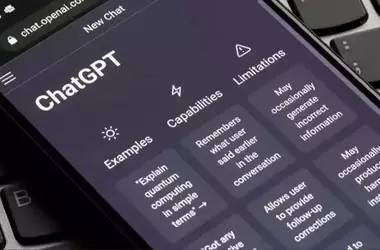
Smartphones and AI: Revolutionizing Psychiatric Care for Adolescents
A groundbreaking pilot study explores the potential of smartphones and advanced AI models like ChatGPT in transforming mental health assessment and treatment. Focusing on adolescents with depression undergoing behavioral activation therapy, the research investigates how passive mobile data and AI-driven text analysis can provide real-time insights into behavioral changes. This innovative approach aims to move beyond traditional self-reports, offering a more objective and personalized way to monitor therapeutic progress and adjust interventions, ultimately paving the way for data-informed psychotherapy.
 Dec 09, 2025
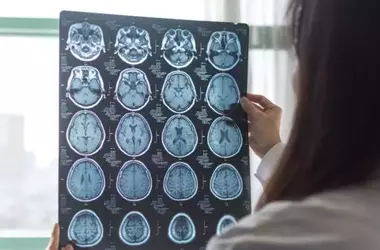
New Insights into Post-Concussion Syndrome: Targeting the Salience Network for Treatment
A recent study led by Dr. Sean M. Nestor offers a novel approach to understanding and treating persisting symptoms after concussion (PSaC). By analyzing neural network dysfunction, particularly within the salience network, researchers have identified specific brain regions within the dorsolateral prefrontal cortex (DLPFC) as potential targets for repetitive transcranial magnetic stimulation (rTMS). This research paves the way for more individualized and effective neuromodulation therapies for PSaC, moving beyond general depression treatments to address the diverse symptom profile of concussion patients.
 Dec 08, 2025
Rapid Verbal Fluency Test Offers Early Brain Health Insights
New research suggests that the ability to generate words in a specific category within 15 seconds can powerfully predict overall cognitive health. Published in 'Experimental Aging Research', the study indicates that this initial burst of word retrieval is more indicative of cognitive status than performance over a longer period. This finding highlights a potential quick and effective tool for the early detection of cognitive decline, crucial for managing neurodegenerative diseases like dementia.
 Dec 08, 2025
Inflammation's Impact on Depression's Anhedonia
New research delves into the connection between systemic inflammation and anhedonia in individuals with major depressive disorder (MDD). The study reveals that MDD patients with elevated inflammatory markers exhibit a more pronounced anhedonic response to inflammatory triggers, suggesting a unique subtype of depression. This discovery could pave the way for targeted treatments and highlight the vulnerability of certain MDD patients to inflammatory exposures.