 Breaking News & Live Updates
- Breaking News & Live Updates
- Breaking News & Live Updates
- Breaking News & Live Updates
- Breaking News & Live Updates
- Breaking News & Live Updates
- Breaking News & Live Updates
- Breaking News & Live Updates
- Breaking News & Live Updates
- Breaking News & Live Updates
The Psychological Shield Against Dementia: Cultivating Purpose for Brain Health
Conventional wisdom often places the prevention of cognitive decline squarely in the realm of biological factors, focusing on molecular pathways and physical interventions like diet and exercise. However, a growing body of scientific inquiry is illuminating a crucial, yet often overlooked, dimension: the profound influence of psychological well-being on our brain's resilience. This shift in perspective compels us to broaden our understanding of dementia prevention, recognizing that our inner states can be as vital as our physiological ones.
Cultivating Purpose: A Potent Strategy for Cognitive Vitality
In a groundbreaking confluence of research findings, Dr. Austin Perlmutter highlights how specific psychological attributes are emerging as significant protective factors against the onset of dementia. Recent studies have brought to light the remarkable impact of optimism and conscientiousness. For instance, a publication in Innovation Aging revealed an 18% lower risk of dementia over several years for individuals exhibiting higher levels of optimism. Concurrently, an analysis in Alzheimer's and Dementia found that elevated conscientiousness, extraversion, and positive affect correlated with superior cognitive function, while neuroticism and negative affect presented the inverse correlation. Yet, the most compelling evidence stems from an October 2025 paper in The American Journal of Geriatric Psychiatry, which posited that a robust sense of life purpose could diminish the risk of cognitive impairment by up to 28%, a benefit observed even among those genetically predisposed to Alzheimer's disease.
These psychological constructs, once considered static, are now understood to be remarkably adaptable. A person's sense of purpose, in particular, demonstrates considerable malleability, suggesting it can be actively nurtured. Establishing and achieving personal objectives, for example, is a proven method for reinforcing one's sense of purpose. Practical avenues for enhancing this vital psychological state are readily accessible. Engaging in volunteer work not only fosters a greater sense of purpose—with associated increases in optimism—but also contributes to community well-being. Seeking inspiration from admired role models and integrating their commendable qualities into one's own daily life can offer a structured path to personal growth. Participating in spiritual or religious communities often provides a framework for purpose and belonging. Additionally, serving as a mentor, sharing accumulated knowledge and skills, can profoundly enrich one's sense of contribution. Lastly, a consistent practice of self-reflection and gratitude can significantly deepen and expand one's existential meaning. These deliberate actions underscore a proactive approach to mental health, offering tangible strategies for bolstering cognitive resilience.
The burgeoning evidence unequivocally underscores the integral role of psychological health in safeguarding against dementia. It calls for a paradigm shift, urging us to consciously invest in our mental well-being as a cornerstone of comprehensive brain health. Embracing strategies to cultivate optimism, conscientiousness, and a profound sense of purpose is no longer merely about emotional enrichment; it is an active and strategic endeavor in preserving our cognitive futures. This holistic perspective offers a powerful, accessible pathway to a healthier mind and a more resilient brain, reminding us that the power to shape our cognitive destiny lies partly within our psychological grasp.
Other Articles
 Jan 14, 2026
Music Education's Impact on Children's Cognitive Development
A study using the Adolescent Brain Cognitive Development (ABCD) dataset indicates that consistent music training enhances vocabulary skills in children, potentially mitigating academic challenges associated with lower-income environments. This research, published in the Annals of the New York Academy of Sciences, highlights music's role as a cognitive equalizer.
 Jan 14, 2026
Books Over Screens: Enhancing Early Childhood Language and Emotional Skills
A study published in 'Computers in Human Behavior' reveals that replacing screen time with shared reading significantly improves language and emotional development in preschoolers, regardless of whether the screen content is educational. This research highlights the unique benefits of interactive reading experiences over digital media for young children's cognitive and socio-emotional growth.
 Jan 13, 2026
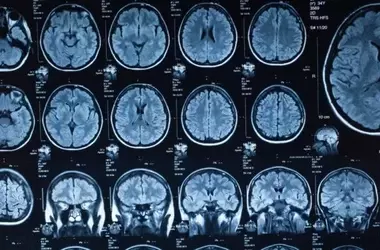
Scientists Uncover Five Distinct Phases of Brain Structural Development Across the Human Lifespan
New research challenges the conventional understanding of brain development, revealing that brain structure undergoes five distinct, non-linear phases throughout life. Analyzing thousands of brain scans from individuals aged zero to ninety, scientists identified critical turning points at approximately ages nine, 32, 66, and 83. These findings suggest a more dynamic and complex maturation process for the human brain, with implications for understanding neurological and mental health conditions.
 Jan 12, 2026
Understanding Cancer Trends in Younger Adults: Detection vs. Incidence
Recent discussions highlight a perceived "epidemic" of cancer among younger individuals, fueled by alarming headlines and prominent cases. However, a closer examination of epidemiological data reveals a more nuanced picture. While cancer diagnoses in those under 50 have indeed increased, overall mortality rates for this age group have largely remained stable or even declined, suggesting that enhanced detection methods, rather than a genuine surge in underlying disease, may be the primary driver behind these rising incidence figures.
 Jan 10, 2026
Random Signals from Support Cells Crucial for Long-Term Memory Formation
New research challenges the traditional view of memory formation, revealing that astrocytes, a type of brain support cell, generate spontaneous electrical signals essential for stabilizing long-term memories. Published in the Proceedings of the National Academy of Sciences, the study suggests that these seemingly random calcium fluctuations in astrocytes help cement neural connections by releasing brain-derived neurotrophic factor (BDNF), a protein vital for synaptic strengthening. This unexpected discovery highlights the brain's reliance on an element of unpredictability to ensure memory persistence.
 Jan 08, 2026
Refined Diets and Memory Impairment in the Aging Brain
A recent study published in "Brain, Behavior, and Immunity" reveals that consuming refined diets for as little as three days can significantly impair memory function in the aging brain. This impairment is particularly noticeable in the amygdala, a brain region crucial for processing fear and emotional memories. The research suggests that the lack of dietary fiber, common in refined foods, may disrupt brain cell energy production and inflammatory signaling, leading to cognitive decline. The study utilized male rats at different life stages to assess the impact of various refined diets on memory and mitochondrial function, highlighting the rapid and detrimental effects of such diets on older subjects.