 Breaking News & Live Updates
- Breaking News & Live Updates
- Breaking News & Live Updates
- Breaking News & Live Updates
- Breaking News & Live Updates
- Breaking News & Live Updates
- Breaking News & Live Updates
- Breaking News & Live Updates
- Breaking News & Live Updates
- Breaking News & Live Updates
Understanding Cancer Trends in Younger Adults: Detection vs. Incidence
Recent reports of increasing cancer diagnoses in individuals under 50 have raised concerns, yet a detailed analysis of public health data suggests a more optimistic outlook regarding overall mortality. While the detection of certain cancers has undoubtedly improved, leading to higher reported incidence rates, this does not necessarily equate to a corresponding rise in fatalities. For many forms of cancer, advancements in screening technologies and medical imaging mean that more cases are being identified earlier, including those that might be slow-growing or clinically less significant. This improved diagnostic capability allows for earlier intervention, contributing to stable or even declining mortality rates across various cancer types within this demographic. Therefore, the observed increase in diagnoses can largely be attributed to the effectiveness of modern medical surveillance rather than an alarming surge in the actual prevalence of life-threatening cancers among younger populations.
Despite the generally reassuring trend, it is crucial to acknowledge specific areas that warrant continuous monitoring and investigation. Notably, certain cancers, such as colorectal and endometrial cancers, have shown a modest but concerning increase in mortality rates among younger adults. These particular trends suggest that for these conditions, the rise in incidence might indicate a genuine increase in clinically significant disease, rather than solely improved detection. Researchers hypothesize that factors like rising obesity rates and changing medical practices could be contributing to these specific increases, underscoring the need for targeted research and public health initiatives. Understanding these distinct patterns is vital for developing effective prevention strategies and ensuring that medical resources are allocated appropriately to address emerging health challenges.
In conclusion, while the initial apprehension surrounding a potential cancer "epidemic" in younger individuals is understandable, a comprehensive look at the data points to a more complex reality. The overall stability or decline in cancer mortality rates for those under 50, despite increased diagnoses, largely reflects the success of early detection and therapeutic advancements. However, the specific increases in mortality for colorectal and endometrial cancers serve as a powerful reminder that vigilance and continuous research are paramount. This nuanced understanding emphasizes the dynamic interplay between diagnostic capabilities, treatment efficacy, and evolving lifestyle factors in shaping public health outcomes. By remaining proactive in research, preventive care, and personalized medicine, we can continue to advance in the fight against cancer and foster a future where health and well-being are prioritized for all generations.
Other Articles
 Jan 10, 2026
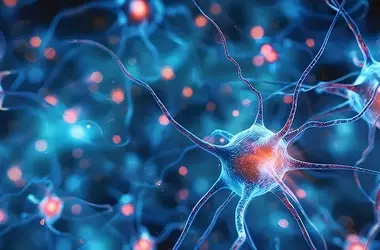
Random Signals from Support Cells Crucial for Long-Term Memory Formation
New research challenges the traditional view of memory formation, revealing that astrocytes, a type of brain support cell, generate spontaneous electrical signals essential for stabilizing long-term memories. Published in the Proceedings of the National Academy of Sciences, the study suggests that these seemingly random calcium fluctuations in astrocytes help cement neural connections by releasing brain-derived neurotrophic factor (BDNF), a protein vital for synaptic strengthening. This unexpected discovery highlights the brain's reliance on an element of unpredictability to ensure memory persistence.
 Jan 08, 2026
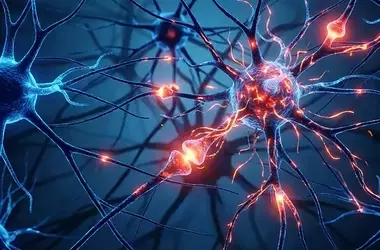
Refined Diets and Memory Impairment in the Aging Brain
A recent study published in "Brain, Behavior, and Immunity" reveals that consuming refined diets for as little as three days can significantly impair memory function in the aging brain. This impairment is particularly noticeable in the amygdala, a brain region crucial for processing fear and emotional memories. The research suggests that the lack of dietary fiber, common in refined foods, may disrupt brain cell energy production and inflammatory signaling, leading to cognitive decline. The study utilized male rats at different life stages to assess the impact of various refined diets on memory and mitochondrial function, highlighting the rapid and detrimental effects of such diets on older subjects.
 Jan 07, 2026
Conversational AI and False Memory Formation: A Deeper Look
A recent study in the US reveals that conversational AI, when subtly injecting misinformation into dialogues, can significantly increase the occurrence of false memories in users while simultaneously diminishing their recall of accurate information. This research highlights the concerning potential for generative AI to distort human memory, particularly when misinformation is woven into conversations. The findings underscore the importance of understanding how AI interactions can shape our perceptions and memories.
 Jan 07, 2026
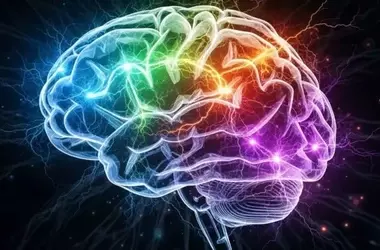
New Neuroscience Model Predicts Intelligence Through Brain's Internal Clocks
A recent study in Nature Communications introduces a novel neuroscience model capable of predicting intelligence by mapping the brain's internal 'clocks.' This innovative framework synchronizes neural network wiring with varying speeds of local brain activity, enhancing the accuracy of cognitive ability predictions. Unlike traditional approaches that assume uniform processing speeds, this model recognizes and accounts for the diverse intrinsic neural timescales across different brain regions, offering a more precise understanding of individual cognitive functions and potential implications for neurological disorders.
 Jan 05, 2026
The Inflamed Brain in Psychiatric Disorders: A New Paradigm for Mental Health
This article explores a recent study published in Biological Psychiatry identifying a distinct subtype of psychiatric illness linked to brain inflammation. This discovery suggests that traditional diagnostic categories like depression, bipolar disorder, and schizophrenia may not fully capture the biological underpinnings of these conditions. The study highlights that for some individuals, brain inflammation, detectable through brain scans and immune system tests, plays a crucial role in their symptoms and resistance to standard psychiatric treatments. This new perspective paves the way for more personalized, neuroimmune-informed mental health care approaches.
 Jan 04, 2026
Biological Age Accelerates Cognitive Decline
New research from the Framingham Heart Study reveals that advanced biological aging, as measured by epigenetic clocks, is strongly linked to reduced cognitive function, specifically lower scores on the digital Clock Drawing Test, seven years later. This association is particularly pronounced in older individuals, highlighting the critical role of biological aging metrics like DunedinPACE in predicting future cognitive health. The study suggests that managing biological aging could be key to preserving cognitive abilities.