 Breaking News & Live Updates
- Breaking News & Live Updates
- Breaking News & Live Updates
- Breaking News & Live Updates
- Breaking News & Live Updates
- Breaking News & Live Updates
- Breaking News & Live Updates
- Breaking News & Live Updates
- Breaking News & Live Updates
- Breaking News & Live Updates
Navigating the Complexities of Psychiatry Criticism: Alliances, Threats, and Ethical Dilemmas
The critique of established psychiatry is a multifaceted domain, attracting diverse groups with varying motivations. While some individuals, driven by anti-authoritarian principles, seek to expose psychiatry's scientific and ethical shortcomings, others harbor authoritarian ideologies that, though also critical of the psychiatric establishment, aim to replace it with their own coercive systems. This complex interplay necessitates careful discernment for those engaged in meaningful psychiatric reform, as aligning with groups whose core values diverge can inadvertently undermine genuine efforts for change. The public discourse surrounding psychiatry is fraught with potential misinterpretations and exploitations, particularly when critics engage with media platforms that prioritize sensationalism or partisan agendas. Understanding the historical context of psychiatric opposition, from past anti-authoritarian movements to current political alignments, is crucial for navigating this intricate landscape and forging productive paths forward.
The Shifting Sands of Psychiatric Opposition: From Progressive Critiques to Ideological Alignments
Historically, movements critical of psychiatry have evolved significantly, reflecting broader societal and political currents. Early anti-authoritarian movements in the mid-20th century, particularly the left, posed a substantial challenge to psychiatric authority, advocating for non-coercive approaches to mental distress. Figures such as Erich Fromm and initiatives like Soteria exemplified this era, demonstrating that alternative, community-based care models could yield superior outcomes compared to conventional psychiatric treatments. However, as the political climate shifted towards more authoritarian tendencies in the late 1970s and 1980s, these progressive critiques were marginalized. The void was increasingly filled by other, often authoritarian, entities like the Church of Scientology, which, despite its own questionable practices, became a prominent public voice against psychiatry. This shift allowed establishment psychiatry to deflect legitimate criticism by associating it with a widely unpopular and often controversial group. The mainstream media, often influenced by pharmaceutical industry advertising, played a role in amplifying this narrative, further complicating the public's understanding of psychiatric critique. The contemporary landscape sees new alliances emerging, notably between some psychiatry critics and elements of the right-wing political spectrum, raising fresh ethical considerations regarding the propagation of their message.
The evolution of psychiatric criticism is a testament to the dynamic relationship between medical authority, societal norms, and political power. In more anti-authoritarian times, the left's critique of psychiatry focused on its coercive practices, its pathologizing of human diversity, and its unscientific reliance on biological explanations for complex human experiences. The success of programs like Soteria, which emphasized human connection and minimized drug use, demonstrated the viability of alternative approaches. However, the subsequent suppression of such initiatives and the marginalization of their proponents underscored the powerful resistance from an establishment unwilling to relinquish its authority. The rise of groups like Scientology as prominent critics, often highlighted by mainstream media, provided a convenient "foil" for psychiatry to dismiss its detractors as fringe or cult-like, regardless of the validity of their arguments. This tactic effectively muddied the waters, making it difficult for the public to differentiate between well-researched, ethical critiques and ideologically driven opposition. Today, the landscape is further complicated by the involvement of various right-wing factions, some of whom criticize psychiatry for reasons that align with their broader political agendas, such as opposition to gun control or specific social issues. These alliances, while potentially amplifying the message of psychiatric critics, also carry the risk of association with ideologies that are fundamentally at odds with the humanitarian goals of many who seek genuine reform in mental healthcare. Critics must therefore carefully weigh the benefits of increased visibility against the potential for their message to be co-opted or misrepresented by such partners.
Navigating Public Discourse: Ethical Engagement and the Dangers of Misaligned Alliances
Engaging in public discourse as a critic of establishment psychiatry is an inherently perilous undertaking, akin to navigating a minefield. The primary objective for many critics is to disseminate accurate information about psychiatry's scientific shortcomings, the limitations of its diagnostic systems, the adverse effects of its treatments, and its reliance on unsubstantiated theories. However, the media landscape, often dominated by entities with vested interests or partisan leanings, presents significant challenges. Many mainstream media outlets may either ignore psychiatric critics or actively work to discredit them, sometimes through biased reporting or by associating them with controversial figures or groups. This can lead some critics, even those with liberal backgrounds, to seek platforms within right-wing media, which, while offering a larger audience, may also seek to exploit their message for unrelated political agendas. The historical example of Thomas Szasz's association with Scientology, though driven by a desire to support patients' rights, ultimately allowed establishment psychiatry to broadly dismiss all criticism as part of a fringe movement. This highlights the critical need for vigilance and political astuteness when choosing allies and media channels.
The complexities of public engagement for psychiatric critics demand a keen awareness of the potential for misrepresentation and unintended consequences. Critics often face a dilemma: to reach a wider audience, they may need to interact with media personalities or groups whose broader views are antithetical to their own core principles. This can result in their nuanced arguments being oversimplified, distorted, or weaponized for purposes entirely unrelated to genuine mental health reform. The case of Joanna Moncrieff, a prominent critic of antidepressant theories, being linked to right-wing commentators by a seemingly "faux-left" publication, exemplifies how critics can be inadvertently drawn into ideological battles. The danger lies not just in direct association but in the subtle ways a message can be reframed or recontextualized to serve a different narrative. Therefore, discerning the motivations of potential media partners and collaborators is paramount. While the desire to expose the flaws of establishment psychiatry is strong, critics must prioritize the integrity of their message and avoid alliances that could ultimately undermine their credibility or tacitly endorse problematic ideologies. The path forward involves supporting truly anti-authoritarian and critically thinking media platforms, and recognizing that ethical engagement, though challenging, is essential for fostering meaningful change in the realm of mental healthcare.
Other Articles
 May 06, 2026
Brainwave Patterns Explain Emotional Vulnerability in Borderline Traits
A study published in Psychiatry Research: Neuroimaging investigated why individuals with elevated borderline personality traits struggle with cognitive control when faced with negative emotions. Using brain wave analysis during a facial recognition task, researchers found that these individuals exhibit impaired initial attention, increased mental effort, and a breakdown in sustained attention when processing angry faces, particularly under challenging conditions. These findings offer neural insights into the emotional dysregulation associated with borderline personality disorder.
 May 06, 2026
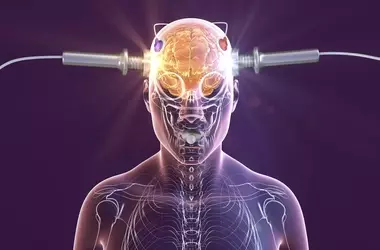
Families Report Devastating Impact of Electroconvulsive Therapy on Loved Ones' Lives
A new study reveals that most relatives and friends of individuals who underwent Electroconvulsive Therapy (ECT) observed a significant decline in their loved ones' overall quality of life. The research indicates that ECT often failed to improve symptoms, and in many cases, exacerbated them, with memory loss being a prevalent and distressing side effect. The findings highlight deep emotional distress among families witnessing the profound negative changes in their loved ones post-ECT.
 May 05, 2026
Genetic Links to Autism and ADHD Brain Structures
A recent genetics study published in 'Progress in Neuropsychopharmacology & Biological Psychiatry' investigates how specific brain structures, particularly in the frontal lobe, are genetically linked to autism and ADHD. The research utilized Mendelian randomization to determine causal relationships between brain morphology and these neurodevelopmental conditions, highlighting the roles of gray and white matter in their onset. The findings offer new insights into the biological underpinnings of these disorders.
May 05, 2026Families Speak Out: The Devastating Impact of Electroconvulsive Therapy
A new study reveals that family members and friends of individuals who underwent Electroconvulsive Therapy (ECT) overwhelmingly report negative effects on their loved ones' quality of life and cognitive functions. Many observed no improvement in symptoms, and some even noted worsening conditions, profound memory loss, and emotional blunting. The research highlights concerns about informed consent and the long-term debilitating consequences of ECT.
 May 04, 2026
Autistic Children's Unexpected Bilingualism: A New Perspective on Language Acquisition
A recent study indicates that many young autistic children unexpectedly acquire a second language primarily through non-interactive media like videos and tablets, rather than social interaction. This challenges conventional views on language development in autistic children and suggests new avenues for early language intervention, highlighting the potential benefits of regulated screen time.
 May 04, 2026
Chris Bennett's Candidacy: A Stand Against Forced Psychiatry
Chris Bennett, a House of Representatives candidate for California's 3rd district, is making waves with his unwavering stance against forced psychiatry. A US Army veteran, Bennett's political awakening came from the Bernie Sanders campaign and deepened with the issue of ICE street abductions. His platform, which includes the abolition of involuntary psychiatric interventions, reflects a broader commitment to human rights, disability justice, and systemic change. This bold position, endorsed by the Abolish Forced Psychiatry initiative, marks a significant moment in the advocacy for mental health reform, challenging long-standing practices and influencing political discourse.