 Breaking News & Live Updates
- Breaking News & Live Updates
- Breaking News & Live Updates
- Breaking News & Live Updates
- Breaking News & Live Updates
- Breaking News & Live Updates
- Breaking News & Live Updates
- Breaking News & Live Updates
- Breaking News & Live Updates
- Breaking News & Live Updates
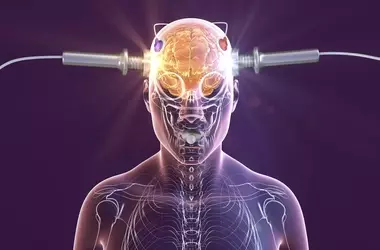
Families Report Devastating Impact of Electroconvulsive Therapy on Loved Ones' Lives
A recent scholarly publication in Psychology and Psychotherapy: Theory, Research, and Practice sheds light on the profound negative effects of Electroconvulsive Therapy (ECT), particularly as perceived by the family members and close acquaintances of those who have undergone the treatment. This investigation, spearheaded by independent scholar Christopher Harrop and involving contributions from John Read of the University of East London, suggests that ECT frequently leads to a diminished quality of life for patients and often fails to alleviate the very symptoms it aims to treat, sometimes even intensifying them. A recurring and deeply troubling consequence identified in the study is significant memory loss among recipients.
The Alarming Realities of Electroconvulsive Therapy: A Deep Dive into Family Perspectives and Clinical Outcomes
The study, born from an international survey disseminated through mental health organizations globally via Qualtrics, gathered responses from 286 participants. These individuals, aged 18 or older, were relatives or friends of ECT recipients, providing secondhand accounts of the treatment's impact. While the majority of respondents were from the US (37%) and the UK (28%), other countries like Australia, Spain, and Canada were also represented. The demographic profile of ECT recipients indicated a disproportionate number of women (68%) and predominantly white individuals (89%).
Key findings reveal a distressing trend: 42.4% of participants reported that ECT worsened the presenting problems in their loved ones, and an additional 12.5% observed no change, meaning over half (54.9%) saw no improvement. Furthermore, a substantial 61% of participants noted a negative impact on their loved one's overall quality of life, contrasting with only 32.3% who perceived an improvement. A striking 80.9% of respondents deemed ECT harmful to some degree, while a mere 19.1% reported no harm.
Personal anecdotes from the survey paint a vivid picture of the suffering endured. One participant poignantly described their mother, once a vibrant "scientist, activist, poet, and writer," transforming into a "withdrawn, fearful, dependent person" following ECT, lamenting, "It was like they crushed a beautiful flower." Another recounted their sister-in-law's severe cognitive and physical decline, losing the ability to talk, walk, and even remember her childhood. Concerns regarding increased suicidality post-ECT were also voiced, with one participant criticizing the prescribing doctor for failing to consider the patient's stressors and the lasting cognitive damage.
Memory impairment emerged as a critical issue, with 60.7% reporting problems with recent memory and 73.3% struggling with pre-ECT memories. A long list of other adverse effects was reported by over half of the respondents, including difficulty concentrating (79.1%), emotional blunting (72.6%), loss of independence (71.5%), fatigue (73.3%), and relationship problems (70.2%). Physical ailments such as headaches, slurred speech, and sensitivity to noise were also common. A significant portion of participants (34.2%) suspected brain damage, with 47.7% remaining unsure.
The issue of informed consent was another contentious point, with 47.1% reporting voluntary consent, 31.7% indicating pressure, and 21.3% stating that ECT was involuntary. Many expressed feeling misled about ECT's efficacy and potential harms, leading to a deep erosion of trust in the medical community. Some family members harbored profound guilt for not preventing the treatment, articulating feelings of terror and witnessing traumatization.
It is important to acknowledge certain limitations of the study, such as potential recruitment bias due to the involvement of authors critical of ECT, reliance on retrospective secondhand accounts, and the survey's exclusivity to English speakers. Despite these, the collective testimony underscores a pressing need for a critical reassessment of ECT practices and more transparent, genuinely informed consent processes.
The revelations from this study compel us to reflect on the ethical and humanistic dimensions of mental health treatments. The accounts of families witnessing their loved ones' profound decline post-ECT are not merely statistics; they are poignant cries for a more compassionate, less invasive approach to mental health care. It raises crucial questions about the balance between perceived therapeutic benefits and irreversible harm, particularly when patient consent may be compromised. As a society, we must advocate for robust research into alternative, less destructive interventions and ensure that individuals and their families are fully informed and empowered in making critical health decisions, free from coercion or misleading information. The emotional and cognitive scars left by ECT, as detailed in this report, demand our collective attention and a commitment to upholding the dignity and well-being of all individuals seeking mental health support.
Other Articles
 May 05, 2026
Genetic Links to Autism and ADHD Brain Structures
A recent genetics study published in 'Progress in Neuropsychopharmacology & Biological Psychiatry' investigates how specific brain structures, particularly in the frontal lobe, are genetically linked to autism and ADHD. The research utilized Mendelian randomization to determine causal relationships between brain morphology and these neurodevelopmental conditions, highlighting the roles of gray and white matter in their onset. The findings offer new insights into the biological underpinnings of these disorders.
 May 05, 2026
Families Speak Out: The Devastating Impact of Electroconvulsive Therapy
A new study reveals that family members and friends of individuals who underwent Electroconvulsive Therapy (ECT) overwhelmingly report negative effects on their loved ones' quality of life and cognitive functions. Many observed no improvement in symptoms, and some even noted worsening conditions, profound memory loss, and emotional blunting. The research highlights concerns about informed consent and the long-term debilitating consequences of ECT.
 May 04, 2026
Autistic Children's Unexpected Bilingualism: A New Perspective on Language Acquisition
A recent study indicates that many young autistic children unexpectedly acquire a second language primarily through non-interactive media like videos and tablets, rather than social interaction. This challenges conventional views on language development in autistic children and suggests new avenues for early language intervention, highlighting the potential benefits of regulated screen time.
 May 04, 2026
Chris Bennett's Candidacy: A Stand Against Forced Psychiatry
Chris Bennett, a House of Representatives candidate for California's 3rd district, is making waves with his unwavering stance against forced psychiatry. A US Army veteran, Bennett's political awakening came from the Bernie Sanders campaign and deepened with the issue of ICE street abductions. His platform, which includes the abolition of involuntary psychiatric interventions, reflects a broader commitment to human rights, disability justice, and systemic change. This bold position, endorsed by the Abolish Forced Psychiatry initiative, marks a significant moment in the advocacy for mental health reform, challenging long-standing practices and influencing political discourse.
 May 04, 2026
Depression Rates Soar Among Youth with ADHD, Study Reveals
A new study reveals that children and adolescents diagnosed with ADHD are significantly more prone to depression, with girls experiencing higher rates. The research highlights challenges in accurate diagnosis due to overlapping symptoms and calls for improved assessment tools.
 May 02, 2026
Challenging Psychiatric Narratives: Prateeksha Sharma's Journey of Recovery and Advocacy
This article explores the inspiring journey of Prateeksha Sharma, a musician, researcher, and counselor, who defied the grim prognosis of a bipolar disorder diagnosis. After 18 years on psychiatric medication, she discovered a path to recovery through alternative treatments and a deep connection to her passions, particularly music and animal therapy. Sharma's story challenges conventional psychiatric approaches, advocating for a more human-centered understanding of distress and emphasizing the possibility of recovery for all.