 Breaking News & Live Updates
- Breaking News & Live Updates
- Breaking News & Live Updates
- Breaking News & Live Updates
- Breaking News & Live Updates
- Breaking News & Live Updates
- Breaking News & Live Updates
- Breaking News & Live Updates
- Breaking News & Live Updates
- Breaking News & Live Updates
Music's Healing Harmony: Retuning the Brain from Psychosis
A new avenue for psychiatric care is emerging, focusing on the therapeutic power of music. Research indicates that composing and performing music in a group setting offers substantial benefits for those experiencing psychosis. This method leverages the brain's predictive coding mechanisms, allowing individuals to anticipate and respond to musical patterns, thereby re-establishing a stronger connection to their environment.
This innovative research highlights several key findings: participants showed a decrease in paranoid thoughts, especially those with milder symptoms. A significant shift in language use was also observed; individuals moved from predominantly first-person pronouns, often indicative of isolation, to more collective pronouns, signifying enhanced social integration. This therapy provided these benefits without the adverse effects commonly associated with antipsychotic medications, such as lethargy and cognitive fog, promoting emotional expression and creativity.
Ultimately, this research suggests that consistent musical engagement could lead to lasting changes in brain function, effectively rehabilitating the brain's impaired prediction systems. This musical intervention acts as a controlled environment where expectations can be safely challenged and rebuilt, akin to a 'rollercoaster' for the mind that helps in restoring healthy cognitive processes. The success of this approach validates the long-held belief in music's profound ability to heal and foster community among vulnerable populations.
Embracing the arts, especially music, provides a powerful and uplifting path toward mental well-being and social connection. It reminds us that recovery is not solely about managing symptoms, but also about rediscovering joy, creativity, and the profound human capacity for shared experience and growth.
Other Articles
 Apr 16, 2026
Cold Water Swimming: A Finnish Method for Mental Calmness
A recent study published in the European Journal of Marketing investigates how regular cold-water swimmers in Finland intentionally slow down their perception of time to find mental stillness. This practice, involving dips in icy water, helps individuals detach from the fast pace of modern life and alleviate stress. The findings suggest that intense physical routines can serve as a rapid antidote to daily anxieties, offering a unique path to peace without the need for extended retreats.
 Apr 16, 2026
Exploring the Link Between Gut Bacteria and Stress Resilience
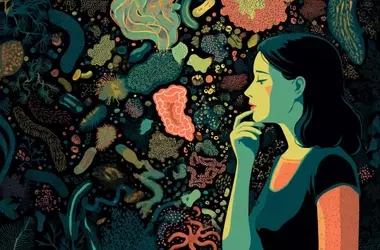
A recent study suggests that a diverse gut microbiome may influence an individual's response to acute stress. Researchers discovered that people with a wider variety of gut bacteria exhibited more pronounced hormonal and subjective reactions to stressful situations. This finding challenges conventional views, proposing that a stronger stress response, when supported by gut diversity, might actually indicate a more adaptable and robust biological system rather than a susceptibility to pressure.
 Apr 16, 2026
Children with ADHD Perceive Lower Effort on Cognitive Tasks Compared to Peers
A new study reveals that children with ADHD report applying less effort on cognitive tasks, regardless of perceived difficulty, compared to neurotypical peers. This suggests that self-reported effort provides unique insights into their daily challenges, separate from objective performance scores. The findings highlight the importance of understanding subjective experiences in ADHD research, suggesting metacognitive monitoring differs in these children.
 Apr 16, 2026
Overcoming Inner Criticism: An ACT Approach to Self-Acceptance
This article explores how Acceptance and Commitment Therapy (ACT) can help individuals shift from self-criticism to self-acceptance. It delves into the nature of the inner critic, how it hinders self-acceptance, and provides a four-step ACT framework to foster psychological flexibility and enable value-driven actions despite self-critical thoughts. The piece emphasizes that the goal isn't to eliminate negative thoughts but to change one's relationship with them, promoting a more compassionate self-view and enhanced well-being.
 Apr 15, 2026
Social Media Use: Is It an Addiction or a Lifestyle?
Recent legal judgments have sparked debate over whether excessive social media engagement constitutes a clinical addiction. While platforms face lawsuits for their 'addictive' design, the scientific community is divided. Researchers note parallels between problematic social media use and substance abuse in terms of brain changes and negative life impacts. However, the American Psychiatric Association (APA) has yet to officially classify it as a disorder, highlighting the need for more rigorous research and data to establish diagnostic criteria and avoid over-pathologizing everyday behaviors.
 Apr 15, 2026
Embracing Self-Acceptance Through ACT Principles
This article explores how Acceptance and Commitment Therapy (ACT) can foster self-acceptance. It delves into the misconception that self-acceptance requires liking all thoughts and feelings, instead emphasizing the practice of acknowledging and coexisting with inner experiences without judgment. The piece highlights how struggling against difficult thoughts can intensify distress and introduces four ACT-based exercises—defusion, gratitude towards the mind, making room for feelings, and value-driven action—to cultivate psychological flexibility and promote a healthier relationship with oneself.